
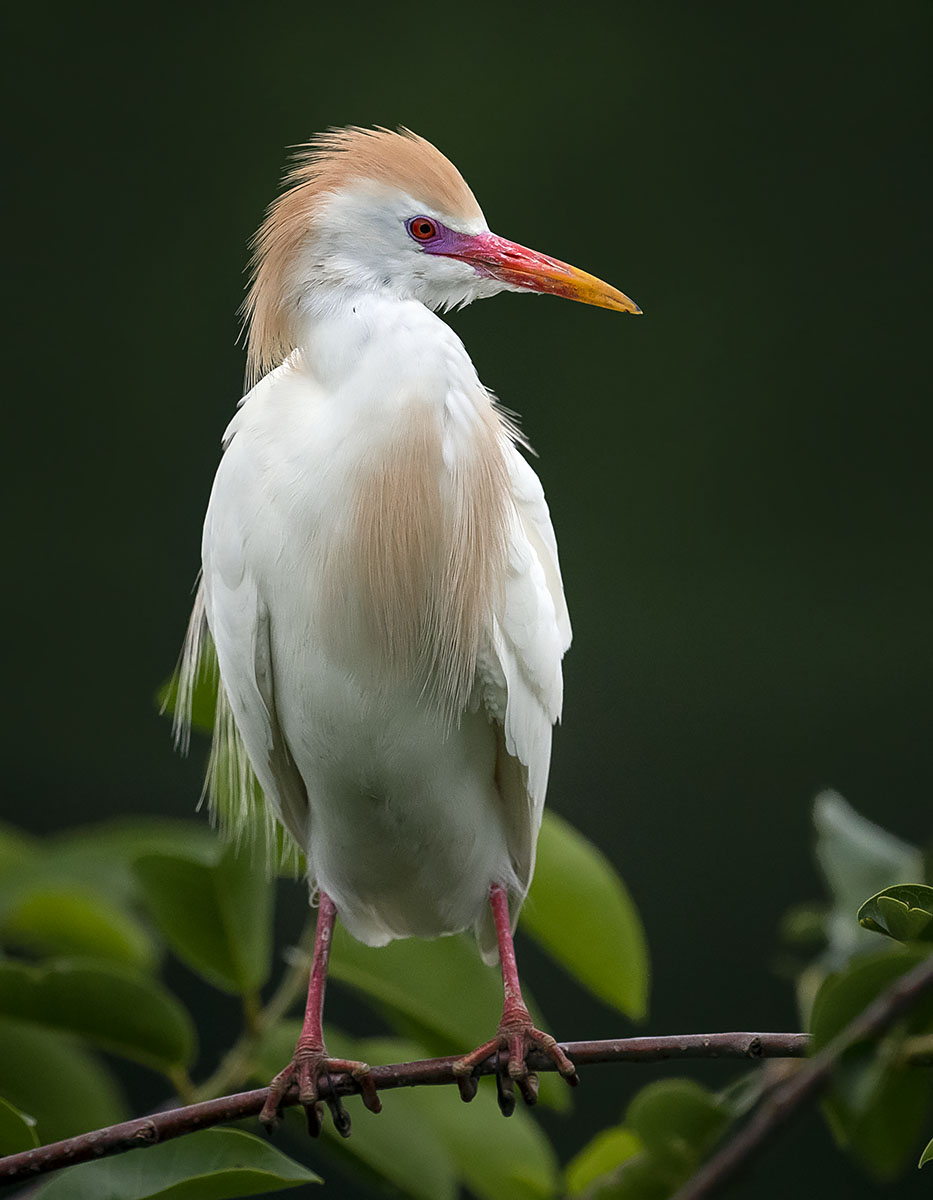
Come identificare Cattle Egret
Bubulcus ibis
Visto un uccello? Identificalo all'istante con l'app Birdby
Apri l'appPer identificare correttamente Cattle Egret (Bubulcus ibis), controlla ciascuna di queste caratteristiche. Gli uccelli possono essere complicati da riconoscere, perché comportamento, habitat e canto spesso confermano ciò che una sola foto non può.
Dimensioni a colpo d'occhio
- Lunghezza
- 46-56 cm
- Apertura alare
- 88-96 cm
- Peso
- 270-510 g
Caratteristiche fisiche da controllare
- 1
Piumaggio
Colorazione e disegno generale del piumaggio.
Non-breeding adults are entirely white with a yellow bill and greenish-yellow legs. Breeding adults develop buff-orange plumes on the crown, nape, back, and breast. The bill becomes brighter orange-yellow, and the legs turn reddish-orange.
- 2
Forma del becco
Forma e colore del becco, un segno di campo chiave.
Relatively short, stout, and pointed bill, yellow in non-breeding plumage, brighter orange-yellow in breeding plumage.
- 3
Colore degli occhi
Colore dell'iride e segni distintivi sugli occhi.
Yellow iris, often with a reddish tinge during breeding season.
- 4
Colore delle zampe
Colore di zampe e piedi.
Greenish-yellow in non-breeding adults, reddish-orange in breeding adults.
- 5
Caratteristiche distintive
Tratti distintivi che separano questa specie.
Its small size, stocky build, and habit of associating with livestock or agricultural machinery are key identifiers. The buff-orange breeding plumes are distinctive. Unlike other white egrets, it has a relatively short, thick neck and a more hunched posture when foraging.
- 6
Aspetto giovanile
Come i giovani si differenziano dagli adulti.
Juveniles resemble non-breeding adults, being entirely white with a duller yellow-grey bill and dark greyish-black legs. They lack any buff coloration.
- 7
Cambiamenti stagionali
Variazione del piumaggio tra stagione riproduttiva e non.
Pronounced seasonal changes in plumage and soft part coloration. Non-breeding plumage is pure white with a yellow bill and greenish-yellow legs. Breeding plumage involves the development of buff-orange plumes on the crown, nape, back, and breast, with the bill becoming brighter orange-yellow and the legs turning reddish-orange. The eyes may also become redder.
- 8
Dimorfismo sessuale
Differenze tra maschi e femmine.
Males and females are generally similar in appearance, though males may be slightly larger and have more extensive or brighter breeding plumes.
Segni di campo chiave
- Size and Shape. Relatively small and stocky for an egret, with a short, thick neck and a somewhat hunched posture when foraging on land.
- Plumage (Non-breeding). Pure white body plumage. Look for the yellow bill and greenish-yellow legs.
- Plumage (Breeding). Distinctive buff-orange plumes on the crown, nape, back, and breast. The bill becomes brighter orange-yellow, and legs turn reddish-orange.
- Behavior. Its strong association with grazing livestock or agricultural machinery is a key identification clue. It often walks alongside these animals, snatching disturbed insects.
- Habitat. Prefers open, grassy fields, pastures, and agricultural areas, rather than deep water, distinguishing it from most other egrets.
Esplora Cattle Egret
Identifica uccelli ovunque
Gratis su iOS, Android e Web. Identificazione per foto e suono, database completo e la tua lista personale.