
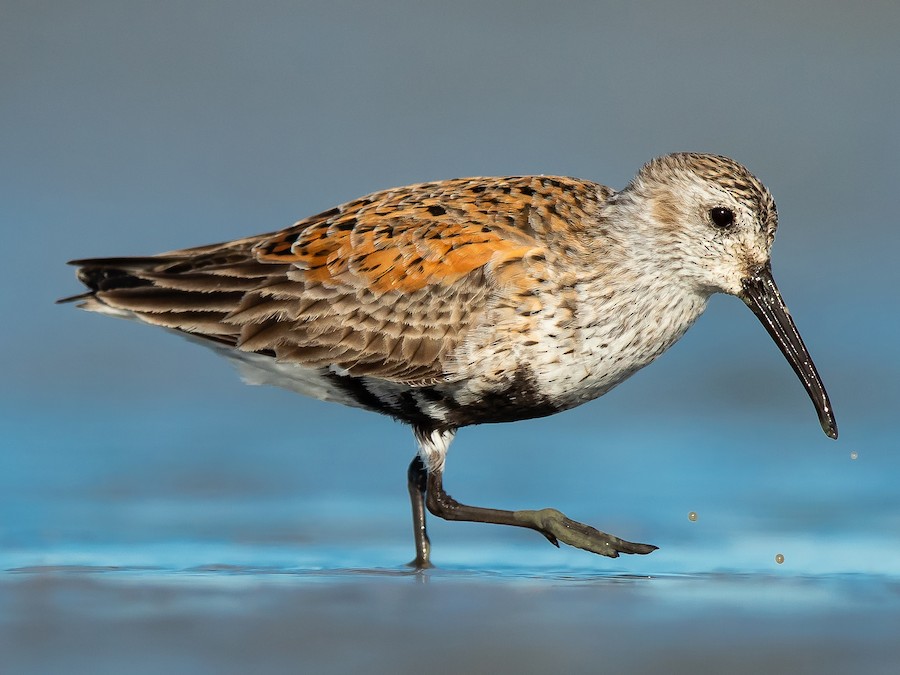
Dove vive Piovanello comune?
Calidris alpina
Visto un uccello? Identificalo all'istante con l'app Birdby
Apri l'appPiovanello comune vive in habitat e regioni specifiche. Sapere dove e quando guardare migliora le possibilità di un avvistamento riuscito.
Biomi
Tundra, coastal wetlands, estuaries, mudflats, sandy beaches, salt marshes, lagoons.
Areale geografico
Breeds in Arctic and subarctic regions of Eurasia and North America. Winters along temperate and tropical coasts of Europe, Africa, Asia, and North America.
Ambienti preferiti
During breeding, prefers wet tundra with mosses, sedges, and dwarf shrubs. During migration and winter, favors intertidal mudflats, sandy shores, and estuaries where it can forage for invertebrates.
Fascia altitudinale
Primarily found at sea level, occasionally inland during migration or in specific breeding areas.
Dove guardare
Coastal Mudflats and Estuaries
These are prime wintering and migratory stopover sites, especially during low tide when vast areas of mud are exposed for foraging.
Sandy Beaches and Lagoons
Can be found foraging along the water's edge on sandy beaches and in sheltered coastal lagoons.
Salt Marshes
Utilizes salt marshes for feeding and roosting, particularly during high tide when other foraging areas are submerged.
Arctic Tundra (Breeding)
During the breeding season, they are found in wet, mossy tundra habitats in the Arctic and subarctic regions.
Consigli sul campo
- Check Tides. For coastal observations, plan your visit around low tide when mudflats are exposed, and Dunlins are actively feeding. They often roost in large groups at high tide.
- Scan Flocks. Dunlins often occur in large, mixed flocks with other waders. Carefully scan these flocks for the characteristic bill shape and, in summer, the black belly patch.
- Listen for Calls. Their distinctive 'krrreet' call is a good indicator of their presence, especially when they are flying or disturbed.
- Observe Feeding Behavior. Watch for their rapid, probing 'sewing machine' feeding action, which is typical for the species.
- Use a Scope. Due to their small size and often distant feeding locations, a spotting scope is highly recommended for detailed observation and identification.
Migrazione
Long-distance migratory. Northern populations undertake extensive migrations to southern wintering grounds. European breeders winter along the coasts of Western Europe and Africa. North American breeders winter along the coasts of the southern US and Mexico. Migration occurs in broad fronts, often with stopovers at key coastal wetlands.
Esplora Piovanello comune
Identifica uccelli ovunque
Gratis su iOS, Android e Web. Identificazione per foto e suono, database completo e la tua lista personale.