
Come identificare Domestic Pigeon
Columba livia domestica
Visto un uccello? Identificalo all'istante con l'app Birdby
Apri l'appPer identificare correttamente Domestic Pigeon (Columba livia domestica), controlla ciascuna di queste caratteristiche. Gli uccelli possono essere complicati da riconoscere, perché comportamento, habitat e canto spesso confermano ciò che una sola foto non può.
Dimensioni a colpo d'occhio
- Lunghezza
- 30-35 cm
- Apertura alare
- 60-70 cm
- Peso
- 230-500 g
Caratteristiche fisiche da controllare
- 1
Piumaggio
Colorazione e disegno generale del piumaggio.
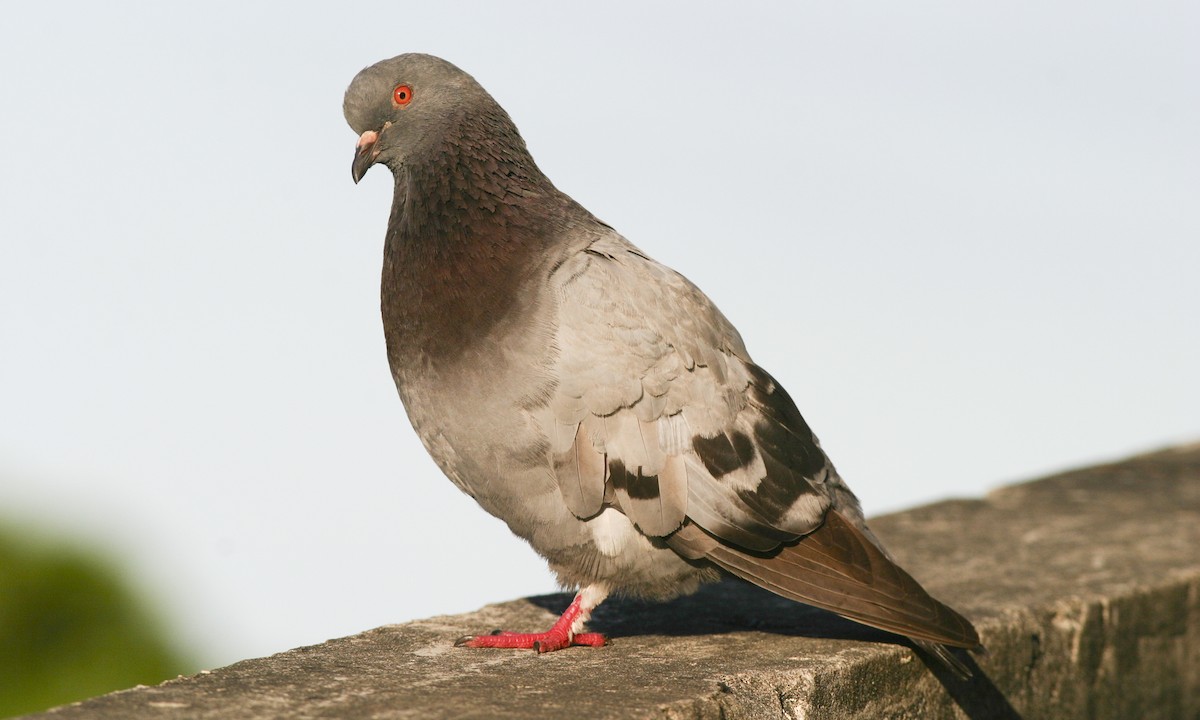
Highly variable. The ancestral wild type (blue-bar) plumage is slate-grey with iridescent green and purple sheens on the neck and breast, two prominent black wing bars, and a white rump. Feral populations display a vast array of colors and patterns including solid black, white, brown, pied (patches of white and other colors), mottled, and various shades of grey, often lacking distinct wing bars or having multiple bars. The primary feathers are typically darker, and the undertail coverts are often white.
- 2
Forma del becco
Forma e colore del becco, un segno di campo chiave.
Relatively short, slender, and dark grey to black, with a prominent cere (fleshy patch) at the base, which is typically white or pale grey.
- 3
Colore degli occhi
Colore dell'iride e segni distintivi sugli occhi.
Typically orange to reddish-orange, with a narrow, pale orbital ring.
- 4
Colore delle zampe
Colore di zampe e piedi.
Reddish-pink to dark red, scaly, with four toes (three forward, one backward).
- 5
Caratteristiche distintive
Tratti distintivi che separano questa specie.
The most distinguishing feature is the immense variability in plumage. However, the general pigeon shape, head bobbing walk, and characteristic cooing vocalizations are consistent. The presence of a white cere at the base of the beak is also a good field mark.
- 6
Aspetto giovanile
Come i giovani si differenziano dagli adulti.
Juveniles resemble adults but have duller plumage, less iridescence on the neck, and a less prominent or absent cere, which is often greyish. Their eyes may also appear duller.
- 7
Cambiamenti stagionali
Variazione del piumaggio tra stagione riproduttiva e non.
No significant seasonal plumage changes. Plumage variations are primarily genetic rather than seasonal.
- 8
Dimorfismo sessuale
Differenze tra maschi e femmine.
Minimal. Males tend to be slightly larger and heavier than females, with a more pronounced iridescent sheen on the neck and a more robust head. During courtship, males display more vigorous bowing and cooing. These differences are often subtle and not reliable for field identification.
Segni di campo chiave
- Plumage Variability. Look for the wide range of colors and patterns. While some may resemble the ancestral blue-bar Rock Dove, many will be pied, solid black, white, or mottled. This variability is a key indicator of a feral domestic pigeon.
- General Shape and Size. Observe the typical pigeon body shape: plump body, small head, short legs, and a relatively short tail. They are medium-sized pigeons, larger than doves but smaller than Wood Pigeons.
- Head and Beak. Note the small head relative to the body, the slender dark beak, and especially the prominent white or pale grey cere at the base of the upper mandible.
- Behavior. Watch for their characteristic head-bobbing walk while foraging on the ground. Their strong, direct flight with rapid wing beats is also distinctive. They are often seen in flocks in urban settings.
- Vocalization. Listen for the soft, guttural cooing sounds, particularly the 'coo-roo-coo-coo' of males during courtship.
Esplora Domestic Pigeon
Identifica uccelli ovunque
Gratis su iOS, Android e Web. Identificazione per foto e suono, database completo e la tua lista personale.