
Come identificare Rock Dove
Columba livia
Visto un uccello? Identificalo all'istante con l'app Birdby
Apri l'appPer identificare correttamente Rock Dove (Columba livia), controlla ciascuna di queste caratteristiche. Gli uccelli possono essere complicati da riconoscere, perché comportamento, habitat e canto spesso confermano ciò che una sola foto non può.
Dimensioni a colpo d'occhio
- Lunghezza
- 31-35 cm
- Apertura alare
- 62-68 cm
- Peso
- 238-380 g
Caratteristiche fisiche da controllare
- 1
Piumaggio
Colorazione e disegno generale del piumaggio.
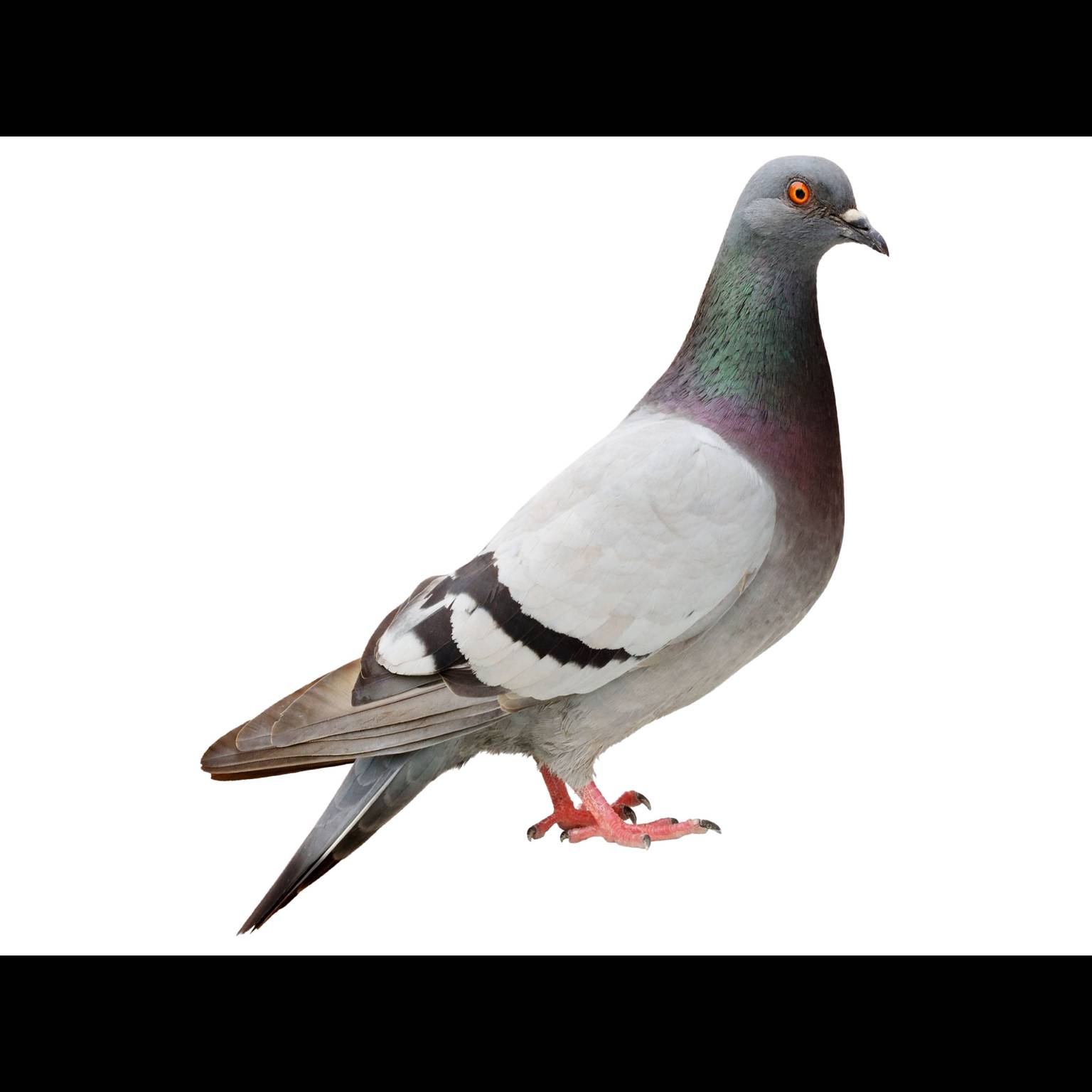
The wild type (Rock Dove) has a dark bluish-grey head, neck, and chest with iridescent green and purplish gloss on the neck and upper breast. The back is pale grey, and the wings are pale grey with two prominent black bars. The rump is white, and the tail is grey with a broad black terminal band. Feral pigeons exhibit a wide range of plumage variations due to hybridization with domestic strains, including solid black, white, brown, pied, and various shades of grey with differing bar patterns.
- 2
Forma del becco
Forma e colore del becco, un segno di campo chiave.
Slender, dark grey to blackish beak with a prominent white cere at the base.
- 3
Colore degli occhi
Colore dell'iride e segni distintivi sugli occhi.
Orange-red, with a pale inner ring.
- 4
Colore delle zampe
Colore di zampe e piedi.
Reddish-pink to purplish-red.
- 5
Caratteristiche distintive
Tratti distintivi che separano questa specie.
The pure wild form is distinguished by its white rump, two distinct black wing bars, and iridescent neck plumage. Feral pigeons often retain the two black wing bars but can vary greatly in color. The characteristic bobbing head walk is also a key feature.
- 6
Aspetto giovanile
Come i giovani si differenziano dagli adulti.
Juveniles resemble adults but have duller plumage, less iridescence on the neck, and a less prominent cere. Their eyes are typically duller brown.
- 7
Cambiamenti stagionali
Variazione del piumaggio tra stagione riproduttiva e non.
No significant seasonal plumage changes. The iridescence on the neck may appear more vibrant during courtship displays.
- 8
Dimorfismo sessuale
Differenze tra maschi e femmine.
Males and females are generally monomorphic in plumage, though males may appear slightly larger and have more pronounced iridescence on the neck during breeding displays.
Segni di campo chiave
- Plumage (Wild Type). Look for a blue-grey body, iridescent green and purple sheen on the neck, two distinct black wing bars, and a prominent white rump (especially visible in flight). The tail has a broad black terminal band.
- Plumage (Feral Type). Be aware of extreme variability. Many feral pigeons will still show the two black wing bars, but colors can range from pure white, black, brown, to various mottled or checkered patterns. The white rump is a key feature of the ancestral wild type, but may be obscured or absent in some feral variants.
- Flight. Strong, direct flight with rapid wingbeats. Often flies in tight flocks. A characteristic 'whistle' can be heard from the wings during takeoff or rapid flight.
- Behavior. Observe their characteristic head-bobbing walk while foraging on the ground. They are often seen perching on ledges, buildings, or cliffs.
- Vocalization. Listen for the soft, guttural 'coo-COO-coo' song, especially from males during courtship.
Esplora Rock Dove
Identifica uccelli ovunque
Gratis su iOS, Android e Web. Identificazione per foto e suono, database completo e la tua lista personale.