
Dove vive Mute Swan?
Cygnus olor
Visto un uccello? Identificalo all'istante con l'app Birdby
Apri l'appMute Swan vive in habitat e regioni specifiche. Sapere dove e quando guardare migliora le possibilità di un avvistamento riuscito.
Biomi
Freshwater wetlands, lakes, ponds, slow-moving rivers, estuaries, and coastal lagoons.
Areale geografico
Native to temperate Europe and Asia, from the UK and Scandinavia eastwards across Russia to China. Introduced populations exist in North America (primarily the Great Lakes region and Atlantic coast), Australia, New Zealand, and South Africa.
Ambienti preferiti
Shallow, nutrient-rich waters with abundant aquatic vegetation. They prefer areas with emergent vegetation for nesting and shelter, often near human habitation in parks and urban waterways.
Fascia altitudinale
Typically found at low elevations, from sea level up to a few hundred meters, associated with water bodies.
Dove guardare
Urban Parks and Lakes
Commonly found in city parks, ornamental lakes, and ponds where they are often accustomed to human presence.
Slow-moving Rivers and Canals
Look for them in calm sections of rivers, canals, and backwaters with ample aquatic vegetation.
Estuaries and Coastal Lagoons
In some regions, they can be found in brackish water environments, especially during winter.
Wetland Reserves
Protected wetland areas and nature reserves with suitable freshwater habitats are excellent places to observe them in a more natural setting.
Consigli sul campo
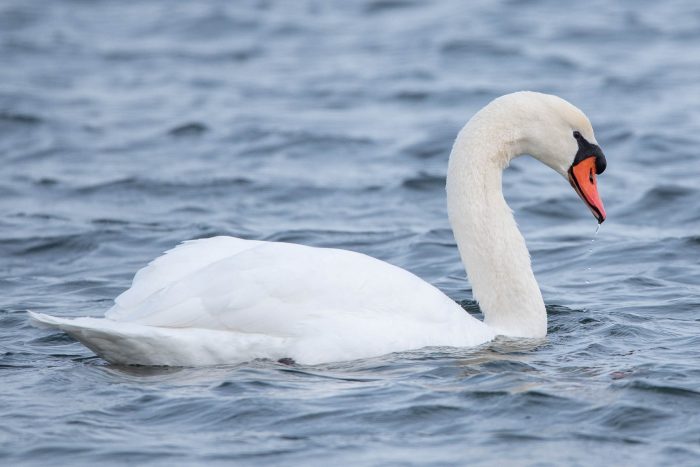
- Look for the S-curve. The S-shaped neck is the most reliable field mark for a Mute Swan, especially when swimming.
- Observe the bill. The orange bill with a black knob is unique among swans in its native range. Note the size of the knob to potentially distinguish sex.
- Listen for wing sounds. Even if you can't see them clearly, the loud, rhythmic 'singing' sound of their wings in flight is unmistakable.
- Be cautious during breeding season. Mute Swans can be very aggressive when nesting or with cygnets. Maintain a respectful distance.
- Check for cygnets. During late spring and summer, look for grey-brown cygnets accompanying the white adults.
Migrazione
Many populations are largely resident, especially in milder climates or where food is consistently available. Northern and eastern European/Asian populations are migratory, moving south and west for the winter. Introduced populations are generally resident.
Esplora Mute Swan
Identifica uccelli ovunque
Gratis su iOS, Android e Web. Identificazione per foto e suono, database completo e la tua lista personale.