
Visto un uccello? Identificalo all'istante con l'app Birdby
Apri l'appInformazioni
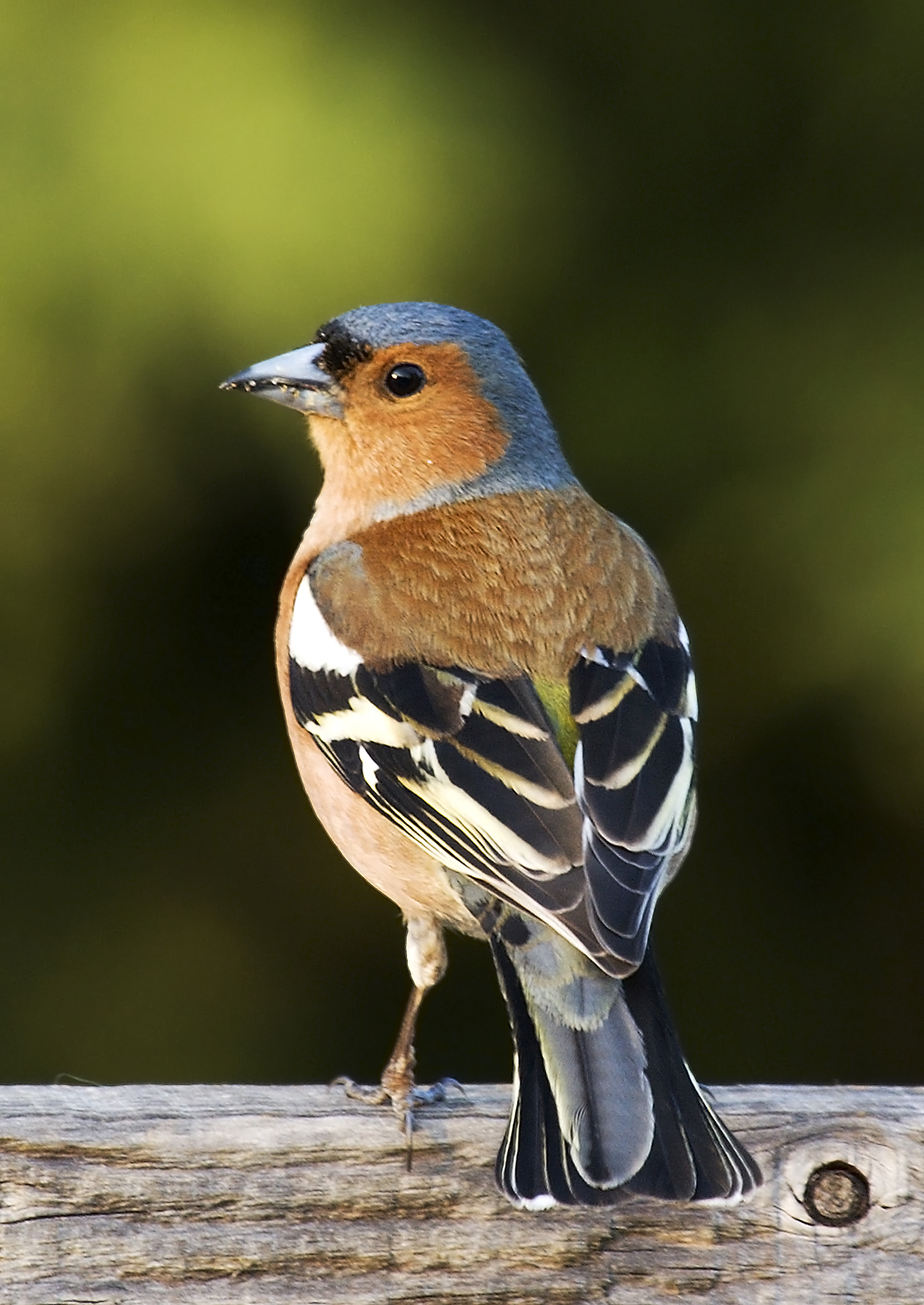
The Common Chaffinch (Fringilla coelebs), often referred to as 'Fringuello' in Italian, is one of the most widespread and abundant passerine birds in Europe. It is a small, robust finch known for its distinctive song and colorful plumage, particularly in males. It is a familiar sight in gardens, parks, woodlands, and agricultural areas across its range.
Dimensioni e longevità
- Lunghezza
- 14-16 cm
- Apertura alare
- 24.5-28.5 cm
- Peso
- 18-29 g
- Longevità
- Typically 2-3 years in the wild, up to 10 years recorded
- Dieta
- Omnivore (primarily granivorous, insectivorous during breeding season)
Caratteristiche fisiche
- Piumaggio
- Males are brightly colored with a blue-grey crown and nape, reddish-brown cheeks and breast, and a pinkish-brown belly. The back is chestnut-brown, and the rump is greenish. Wings are dark with two prominent white wing-bars and a yellow patch. The tail is dark with white outer feathers. Females are duller, predominantly olive-brown to grey-brown overall, with a paler underside and less distinct white wing-bars. Both sexes have a pale bill (bluish-grey in males, brownish in females) and dark eyes.
- Forma del becco
- Conical, stout, and pointed, adapted for cracking seeds. Bluish-grey in breeding males, brownish in females and non-breeding males.
- Colore degli occhi
- Dark brown
- Colore delle zampe
- Dark grey to brownish-grey
- Caratteristiche distintive
- Key features include the prominent white wing-bars (especially two on the wing), the greenish rump (visible in flight), and the distinctive head pattern of the male. The female's overall duller plumage still shows the characteristic wing-bars and greenish rump.
- Aspetto giovanile
- Juveniles resemble females but are generally duller and streakier, with less defined wing-bars. Their plumage is softer and less compact.
- Cambiamenti stagionali
- Males in breeding plumage are vibrant. In non-breeding plumage (autumn/winter), the male's colors are slightly muted due to pale feather fringes, which wear off by spring to reveal the brighter breeding colors. Females show less seasonal variation.
- Dimorfismo sessuale
- Pronounced. Males are much more brightly colored with blue-grey, reddish-brown, and chestnut tones. Females are duller, mostly olive-brown and grey-brown.
Come identificare
- 1
Size and Shape
A medium-sized, plump finch with a relatively short tail and a stout, conical bill.
- 2
Male Plumage (Breeding)
Look for the distinctive blue-grey crown and nape, reddish-brown cheeks and breast, chestnut-brown back, and greenish rump. Two prominent white wing-bars and a yellow patch on the dark wings are key.
- 3
Female Plumage
Duller overall, olive-brown to grey-brown, but still shows the characteristic two white wing-bars and a greenish rump (though less vibrant than the male).
- 4
Flight
Observe the undulating flight pattern and the flash of the greenish rump and white wing-bars.
- 5
Song
Listen for the loud, rapid, and cheerful song ending with an emphatic 'tschink' or 'chick-choo-wee' flourish.
- 6
Call
Listen for the sharp, metallic 'pink!' or 'chink!' call, especially when alarmed or in flight.
Habitat e areale
- Biomi
- Temperate forests, woodlands, parks, gardens, hedgerows, agricultural land, urban areas.
- Areale geografico
- Widespread across Europe, North Africa, and parts of western Asia. Introduced to New Zealand and South Africa.
- Fascia altitudinale
- Sea level up to 2,000 meters, occasionally higher in mountainous regions.
- Ambienti preferiti
- Prefers deciduous and mixed woodlands, but is highly adaptable and thrives in human-modified landscapes such as parks, gardens, orchards, and cultivated areas with scattered trees and bushes. Requires trees for nesting and perching, and open ground for foraging.
Comportamento
- Periodo di attività
- Diurnal.
- Abitudini alimentari
- Primarily ground feeders, hopping to pick up seeds, fallen berries, and insects. During the breeding season, insects (caterpillars, aphids, beetles) form a significant part of the diet, especially for feeding young. Outside the breeding season, seeds (especially beech mast, elm, and various weed seeds) are dominant. They often forage in small flocks.
- Comportamento sociale
- Highly social outside the breeding season, forming large, often mixed-species flocks (sometimes with Bramblings) to forage. During the breeding season, pairs are territorial, with males defending their nesting area.
- Tipo di volo
- Undulating flight pattern, typical of finches, with rapid wing beats followed by a short glide. Often flies low between trees or bushes.
- Migrazione
- Partially migratory. Northern and eastern European populations are largely migratory, moving south and west for the winter. Western and southern European populations are mostly resident or undertake short-distance movements. Males tend to be more sedentary than females and juveniles, leading to the species' name 'coelebs' (bachelor) as Linnaeus observed mostly males in Sweden during winter.
- Territorialità
- Males are highly territorial during the breeding season, defending their nesting site and foraging area with vigorous singing and occasional aggressive displays towards rivals.
Canto e richiami
- Canto
- The male's song is a loud, rapid, and cheerful series of phrases, typically starting with a series of 'chip-chip-chip' notes, accelerating into a jumbled trill, and ending with a distinctive, emphatic 'tschink' or 'chick-choo-wee' flourish. It's often described as 'chip-chip-chip-choo-wee-oo-wee-oo-wee-chick-choo-wee'. Songs vary regionally and individually, with males often having multiple song types.
- Richiamo
- Common calls include a sharp, metallic 'pink!' or 'chink!' call, often given in flight or when alarmed. A softer 'chupp' or 'hweet' contact call is also used. The 'rain call' is a distinctive, drawn-out 'hweet' or 'tew' often heard before or during rain.
- Quando vocalizza
- Males sing vigorously from early spring (February/March) through the breeding season (until July), primarily in the mornings and evenings. Calls are given year-round.
Riproduzione
- Stagione riproduttiva
- April to July, typically two broods per year.
- Abitudini di nidificazione
- The female builds a neat, cup-shaped nest, usually in the fork of a tree or shrub, often well-camouflaged with moss, lichen, and spider silk on the exterior, and lined with fine roots, hair, and feathers. Nests are typically 2-7 meters above the ground.
- Dimensione della covata
- 3-6 eggs (most commonly 4-5)
- Descrizione dell'uovo
- 3-6 eggs (usually 4-5), pale blue to greenish-blue, often sparsely spotted or streaked with reddish-brown or purplish-grey, particularly at the broader end. Eggs measure approximately 19 x 14 mm.
- Periodo di incubazione
- 11-14 days, primarily by the female.
- Periodo di involo
- 11-18 days after hatching. Young are fed by both parents.
- Cure parentali
- Both parents feed the nestlings, primarily with insects. The female continues to brood the young for the first few days after hatching. After fledging, the young remain dependent on parents for several weeks.
Dove trovarlo
Woodlands and Forests
Common in both deciduous and mixed woodlands, especially at the edges.
Parks and Gardens
A frequent visitor to urban and suburban parks and gardens, particularly those with mature trees and shrubs.
Agricultural Areas
Found in cultivated areas with hedgerows, scattered trees, and copses.
Orchards and Avenues
Favors areas with fruit trees and tree-lined roads.
Consigli sul campo
- Listen for the song. The male's distinctive song is often the first indication of a Chaffinch's presence, especially in spring and early summer. They sing from prominent perches.
- Look on the ground. Chaffinches frequently forage on the ground for seeds and insects, often near the base of trees or under feeders.
- Check bird feeders. They are common visitors to garden bird feeders, especially those offering sunflower seeds or mixed seed. They often feed on spilled seeds below the feeder.
- Observe mixed flocks. Outside the breeding season, look for them in mixed flocks with other finches and buntings, particularly in fields or woodland edges.
Specie simili
Brambling
Fringilla montifringilla
The Brambling is slightly larger and has an orange breast and shoulders, a white belly, and a black head/back in breeding males (darker brown in non-breeding). The Chaffinch has a reddish-brown breast and a blue-grey crown. Bramblings also have a more prominent white rump. In flight, the Brambling shows a white rump and orange wing patches, while the Chaffinch has a greenish rump and yellow wing patches.
Greenfinch
Chloris chloris
Greenfinches are stockier with a thicker bill and a more uniform greenish-yellow plumage, especially noticeable in the wings and tail. They lack the distinct blue-grey cap and reddish breast of the male Chaffinch, and the prominent white wing-bars are different (Greenfinch has yellow wing patches). Their flight is also more direct and less undulating.
Hawfinch
Coccothraustes coccothraustes
The Hawfinch is significantly larger and much more robust, with an enormous, powerful conical bill. Its plumage is predominantly orange-brown with a grey head and black mask. While both are finches, the size and bill shape are unmistakable differences.
Fatti rapidi
- Common Name:
- Common Chaffinch (Fringuello)
- Scientific Name:
- Fringilla coelebs
- Family:
- Fringillidae
- Diet:
- Seeds, insects
- Habitat:
- Woodlands, gardens, parks
- Conservation Status:
- Least Concern
- Distinctive Feature:
- Two prominent white wing-bars, greenish rump, male's colorful plumage
Curiosità
- The scientific name 'coelebs' means 'bachelor' because Carl Linnaeus observed that only male Chaffinches remained in Sweden during winter, while females migrated south.
- Chaffinches are known for their complex and varied songs, with regional dialects and individual variations. Young males learn their songs from older males.
- They are one of the most numerous bird species in Europe, with an estimated population of over 100 million breeding pairs.
- In some cultures, the Chaffinch's song is associated with predicting rain, hence one of its calls is known as the 'rain call'.
Classificazione scientifica
- Regno
- Animalia
- Phylum
- Chordata
- Classe
- Aves
- Ordine
- Passeriformes
- Famiglia
- Fringillidae
- Genere
- Fringilla
- Specie
- Fringilla coelebs
Esplora Common Chaffinch
Identifica uccelli ovunque
Gratis su iOS, Android e Web. Identificazione per foto e suono, database completo e la tua lista personale.