
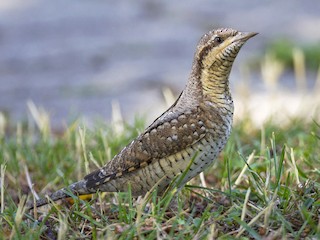
Dove vive Eurasian Wryneck?
Jynx torquilla
Visto un uccello? Identificalo all'istante con l'app Birdby
Apri l'appEurasian Wryneck vive in habitat e regioni specifiche. Sapere dove e quando guardare migliora le possibilità di un avvistamento riuscito.
Biomi
Temperate forests, woodlands, orchards, parks, gardens, and open country with scattered trees.
Areale geografico
Breeds across most of Europe and temperate Asia, from the UK and Scandinavia east to Japan. Winters in sub-Saharan Africa and parts of South Asia.
Ambienti preferiti
Prefers open deciduous or mixed woodlands with old trees, orchards, large gardens, and parkland, especially those with a good supply of ants and suitable nesting cavities. Avoids dense, unbroken forest.
Fascia altitudinale
Typically found from sea level up to 2,000 meters, occasionally higher in some parts of its range.
Dove guardare
Orchards and Vineyards
These habitats often provide old trees with suitable cavities and a good supply of ants.
Open Woodlands and Parkland
Look in areas with scattered mature trees, especially deciduous ones, and clearings where ants are abundant.
Large Gardens and Allotments
Well-established gardens with old fruit trees or decaying wood can attract them, particularly during migration.
Forest Edges and Clearings
They prefer the interface between forest and open areas rather than dense forest interiors.
Consigli sul campo
- Listen for its call. The Wryneck's distinctive, repetitive call is often the easiest way to locate it, especially during the breeding season. They can be surprisingly difficult to spot due to their camouflage.
- Scan tree trunks and branches. While they forage on the ground, they also climb trees. Look for them moving slowly, probing crevices with their beak.
- Check old woodpecker holes. Since they don't excavate their own nests, they rely on existing cavities. Observing old woodpecker holes in spring might reveal a Wryneck pair.
- Be patient and observant. Their cryptic plumage and quiet movements make them challenging to find. Patience and careful observation of subtle movements are key.
- Look for ant activity. As their primary food source is ants, areas with high ant populations are good places to search.
Migrazione
Long-distance migratory species. European populations migrate south to sub-Saharan Africa, while Asian populations winter in South Asia. They are one of the earliest passerine migrants to leave their breeding grounds in late summer/early autumn and return in spring.
Esplora Eurasian Wryneck
Identifica uccelli ovunque
Gratis su iOS, Android e Web. Identificazione per foto e suono, database completo e la tua lista personale.