
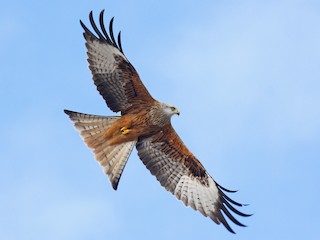
Dove vive Red Kite?
Milvus milvus
Visto un uccello? Identificalo all'istante con l'app Birdby
Apri l'appRed Kite vive in habitat e regioni specifiche. Sapere dove e quando guardare migliora le possibilità di un avvistamento riuscito.
Biomi
Woodlands, open country, farmland, pastures, river valleys, and sometimes suburban areas.
Areale geografico
Primarily Western Palearctic, ranging from Western Europe (including the UK, France, Spain, Germany) east to parts of Central Europe, and south to parts of North Africa. Strongholds are in Spain, France, and Germany, with successful reintroduction programs in the UK and Ireland. A distinct subspecies, Milvus milvus fasciicauda, was formerly recognized on the Cape Verde Islands but is now extinct.
Ambienti preferiti
Mosaic landscapes of deciduous or mixed woodlands for nesting, interspersed with open areas for foraging. Often associated with human activity, including agricultural land and even urban fringes where food sources are available.
Fascia altitudinale
Typically found from sea level up to 1,500 meters (5,000 feet), occasionally higher in mountainous regions.
Dove guardare
Woodlands and Forest Edges
Look for them nesting or roosting in tall trees, especially deciduous or mixed woodlands adjacent to open areas.
Open Farmland and Pastures
Often seen soaring over agricultural fields, meadows, and pastures while foraging for carrion or small prey.
River Valleys and Floodplains
These areas provide a good mix of foraging habitat and nesting trees.
Roadsides
Frequently seen scavenging roadkill, so keep an eye out along rural roads.
Consigli sul campo
- Scan the Sky. Red Kites spend a lot of time soaring. Look up, especially on sunny days, for their distinctive silhouette and flight pattern.
- Look for Communal Roosts. In winter, Red Kites often gather in large communal roosts. Finding one can offer spectacular views of many individuals.
- Visit Reintroduction Areas. In countries like the UK, areas where Red Kites have been reintroduced (e.g., Chilterns, Galloway) are excellent places to see them.
- Listen for Calls. Their distinctive 'pee-wee-ooo' whistle can often alert you to their presence before you see them.
Migrazione
Populations vary in migratory behavior. Northern and eastern European populations are largely migratory, moving south and west for the winter. Western and southern European populations are largely resident or undertake short-distance dispersal. British and French populations are mostly resident. Migrants typically move between September-November and return March-April.
Esplora Red Kite
Identifica uccelli ovunque
Gratis su iOS, Android e Web. Identificazione per foto e suono, database completo e la tua lista personale.