
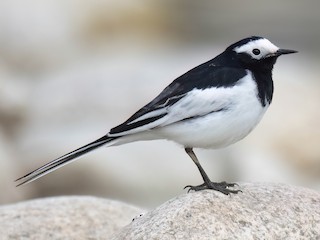
Dove vive White Wagtail?
Motacilla alba
Visto un uccello? Identificalo all'istante con l'app Birdby
Apri l'appWhite Wagtail vive in habitat e regioni specifiche. Sapere dove e quando guardare migliora le possibilità di un avvistamento riuscito.
Biomi
Temperate grasslands, urban and suburban areas, agricultural lands, wetlands, coastal areas.
Areale geografico
Widespread across Eurasia, from Western Europe to Eastern Asia, including parts of North Africa and Alaska. Breeding range extends from the Arctic Circle south to the Mediterranean and Himalayas. Winters in southern Europe, Africa, and South Asia.
Ambienti preferiti
Open, short-grass areas, often near water bodies (rivers, lakes, ponds), human settlements (towns, villages, farms), car parks, sports fields, and industrial areas. They prefer disturbed or artificial habitats with scattered vegetation and bare ground for foraging.
Fascia altitudinale
Sea level up to 3,000 meters in some mountainous regions, though typically found at lower elevations.
Dove guardare
Urban and Suburban Areas
Parks, gardens, car parks, industrial estates, and residential areas, especially where there are open grassy patches and buildings for nesting.
Agricultural Land
Fields, pastures, and farmyards, where they can forage for insects disturbed by livestock or machinery.
Water Bodies
Riverbanks, lake shores, pond edges, and coastal areas, as they often forage for aquatic insects.
Open Ground
Any open, short-grass or bare ground areas, including sports fields, airfields, and construction sites.
Consigli sul campo
- Look for movement. Their constant tail-wagging and darting movements on the ground make them quite conspicuous, even from a distance.
- Listen for calls. Their distinctive 'chi-tsip' call is often heard before the bird is seen, especially when they are flying overhead.
- Check open, disturbed areas. Unlike many passerines, they thrive in human-modified landscapes. Focus your search on areas with short grass, pavement, or bare earth.
- Observe communal roosts. In autumn and winter, look for large flocks gathering at dusk in urban trees or reedbeds to roost.
Migrazione
Many populations are migratory, moving south for the winter. Northern and eastern populations are generally more migratory than western and southern ones. They migrate during the day, often in loose flocks. Some populations in milder climates (e.g., Western Europe) are resident or partially migratory.
Esplora White Wagtail
Identifica uccelli ovunque
Gratis su iOS, Android e Web. Identificazione per foto e suono, database completo e la tua lista personale.