
Come identificare Western Yellow Wagtail
Motacilla flava
Visto un uccello? Identificalo all'istante con l'app Birdby
Apri l'appPer identificare correttamente Western Yellow Wagtail (Motacilla flava), controlla ciascuna di queste caratteristiche. Gli uccelli possono essere complicati da riconoscere, perché comportamento, habitat e canto spesso confermano ciò che una sola foto non può.
Dimensioni a colpo d'occhio
- Lunghezza
- 15-16 cm
- Apertura alare
- 23-27 cm
- Peso
- 12-26 g
Caratteristiche fisiche da controllare
- 1
Piumaggio
Colorazione e disegno generale del piumaggio.
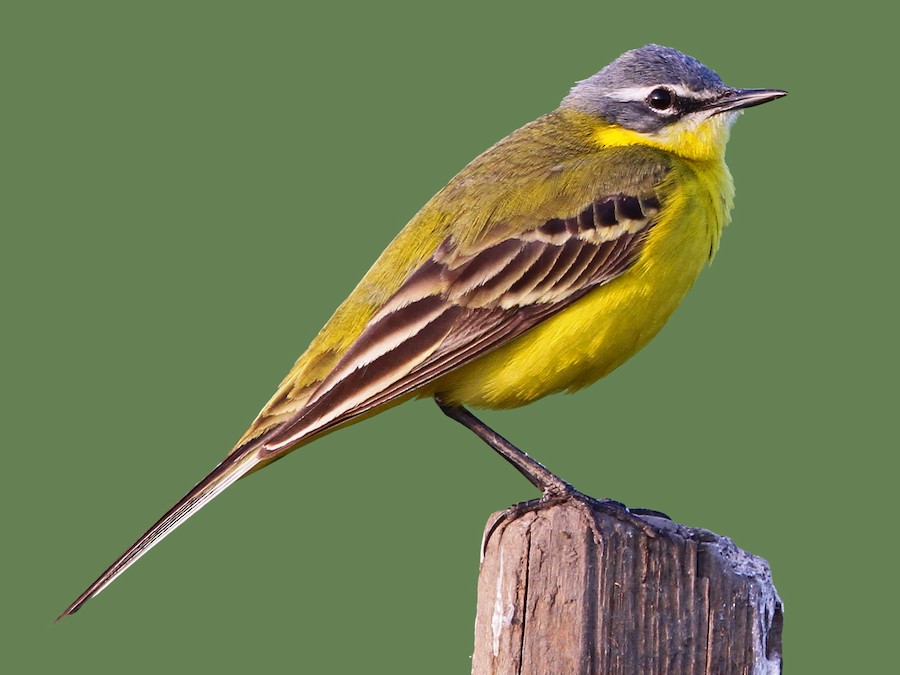
Highly variable depending on subspecies and sex. Generally, males in breeding plumage have bright yellow underparts, olive-green upperparts, and a variable head pattern (grey, blue-grey, or green with white supercilium, depending on subspecies). Females are duller, with paler yellow underparts and more olive-brown upperparts. Non-breeding plumage is duller overall, with less vibrant yellow and more brownish tones.
- 2
Forma del becco
Forma e colore del becco, un segno di campo chiave.
Slender, pointed, and dark (blackish-brown).
- 3
Colore degli occhi
Colore dell'iride e segni distintivi sugli occhi.
Dark brown.
- 4
Colore delle zampe
Colore di zampe e piedi.
Dark grey to black.
- 5
Caratteristiche distintive
Tratti distintivi che separano questa specie.
Long, constantly wagging tail; slender build; predominantly yellow underparts (especially in males); distinctive head patterns varying by subspecies. The flight is undulating.
- 6
Aspetto giovanile
Come i giovani si differenziano dagli adulti.
Juveniles are duller and browner overall, with buffy-white underparts, often with a yellowish wash on the flanks and vent. They lack the bright yellow of adults and have a less distinct supercilium. They gradually acquire adult plumage through successive molts.
- 7
Cambiamenti stagionali
Variazione del piumaggio tra stagione riproduttiva e non.
Adults undergo a complete post-breeding molt and a partial pre-breeding molt. Breeding plumage is brighter and more contrasting, particularly in males, with vibrant yellow and distinct head patterns. Non-breeding plumage is duller, with more olive-brown tones and less intense yellow.
- 8
Dimorfismo sessuale
Differenze tra maschi e femmine.
Pronounced in breeding plumage, with males being much brighter and having more distinct head patterns. Females are duller, with less intense yellow and more muted head markings. In non-breeding plumage, differences are less obvious.
Segni di campo chiave
- Overall Coloration. Look for bright yellow underparts, especially in breeding males. Females and immatures are duller but usually retain some yellow wash.
- Head Pattern. Pay close attention to the head. Subspecies vary greatly: some have a blue-grey head with a white supercilium (e.g., M. f. flava), others a dark grey head (e.g., M. f. thunbergi), or a green head (e.f., M. f. flavissima). This is key for subspecies identification.
- Tail Wagging. Observe its characteristic constant tail wagging, a trait shared with other wagtails but a good general identifier for the family.
- Habitat. Search in open, damp, grassy areas, especially near water or livestock. This species is rarely found in woodlands.
- Call. Listen for its sharp 'tseep' or 'psit' call, often given in flight.
Esplora Western Yellow Wagtail
Identifica uccelli ovunque
Gratis su iOS, Android e Web. Identificazione per foto e suono, database completo e la tua lista personale.