
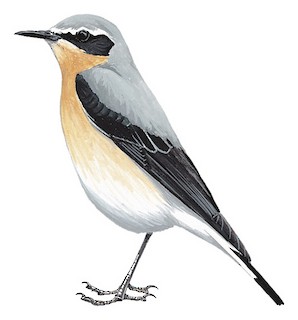
Dove vive Northern Wheatear?
Oenanthe oenanthe
Visto un uccello? Identificalo all'istante con l'app Birdby
Apri l'appNorthern Wheatear vive in habitat e regioni specifiche. Sapere dove e quando guardare migliora le possibilità di un avvistamento riuscito.
Biomi
Tundra, moorland, rocky outcrops, open grasslands, steppes, semi-deserts, and agricultural land with sparse vegetation.
Areale geografico
Breeds across a vast range in the Northern Hemisphere, including Europe, Asia, Greenland, eastern Canada, and Alaska. Winters in sub-Saharan Africa, Arabia, and parts of India.
Ambienti preferiti
Open, treeless or sparsely vegetated areas with scattered rocks, boulders, or low walls that provide perching sites and nesting crevices. Often found in disturbed areas, quarries, and coastal dunes.
Fascia altitudinale
From sea level up to 3,000 meters in mountainous regions during breeding, and similar ranges in wintering grounds.
Dove guardare
Open, Rocky Habitats
Look in areas with sparse vegetation, scattered rocks, boulders, scree slopes, and stone walls, particularly in upland or coastal regions.
Moorland and Tundra
In northern breeding grounds, they are common in open moorland, heathland, and tundra environments.
Agricultural and Disturbed Land
During migration, they can be found in open fields, pastures, quarries, and other disturbed open areas.
Consigli sul campo
- Scan prominent perches. Wheatears often perch conspicuously on rocks, fence posts, or low bushes to survey their surroundings for prey or intruders.
- Look for tail flicking. Their characteristic tail-flicking behavior is a good indicator, even from a distance.
- Observe ground foraging. Watch for birds running and hopping on the ground, making short dashes to catch insects.
- Listen for calls. Their sharp 'chack' call can often draw attention to their presence before you see them.
- Check migration hotspots. During spring and autumn migration, coastal areas, islands, and open habitats along migratory routes can host large numbers of wheatears.
Migrazione
Long-distance migratory species. European and Asian populations winter in Africa, while North American populations winter in Africa. Known for one of the longest migratory journeys of any passerine, with some individuals traveling from Arctic Canada to Africa.
Esplora Northern Wheatear
Identifica uccelli ovunque
Gratis su iOS, Android e Web. Identificazione per foto e suono, database completo e la tua lista personale.