
Come identificare Great Cormorant
Phalacrocorax carbo
Visto un uccello? Identificalo all'istante con l'app Birdby
Apri l'appPer identificare correttamente Great Cormorant (Phalacrocorax carbo), controlla ciascuna di queste caratteristiche. Gli uccelli possono essere complicati da riconoscere, perché comportamento, habitat e canto spesso confermano ciò che una sola foto non può.
Dimensioni a colpo d'occhio
- Lunghezza
- 80-100 cm
- Apertura alare
- 130-160 cm
- Peso
- 1.5-5.3 kg
Caratteristiche fisiche da controllare
- 1
Piumaggio
Colorazione e disegno generale del piumaggio.
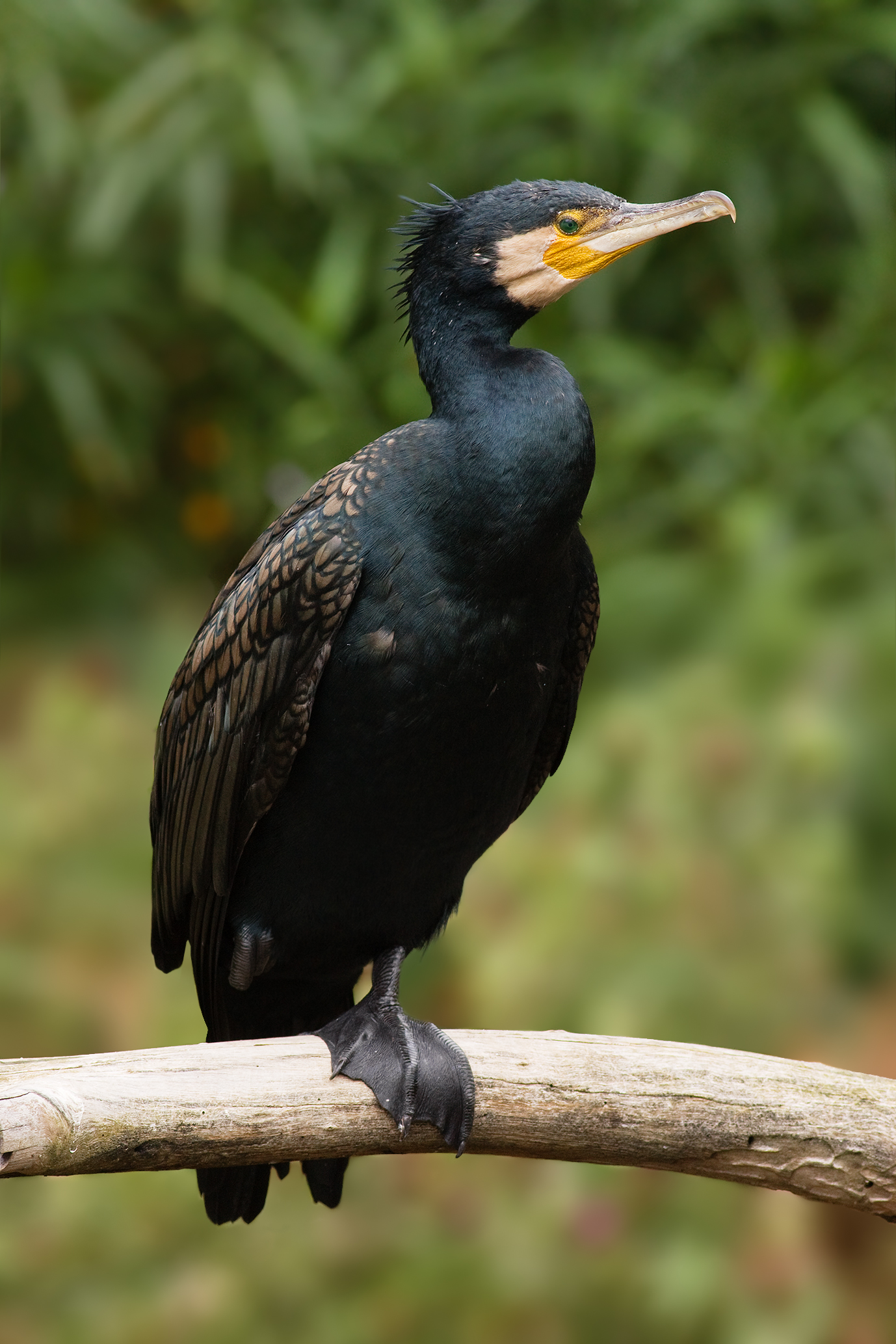
Adults are predominantly glossy black with a metallic green sheen, especially on the back and wings. The throat and cheeks are white, bordered by a yellow gular patch. During breeding season, adults develop white patches on the flanks and fine white streaking on the head and neck.
- 2
Forma del becco
Forma e colore del becco, un segno di campo chiave.
Long, slender, and hooked at the tip, dark grey to black. The upper mandible is slightly longer than the lower.
- 3
Colore degli occhi
Colore dell'iride e segni distintivi sugli occhi.
Bright green, surrounded by a bare yellow patch of skin.
- 4
Colore delle zampe
Colore di zampe e piedi.
Black, with fully webbed feet.
- 5
Caratteristiche distintive
Tratti distintivi che separano questa specie.
Large size, dark plumage, prominent yellow gular patch, and the characteristic habit of perching with wings spread to dry. The hooked bill is also distinctive.
- 6
Aspetto giovanile
Come i giovani si differenziano dagli adulti.
Juveniles are browner overall, with a paler, often whitish, belly and throat. The yellow gular patch is less developed, and they lack the white flank patches and head streaking of breeding adults. They gradually acquire adult plumage over 2-3 years.
- 7
Cambiamenti stagionali
Variazione del piumaggio tra stagione riproduttiva e non.
During the breeding season, adults develop a prominent white patch on each flank (thigh patch) and fine white filoplumes on the head and neck. These features are lost outside the breeding season.
- 8
Dimorfismo sessuale
Differenze tra maschi e femmine.
Males are generally slightly larger than females, but plumage is identical.
Segni di campo chiave
- Size and Shape. Look for a large, heavy-bodied waterbird with a long neck, stout body, and a long, hooked bill. Appears somewhat 'reptilian'.
- Plumage (Adult). Glossy black plumage with a metallic sheen. Distinctive white throat and cheek patch, bordered by a yellow-orange gular skin. Breeding adults show white flank patches and fine white head streaking.
- Plumage (Juvenile). Browner overall with a paler, often whitish, belly and throat. Lacks the strong yellow gular patch and breeding adornments of adults.
- Behavior. Often seen diving for fish, then perching with wings outstretched to dry. Flies with strong, direct wingbeats, often in V-formation.
- Habitat. Found in both freshwater (large lakes, rivers) and coastal marine environments.
Esplora Great Cormorant
Identifica uccelli ovunque
Gratis su iOS, Android e Web. Identificazione per foto e suono, database completo e la tua lista personale.