
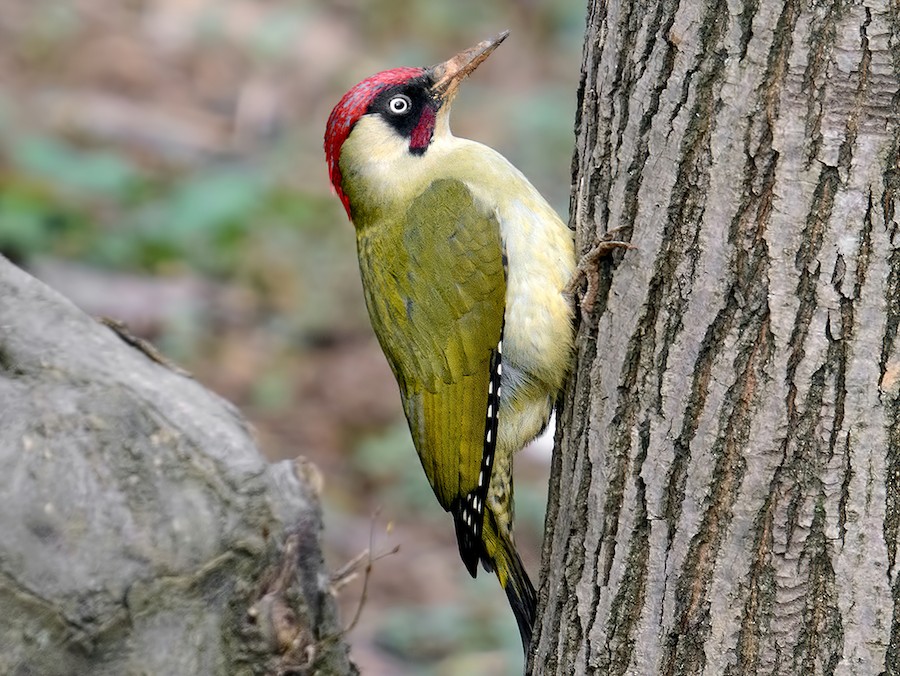
Dove vive European Green Woodpecker?
Picus viridis
Visto un uccello? Identificalo all'istante con l'app Birdby
Apri l'appEuropean Green Woodpecker vive in habitat e regioni specifiche. Sapere dove e quando guardare migliora le possibilità di un avvistamento riuscito.
Biomi
Temperate forests, woodlands, parks, orchards, large gardens, and open country with scattered trees.
Areale geografico
Widespread across most of Europe, excluding Ireland, northern Scandinavia, and parts of southern Europe (e.g., southern Iberian Peninsula, Mediterranean islands). Extends eastward into western Asia.
Ambienti preferiti
Prefers mosaic habitats with a mix of mature deciduous trees (especially oaks, ashes, poplars) for nesting and roosting, and open grassy areas (pastures, lawns, heathland) for foraging. Requires soft wood for excavating nest holes.
Fascia altitudinale
Sea level up to 2000 meters, occasionally higher in some mountain ranges.
Dove guardare
Woodlands and Forests
Look in mature deciduous or mixed woodlands, especially those with open areas and old trees suitable for nesting.
Parks and Gardens
Large parks, orchards, and extensive gardens with mature trees and lawns are excellent places to find them, as these often provide good foraging grounds for ants.
Pastures and Heathland
Areas with scattered trees bordering open grasslands or heathland are prime foraging habitats.
Consigli sul campo
- Listen for its call. The 'yaffle' call is often the first indication of its presence. Learn to recognize it, as the bird can be quite shy.
- Scan the ground. Unlike many other woodpeckers, the Green Woodpecker spends a lot of time on the ground. Look for it foraging on lawns, pastures, or forest floors.
- Look for ant nests. They are often found near large ant nests, which are their primary food source. Observe areas with disturbed soil or small holes where they have been digging.
- Be patient and quiet. They can be wary. Move slowly and quietly, and use binoculars to observe from a distance.
- Early morning or late afternoon. These times are often best for observing them when they are most active in foraging.
Migrazione
Mostly sedentary throughout its range, with adults rarely moving far from their breeding territories. Juveniles may disperse short distances after fledging.
Esplora European Green Woodpecker
Identifica uccelli ovunque
Gratis su iOS, Android e Web. Identificazione per foto e suono, database completo e la tua lista personale.