
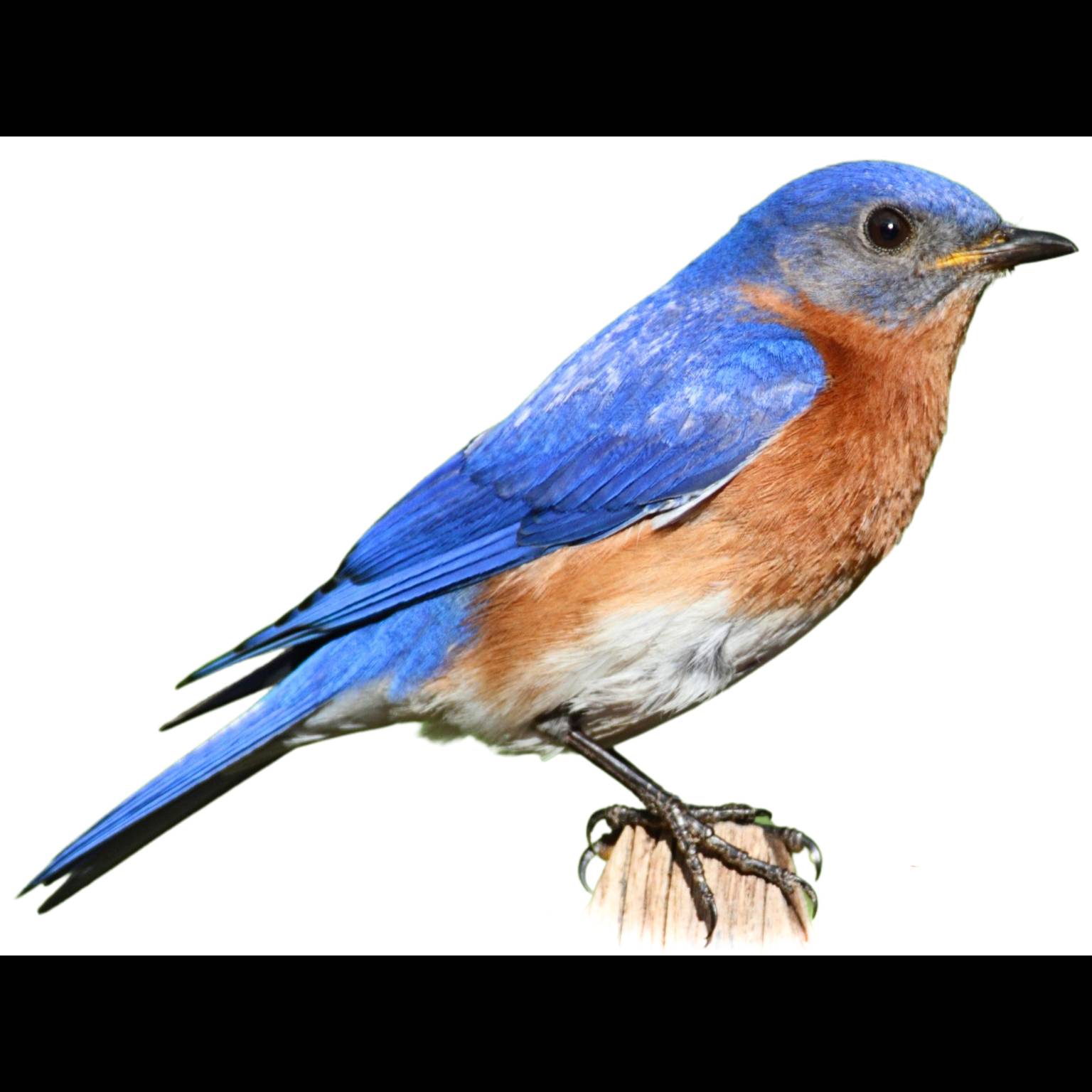
Come identificare Eastern Bluebird
Sialia sialis
Visto un uccello? Identificalo all'istante con l'app Birdby
Apri l'appPer identificare correttamente Eastern Bluebird (Sialia sialis), controlla ciascuna di queste caratteristiche. Gli uccelli possono essere complicati da riconoscere, perché comportamento, habitat e canto spesso confermano ciò che una sola foto non può.
Dimensioni a colpo d'occhio
- Lunghezza
- 16-21 cm (6.3-8.3 in)
- Apertura alare
- 30-32 cm (11.8-12.6 in)
- Peso
- 27-32 g (0.95-1.13 oz)
Caratteristiche fisiche da controllare
- 1
Piumaggio
Colorazione e disegno generale del piumaggio.
Males are brilliant sky-blue on the back, head, and wings, with a rusty orange throat and breast, and a white belly. Females are duller, with grayish-blue on the back and wings, a paler orange-brown breast, and a white belly. Juveniles are grayish-brown with white spotting on the back and breast, and blue only on the wings and tail.
- 2
Forma del becco
Forma e colore del becco, un segno di campo chiave.
Small, slender, pointed black beak, typical of an insectivorous passerine.
- 3
Colore degli occhi
Colore dell'iride e segni distintivi sugli occhi.
Dark brown
- 4
Colore delle zampe
Colore di zampe e piedi.
Blackish-gray
- 5
Caratteristiche distintive
Tratti distintivi che separano questa specie.
The combination of bright blue upperparts, rusty breast, and white belly is distinctive for males. Females are identified by their more subdued blue and rusty tones. Their upright posture when perched is also characteristic.
- 6
Aspetto giovanile
Come i giovani si differenziano dagli adulti.
Juveniles are mottled gray-brown on the back and breast, with faint streaking. They show hints of blue on the wings and tail, which intensifies with subsequent molts. Their bellies are whitish.
- 7
Cambiamenti stagionali
Variazione del piumaggio tra stagione riproduttiva e non.
Plumage does not change significantly between breeding and non-breeding seasons. However, fresh fall plumage may appear slightly brighter and more vibrant due to less feather wear.
- 8
Dimorfismo sessuale
Differenze tra maschi e femmine.
Pronounced. Males are much brighter blue and have richer orange coloration than females. Females have duller blue and paler orange-brown.
Segni di campo chiave
- Coloration (Male). Look for the brilliant sky-blue on the back, head, and wings, contrasting with the rusty orange throat and breast, and white belly. This combination is unique among eastern North American birds.
- Coloration (Female). Observe the duller grayish-blue on the back and wings, with a paler orange-brown breast. The overall shape and habitat preference will help confirm identification.
- Posture and Perching. They often perch upright on wires, fence posts, or dead branches in open areas, scanning the ground for insects. This 'sentinel' behavior is characteristic.
- Flight Style. Watch for their direct, slightly undulating flight, often involving short hovers before dropping to the ground to catch prey.
- Vocalization. Listen for their soft, warbling 'chur-lee' song or their gentle 'tu-a-wee' contact call. These sounds are distinctive and often heard before the bird is seen.
- Habitat. They prefer open woodlands, orchards, pastures, and areas with scattered trees and short grass, rather than dense forests or urban centers.
Esplora Eastern Bluebird
Identifica uccelli ovunque
Gratis su iOS, Android e Web. Identificazione per foto e suono, database completo e la tua lista personale.