
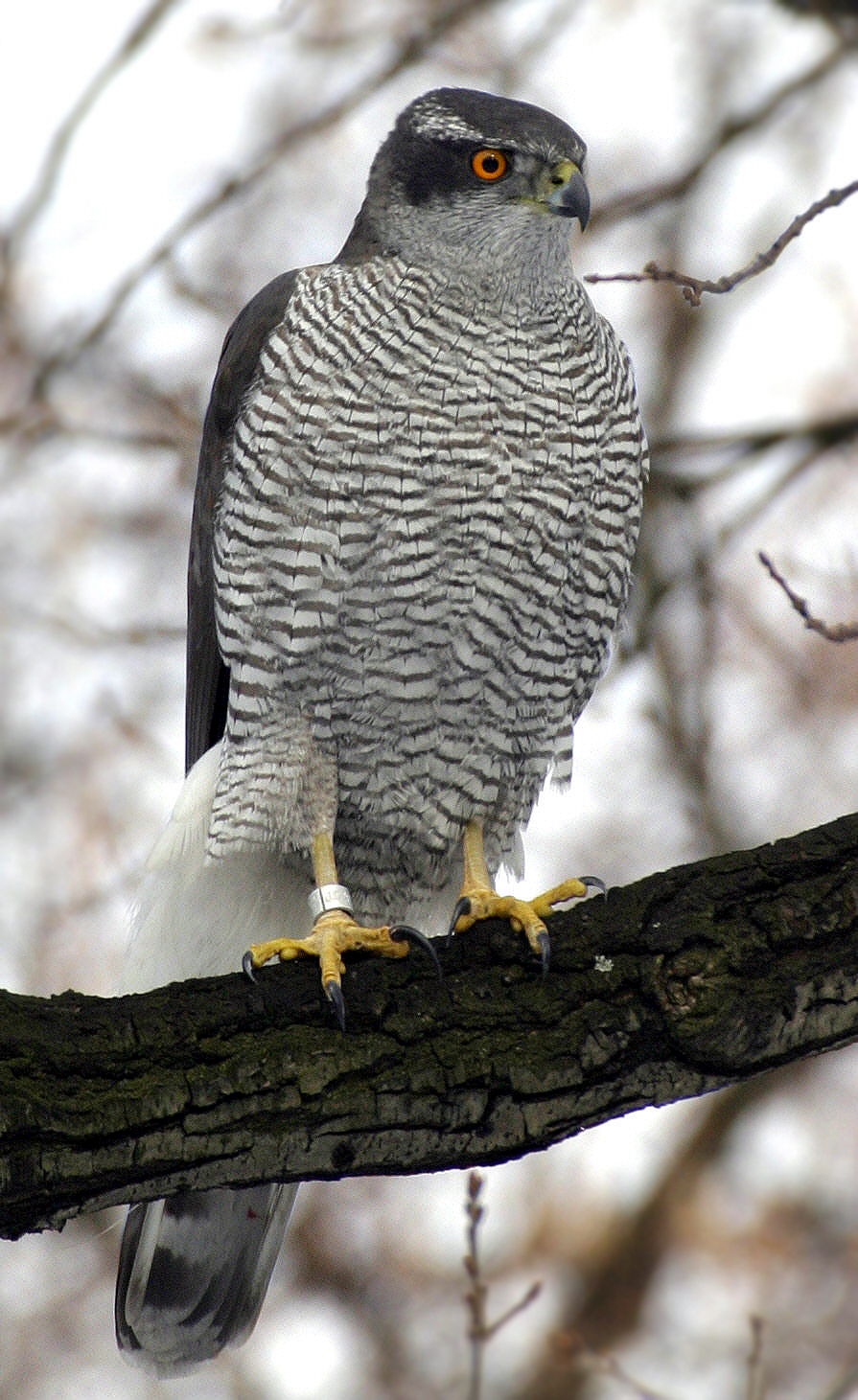
Where does the Northern Goshawk live?
Accipiter gentilis
Spotted a bird? Identify it instantly with the Birdby app
Open the appThe Northern Goshawk lives in specific habitats and regions. Knowing where, and when, to look improves your chances of a successful sighting.
Biomes
Temperate and boreal forests, woodlands.
Geographic range
Widespread across the Northern Hemisphere, including North America, Europe, and Asia. In Europe, it is found from Scandinavia south to the Mediterranean, and east across Russia. In North America, it ranges from Alaska and Canada south through the western mountains to Mexico and across the northern states.
Preferred environments
Mature, extensive deciduous, coniferous, or mixed forests with a dense canopy and open understory, often near clearings or forest edges for hunting. Requires large, undisturbed areas for breeding.
Elevation range
Sea level up to 3,000 meters (10,000 ft), depending on geographic location and availability of suitable forest habitat.
Where to look
Mature Forests
Look in large, undisturbed tracts of mature deciduous, coniferous, or mixed forests. They prefer areas with a dense canopy.
Forest Edges and Clearings
While they nest deep in forests, they often hunt along forest edges, clearings, or near open areas where prey is abundant.
Mountainous Regions
In some parts of their range, they can be found in forested mountainous terrain.
Field tips
- Patience and Stealth. Goshawks are elusive and wary. Move quietly and slowly through suitable forest habitats. They are often detected by their calls or by observing their powerful flight.
- Look for Signs. Search for large stick nests in tall trees, especially during the breeding season. Look for 'plucking posts' (perches where they pluck feathers from prey) or prey remains below potential roosts.
- Listen for Calls. During the breeding season (spring and early summer), listen for their distinctive 'kek-kek-kek' calls, which can indicate a nearby nest or agitated bird.
- Early Morning/Late Afternoon. These are often the most active hunting times for Goshawks, increasing your chances of observation.
- Binoculars and Scope. Essential for detailed observation, especially for distinguishing plumage features and confirming identification from a distance.
Migration
Generally a resident species throughout much of its range. Northern populations may undertake short-distance, irruptive migrations in response to prey scarcity or harsh winter conditions. Juveniles disperse more widely than adults.
Explore the Northern Goshawk
Identify birds anywhere
Free on iOS, Android, and Web. Photo & sound identification, full species database, and your personal life list.