
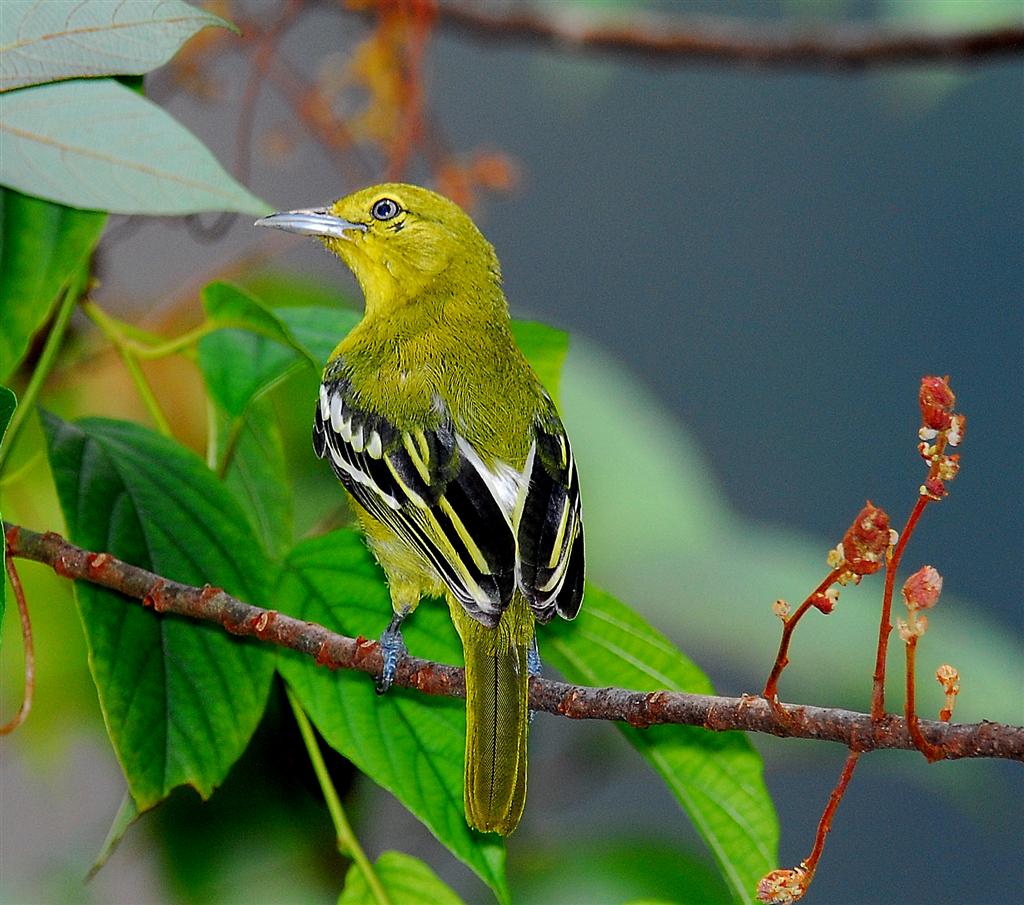
Where does the Common Iora live?
Aegithina tiphia
Spotted a bird? Identify it instantly with the Birdby app
Open the appThe Common Iora lives in specific habitats and regions. Knowing where, and when, to look improves your chances of a successful sighting.
Biomes
Tropical and subtropical moist broadleaf forests, dry forests, mangroves, scrublands, plantations, gardens, and urban parks.
Geographic range
Indian subcontinent (India, Sri Lanka, Bangladesh, Nepal, Bhutan), Southeast Asia (Myanmar, Thailand, Laos, Cambodia, Vietnam, Malaysia, Singapore, Indonesia, Brunei, Philippines).
Preferred environments
Open woodlands, forest edges, secondary growth, scrub, orchards, rubber and coconut plantations, large gardens, and urban green spaces with scattered trees and shrubs.
Elevation range
Sea level up to approximately 1,500 meters (occasionally higher).
Where to look
Gardens and Parks
Common in well-vegetated gardens, urban parks, and tree-lined avenues, especially those with flowering shrubs and fruit trees.
Open Woodlands and Forest Edges
Frequently found in deciduous and evergreen open woodlands, secondary forests, and the edges of denser forests.
Plantations and Orchards
Abundant in agricultural areas such as rubber, coconut, and fruit plantations.
Scrublands
Can be found in areas with dense scrub and scattered trees.
Field tips
- Listen for calls. Their distinctive calls and songs are often the first indication of their presence. Learn to recognize the 'whee-tee' call and the melodious song.
- Look in the canopy and mid-story. They forage actively in the foliage of trees and shrubs, often at mid-level or higher. Scan branches and leaves carefully.
- Observe active foraging. Watch for small, active birds gleaning insects, often performing acrobatic moves like hanging upside down.
- Visit during breeding season. Males are most conspicuous during the breeding season due to their brighter plumage and frequent singing, including the 'parachute display'.
Migration
Resident throughout its range, with no significant migratory movements. Local movements may occur in response to food availability.
Explore the Common Iora
Identify birds anywhere
Free on iOS, Android, and Web. Photo & sound identification, full species database, and your personal life list.