
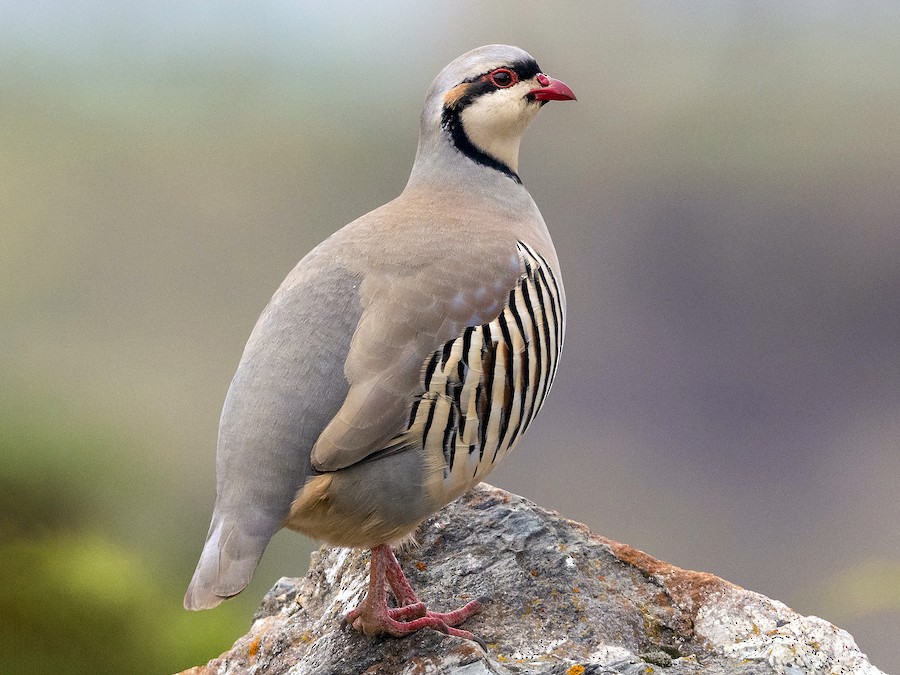
Where does the Chukar Partridge live?
Alectoris chukar
Spotted a bird? Identify it instantly with the Birdby app
Open the appThe Chukar Partridge lives in specific habitats and regions. Knowing where, and when, to look improves your chances of a successful sighting.
Biomes
Arid to semi-arid mountainous regions, rocky slopes, grasslands, and scrublands.
Geographic range
Native to Asia, from Turkey eastward through the Himalayas to Nepal and China. Introduced widely in North America (especially the western United States), New Zealand, and Hawaii, where it has established self-sustaining populations.
Preferred environments
Steep, rocky hillsides with sparse vegetation, brushy canyons, and open rangelands. Requires access to water sources.
Elevation range
Typically found at elevations between 200 to 4,000 meters (650 to 13,000 feet), preferring higher altitudes in hotter climates.
Where to look
Rocky Slopes
Search steep, rocky hillsides and canyon walls, particularly those with sparse vegetation and scrub. They blend in well with the rocks.
Water Sources
Chukars need regular access to water, especially in arid environments. Look near springs, seeps, and waterholes, particularly during dry seasons.
Agricultural Edges
In some introduced ranges, they may be found at the edges of agricultural fields adjacent to suitable rocky habitat, where they can forage for grains.
Field tips
- Listen for Calls. Their loud, repetitive 'chukar' call is often the first indication of their presence. Listen at dawn and dusk, or when hiking in suitable habitat.
- Scan Steep Terrain. Use binoculars to scan rocky slopes, especially near the base of cliffs or along scree fields. They are experts at camouflage.
- Look for Movement. Chukars often run uphill when disturbed. Look for quick movements among rocks or vegetation. If flushed, watch their distinctive downhill flight.
- Visit Water Sources. During hot, dry periods, stake out known water sources in Chukar habitat. They will often come down to drink in the early morning or late afternoon.
Migration
Generally non-migratory. Some populations may undertake short altitudinal movements to lower elevations during harsh winter weather to find food and shelter.
Explore the Chukar Partridge
Identify birds anywhere
Free on iOS, Android, and Web. Photo & sound identification, full species database, and your personal life list.