
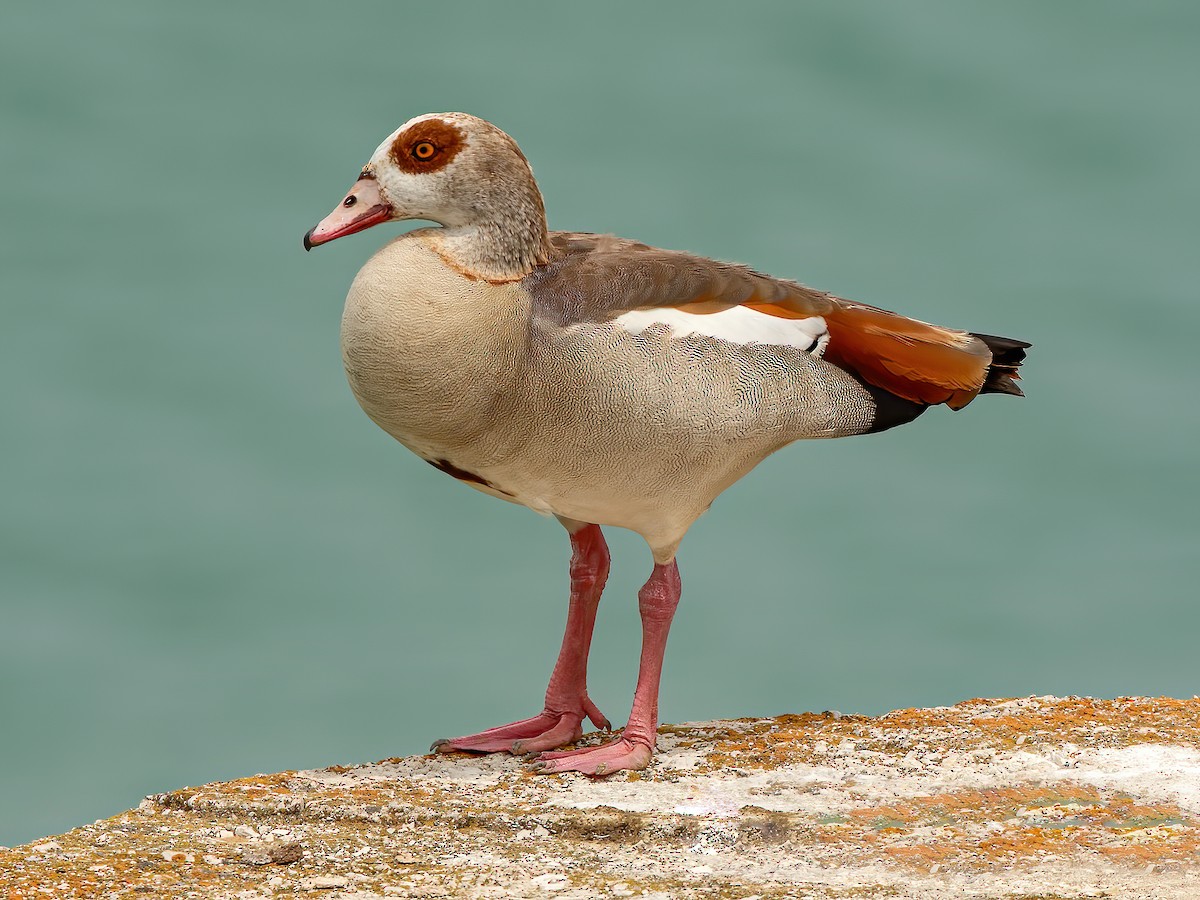
Where does the Egyptian Goose live?
Alopochen aegyptiaca
Spotted a bird? Identify it instantly with the Birdby app
Open the appThe Egyptian Goose lives in specific habitats and regions. Knowing where, and when, to look improves your chances of a successful sighting.
Biomes
Wetlands, grasslands, agricultural areas, urban parks, rivers, lakes, reservoirs, and coastal lagoons.
Geographic range
Native to sub-Saharan Africa and the Nile Valley. Introduced and established populations exist in Western Europe (especially the UK, Netherlands, Belgium, France, Germany), Florida (USA), and parts of the Middle East.
Preferred environments
Prefers open water bodies with grassy banks for grazing, often near trees for nesting. Adaptable to human-modified landscapes, including urban and suburban parks with ponds.
Elevation range
Typically found from sea level up to moderate elevations, generally below 2,000 meters (6,500 feet).
Where to look
Urban and Suburban Parks
Common in parks with ponds, lakes, or slow-moving rivers, especially in areas where they have been introduced and established.
Agricultural Lands
Often found grazing in fields adjacent to water bodies, particularly those growing grains or short grasses.
Wetlands and Reservoirs
Native and introduced populations thrive in various wetland habitats, including large lakes, reservoirs, and slow-moving rivers with vegetated banks.
Coastal Lagoons and Estuaries
Can be found in brackish water environments, especially in their native range.
Field tips
- Look for pairs or small family groups. During the breeding season, they are often seen in pairs with goslings. Outside of breeding, they may form larger flocks.
- Scan grassy banks near water. They are primarily grazers, so look for them feeding on short grass near the water's edge.
- Listen for their calls. Their distinctive calls, especially the female's loud honking, can often alert you to their presence before you see them.
- Observe flight patterns. If you see a goose-like bird flying, look for the striking white and green wing patches, which are unmistakable.
- Check elevated nesting sites. In urban areas, they may nest in unusual places like tree cavities or even on buildings, so keep an eye out for these elevated nests.
Migration
Generally resident throughout its native African range, though some local movements occur in response to water availability. Introduced populations are largely sedentary, but some dispersal of young birds can occur.
Explore the Egyptian Goose
Identify birds anywhere
Free on iOS, Android, and Web. Photo & sound identification, full species database, and your personal life list.