
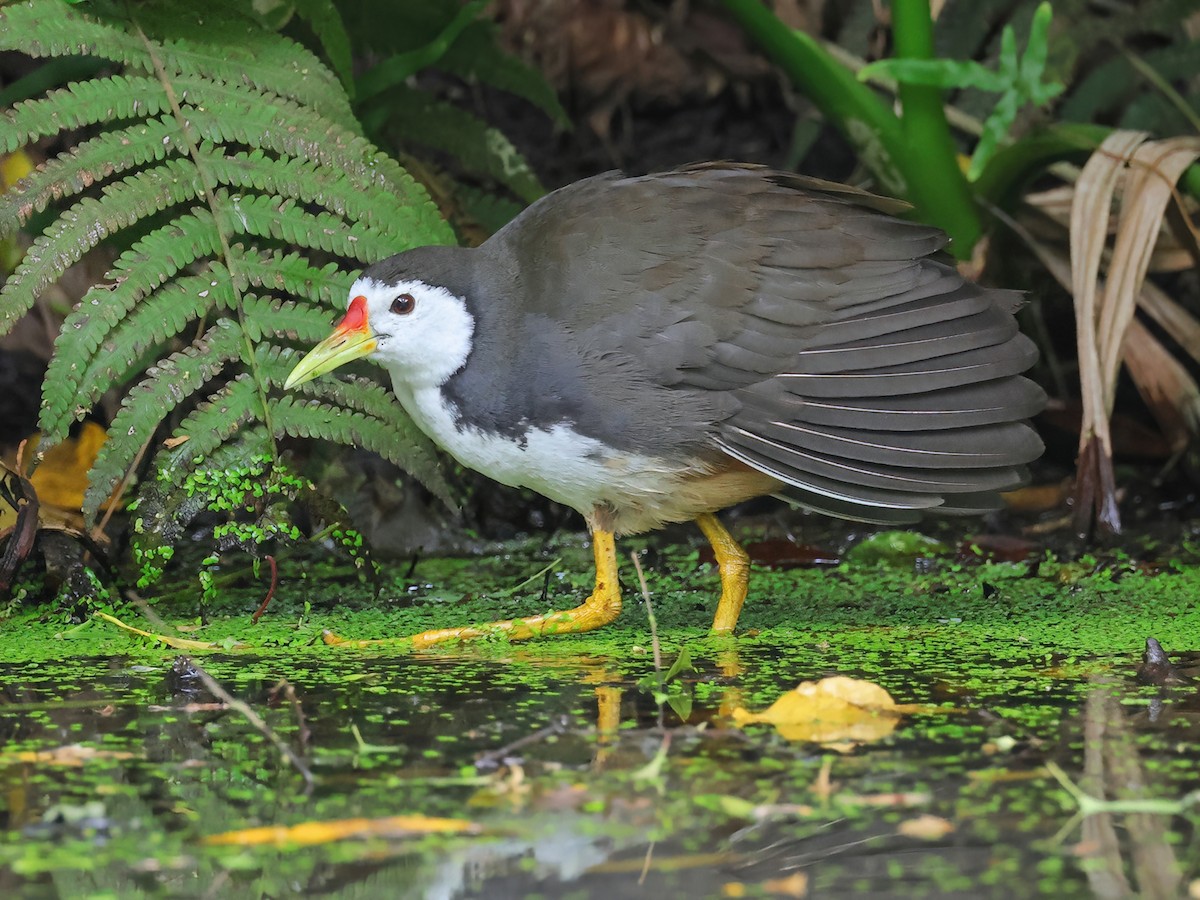
Where does the White-breasted Waterhen live?
Amaurornis phoenicurus
Spotted a bird? Identify it instantly with the Birdby app
Open the appThe White-breasted Waterhen lives in specific habitats and regions. Knowing where, and when, to look improves your chances of a successful sighting.
Biomes
Tropical and subtropical wetlands, including marshes, swamps, paddy fields, reed beds, mangroves, and dense vegetation near water bodies.
Geographic range
Widespread across much of Asia, from the Indian subcontinent, Sri Lanka, and Southeast Asia to southern China, Taiwan, the Philippines, and Indonesia. Resident throughout its range.
Preferred environments
Prefers areas with dense emergent vegetation (e.g., reeds, sedges, rushes) near calm or slow-moving freshwater or brackish water. Also common in cultivated areas like rice paddies, garden ponds, and ditches.
Elevation range
Primarily found in lowlands, typically up to 1,500 meters (about 4,900 feet), though occasionally higher in some areas.
Where to look
Freshwater Marshes
Look in areas with dense emergent vegetation such as reeds, sedges, and cattails along the edges of ponds, lakes, and slow-moving rivers.
Paddy Fields
Common in active and fallow rice paddies, especially where there are overgrown sections or ditches.
Swamps and Mangroves
Can be found in swampy forests and the fringes of mangrove ecosystems, particularly areas with freshwater influence.
Gardens and Parks
In urban or suburban areas, they may inhabit well-vegetated garden ponds, drainage ditches, and overgrown water features.
Field tips
- Listen for Calls. Their loud vocalizations are often the easiest way to detect their presence. Learn their distinctive 'krr-waak' call.
- Be Patient. They are secretive birds. Find a suitable patch of wetland vegetation and wait quietly. They may eventually emerge from cover.
- Scan Edges. Focus on the interface between water and dense vegetation. They often forage along these edges.
- Use Binoculars. Essential for clear views when they are partially obscured by vegetation.
- Visit at Crepuscular Hours. Dawn and dusk are often the best times for observing them as they are most active then.
Migration
Largely resident throughout its range. Some localized movements may occur in response to water levels or food availability. Northern populations (e.g., China) may undertake short-distance migrations to warmer regions during winter.
Explore the White-breasted Waterhen
Identify birds anywhere
Free on iOS, Android, and Web. Photo & sound identification, full species database, and your personal life list.