
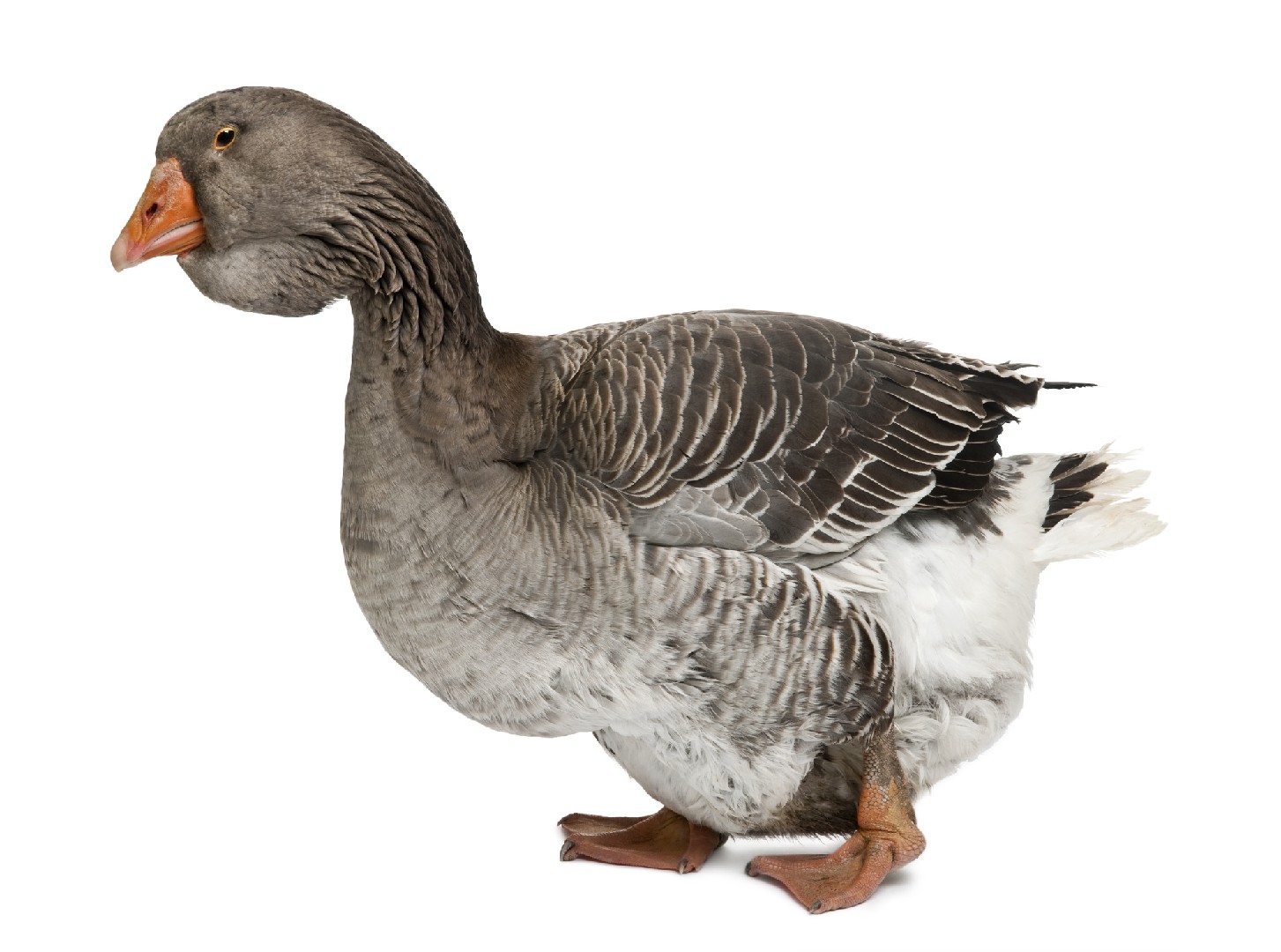
Where does the Domestic Goose live?
Anser anser domesticus
Spotted a bird? Identify it instantly with the Birdby app
Open the appThe Domestic Goose lives in specific habitats and regions. Knowing where, and when, to look improves your chances of a successful sighting.
Biomes
Anthropogenic landscapes, including farms, parks, suburban ponds, and agricultural areas. They are entirely dependent on human care or semi-feral populations near human settlements.
Geographic range
Worldwide, wherever humans have introduced them for agriculture or ornamental purposes. Originating from Europe and Asia, they are now globally distributed.
Preferred environments
Areas with access to fresh water (ponds, lakes, slow-moving rivers) for swimming and preening, and grassy areas for grazing. They thrive in environments where they are provided with shelter and food by humans.
Elevation range
Primarily found in lowlands and areas accessible to human habitation, typically from sea level up to moderate elevations where agriculture is practiced.
Where to look
Farms and Agricultural Areas
The most common place to find domestic geese, often kept for agricultural purposes.
Public Parks and Ponds
Many parks, especially in urban and suburban areas, have resident populations of domestic geese, often alongside ducks and other waterfowl.
Lakes and Rivers near Settlements
Feral or semi-feral populations can be found on bodies of water adjacent to human habitation.
Wildlife Sanctuaries and Zoos
Some sanctuaries or zoos may keep domestic breeds as part of their collection or for educational purposes.
Field tips
- Look for distinctive features. Pay close attention to bill knobs, dewlaps, and unusual plumage colors (like pure white) that are not typical of wild geese.
- Observe behavior. Note their interaction with humans; domestic geese are often less wary than wild species, or conversely, can be quite aggressive if territorial.
- Consider the context. If you see a goose in a park pond or on a farm, it is highly likely to be a domestic goose or a hybrid.
- Listen to vocalizations. Their loud honks and hisses are characteristic and can help distinguish them from other waterfowl.
Migration
Non-migratory. Domestic geese are resident wherever they are kept by humans. Feral populations may make local movements in search of food or water.
Explore the Domestic Goose
Identify birds anywhere
Free on iOS, Android, and Web. Photo & sound identification, full species database, and your personal life list.