
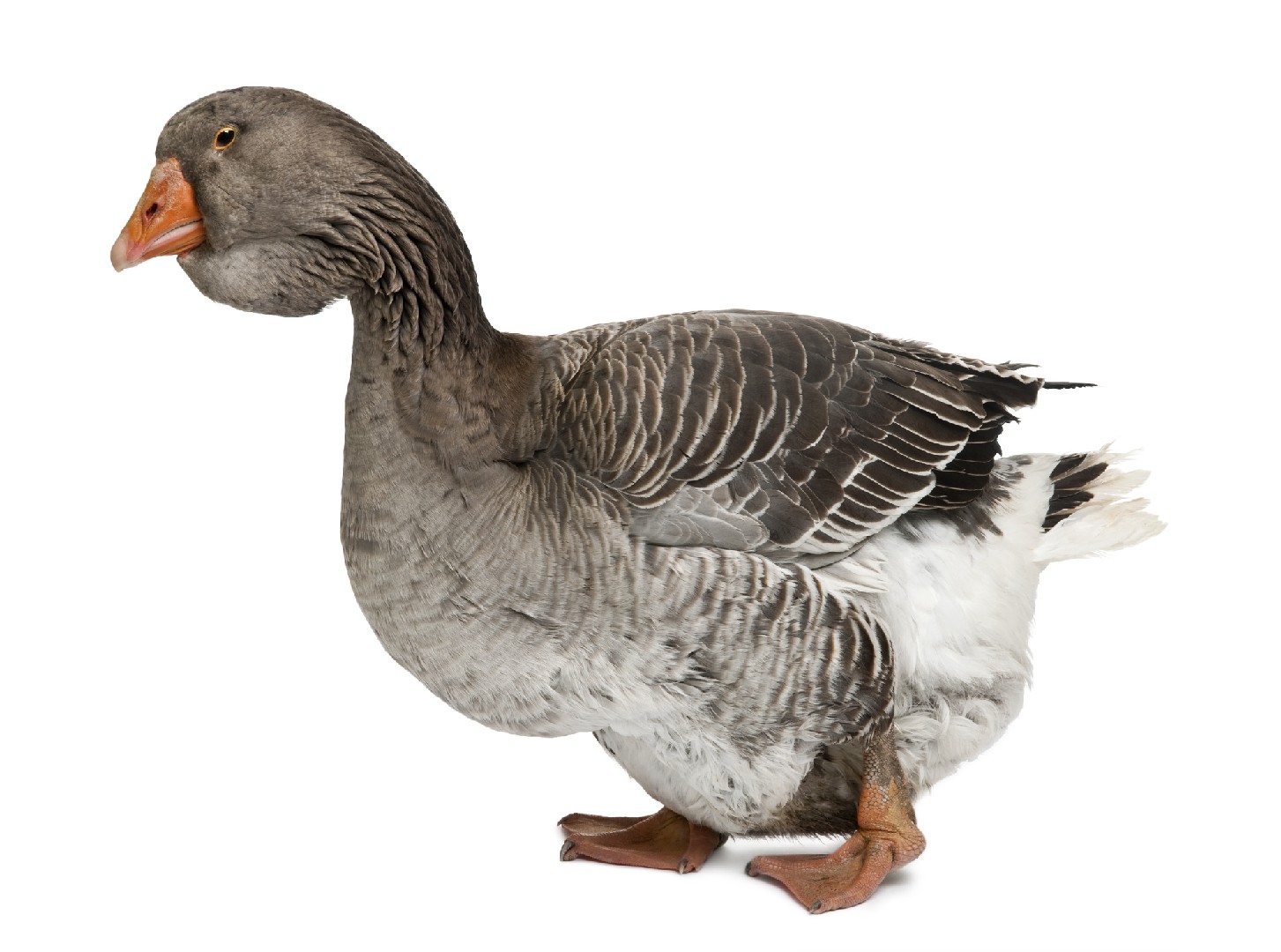
How to identify the Domestic Goose
Anser anser domesticus
Spotted a bird? Identify it instantly with the Birdby app
Open the appTo correctly identify the Domestic Goose (Anser anser domesticus), check each of these features. Birds can be tricky: habit, habitat, and call often confirm a sighting that a single photo cannot.
Size at a glance
- Length
- 70-100 cm (28-39 in)
- Wingspan
- 130-180 cm (51-71 in)
- Weight
- 3-15 kg (6.6-33 lbs), highly variable by breed
Physical features to check
- 1
Plumage
Overall feather coloration and pattern.
Highly variable depending on the breed. Common colors include pure white, grey (resembling wild Greylag), pied (patches of grey and white), buff, and brown. Some breeds have a prominent fatty 'dewlap' under the chin or a knob on the bill. Plumage is generally dense and waterproof.
- 2
Beak shape
Shape and color of the bill: a key field mark.
Strong, conical, and relatively broad bill, typically orange or pinkish-orange, sometimes black in certain breeds. Some breeds, like the African Goose, have a prominent basal knob on the upper mandible.
- 3
Eye color
Iris color and any distinctive eye markings.
Typically blue, brown, or hazel, depending on the breed and plumage color.
- 4
Leg color
Leg and foot color.
Orange or pinkish-orange, stout and webbed for swimming.
- 5
Distinguishing features
Standout features that separate this species.
Generally larger and heavier build than wild geese, often with a more upright stance. Many breeds possess a prominent 'keel' (fat deposit) on the breast or a 'dewlap' under the chin. The presence of a bill knob (e.g., African, Chinese Geese) is a clear indicator of domestic origin. Their flight is often heavy and labored, or they may be flightless due to selective breeding for increased body mass.
- 6
Juvenile appearance
How young birds differ from adults.
Goslings are covered in soft down, typically yellow or grey, often with darker markings. They grow rapidly, developing adult plumage within a few months, though they may retain some juvenile characteristics (e.g., smaller size, less developed dewlap/knob) until full maturity.
- 7
Seasonal changes
Plumage variation between breeding and non-breeding seasons.
Domestic geese do not exhibit significant seasonal plumage changes. Their appearance remains consistent throughout the year, apart from molting periods where feathers are shed and replaced.
- 8
Sexual dimorphism
How males and females differ.
Males (ganders) are typically larger and heavier than females (geese) within the same breed, but plumage differences are usually absent. Ganders may have a more pronounced knob on the bill (if present) and a thicker neck. Behavioral differences, such as ganders being more aggressive during breeding season, are more apparent than visual ones.
Key field marks
- Size and Build. Look for a large, heavy-bodied goose, often appearing more robust and less streamlined than wild geese. Many breeds have a distinctive waddling gait due to their heavy build.
- Plumage Color. Pure white plumage is a strong indicator of a domestic goose, as it is rare in wild goose species. Pied (grey and white) or buff coloration is also common in domestic breeds. If grey, look for a heavier build than a wild Greylag.
- Bill Knob or Dewlap. The presence of a prominent knob at the base of the bill (e.g., Chinese, African breeds) or a fatty 'dewlap' under the chin (e.g., Toulouse) are definitive signs of a domestic goose.
- Posture. Many domestic breeds hold a more upright, almost vertical posture compared to the more horizontal stance of wild geese.
- Flight Capability. Observe if the bird is flightless or struggles to fly. Many domestic geese have been bred for meat and are too heavy for sustained flight.
- Behavior and Location. Domestic geese are typically found in close proximity to human settlements, farms, parks, or ponds where they are fed or managed. Their tameness or aggression towards humans can also be an indicator.
Explore the Domestic Goose
Identify birds anywhere
Free on iOS, Android, and Web. Photo & sound identification, full species database, and your personal life list.