
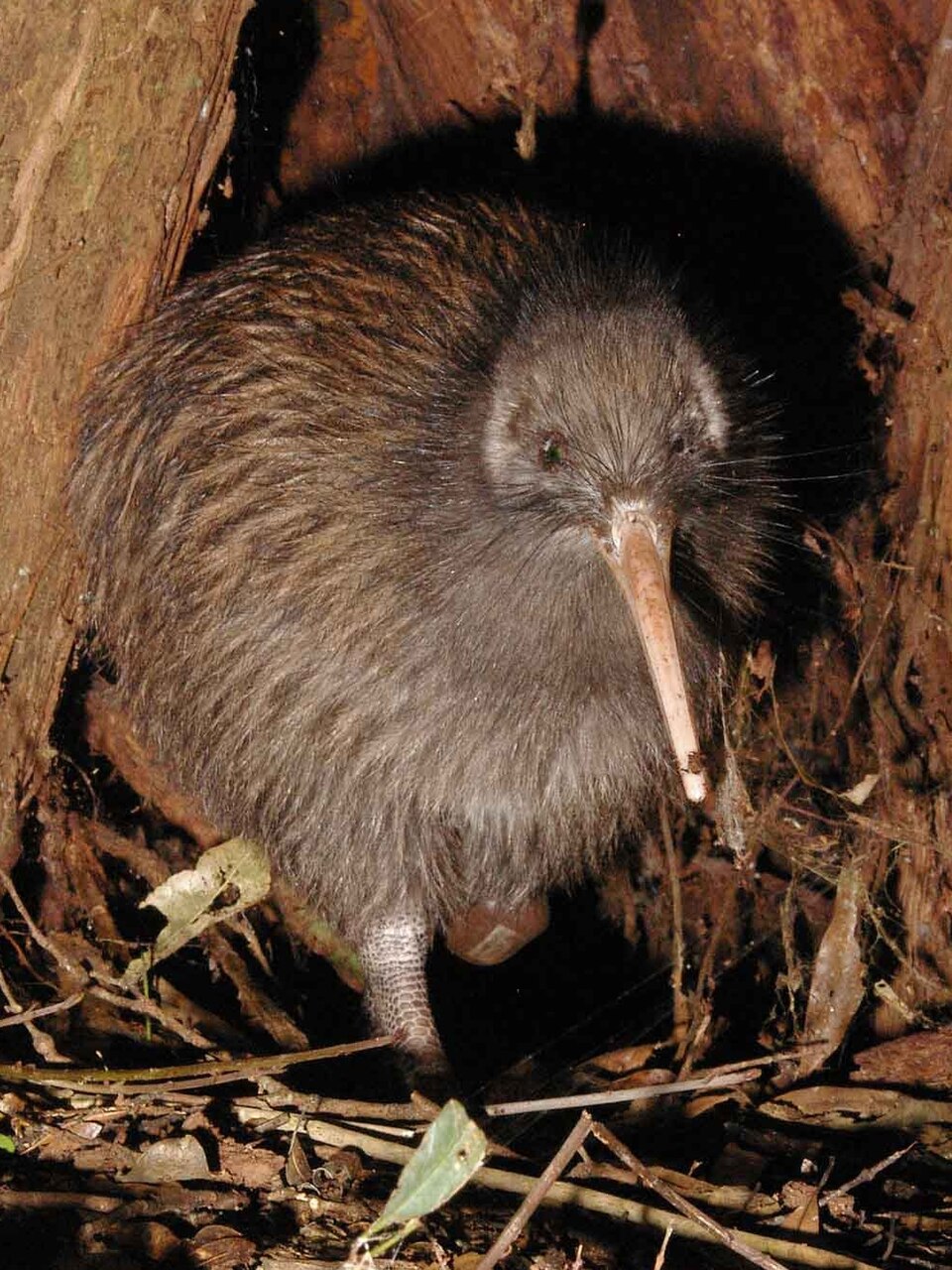
Where does the North Island Brown Kiwi live?
Apteryx mantelli
Spotted a bird? Identify it instantly with the Birdby app
Open the appThe North Island Brown Kiwi lives in specific habitats and regions. Knowing where, and when, to look improves your chances of a successful sighting.
Biomes
Temperate forests, scrubland, regenerating native bush, and sometimes exotic pine plantations.
Geographic range
Endemic to the North Island of New Zealand. Found in scattered populations across the North Island, particularly in Northland, Coromandel, and parts of the central North Island.
Preferred environments
Dense native forest with a thick understory, deep leaf litter, and moist soil for foraging. Requires areas with suitable burrowing sites for nesting and roosting.
Elevation range
Sea level up to approximately 1,200 meters, depending on suitable habitat availability.
Where to look
Sanctuaries and Predator-Free Areas
Best chances are in fenced sanctuaries like Maungatautari Ecological Island, Zealandia (Karori Sanctuary), and predator-free islands such as Little Barrier Island (Hauturu) or Kapiti Island, where populations are more robust and protected.
Native Forests (Northland, Coromandel)
In areas with active predator control, such as parts of Northland (e.g., Puketi Forest, Trounson Kauri Park) and the Coromandel Peninsula, though sightings are rare and require patience and local knowledge.
Field tips
- Go at Night. Kiwi are strictly nocturnal. Your best chance of encountering one is after dark. Use a red-filtered headlamp to minimize disturbance.
- Listen for Calls. Learn their distinctive calls (male's shrill whistle, female's guttural 'krr-krr'). Listening for these calls is often the first sign of their presence.
- Be Patient and Quiet. Kiwi are shy and cryptic. Remain still and quiet in suitable habitat for extended periods. Avoid sudden movements or loud noises.
- Look for Foraging Signs. In soft ground, you might find small probe marks from their bills where they have been searching for invertebrates.
- Join a Guided Tour. Many sanctuaries and conservation projects offer guided night walks specifically designed to find kiwi, significantly increasing your chances of a sighting while ensuring minimal disturbance to the birds.
Migration
Resident. Non-migratory, remaining within its established territory throughout its life.
Explore the North Island Brown Kiwi
Identify birds anywhere
Free on iOS, Android, and Web. Photo & sound identification, full species database, and your personal life list.