
How to identify the North Island Brown Kiwi
Apteryx mantelli
Spotted a bird? Identify it instantly with the Birdby app
Open the appTo correctly identify the North Island Brown Kiwi (Apteryx mantelli), check each of these features. Birds can be tricky: habit, habitat, and call often confirm a sighting that a single photo cannot.
Size at a glance
- Length
- 35-45 cm
- Wingspan
- Vestigial wings, not measurable as a functional wingspan (approx. 5 cm long)
- Weight
- Males: 1.4-2.8 kg; Females: 2.1-3.9 kg
Physical features to check
- 1
Plumage
Overall feather coloration and pattern.
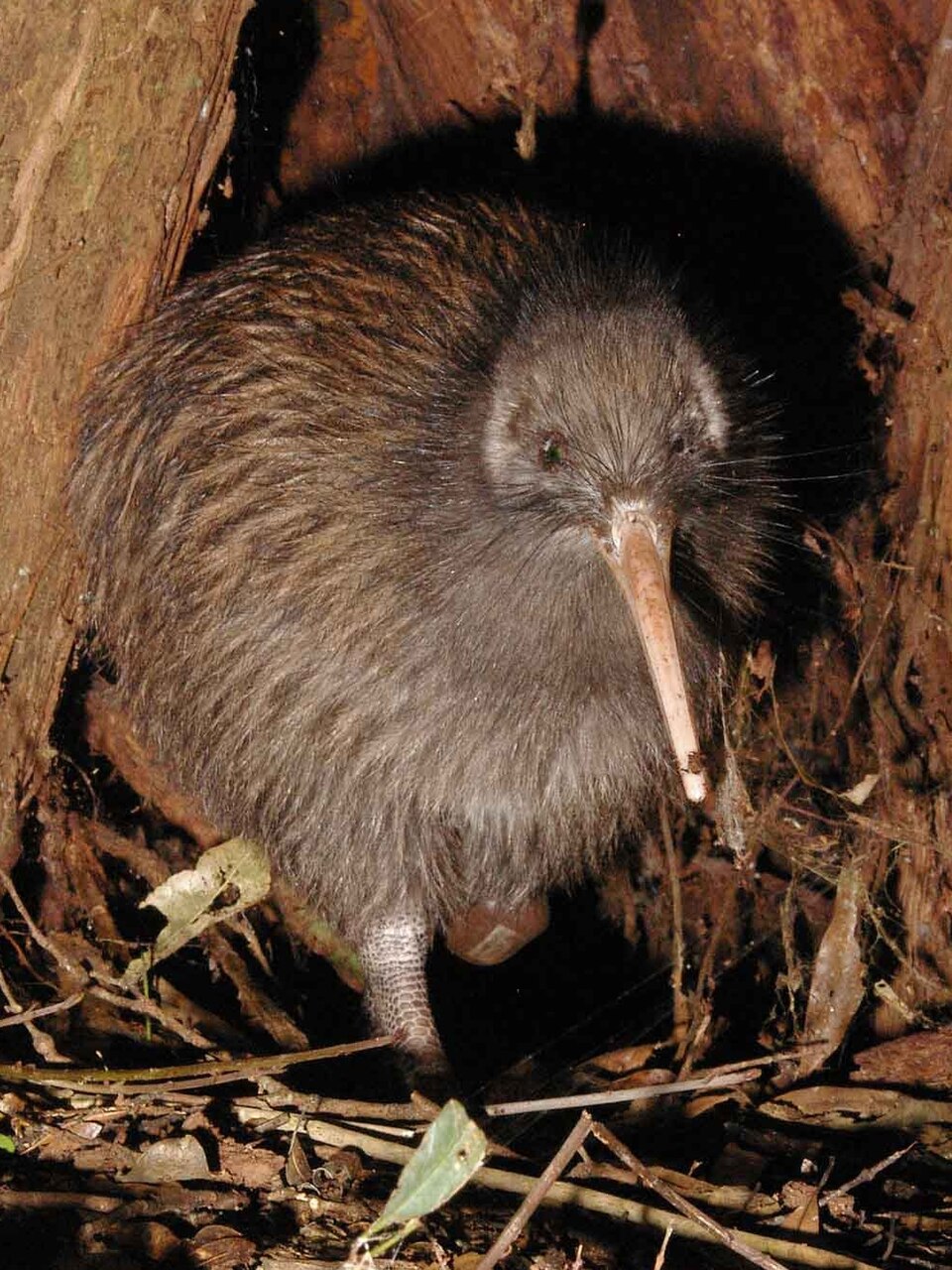
The plumage is shaggy, coarse, and hair-like, typically mottled brown or reddish-brown with streaking of lighter buff or grey. This cryptic coloration provides excellent camouflage in the forest undergrowth. The feathers lack barbules, giving them a fur-like texture.
- 2
Beak shape
Shape and color of the bill: a key field mark.
Long, slender, slightly downcurved bill, typically pale ivory to brownish-pink. Unique among birds, the nostrils are located at the very tip of the bill, which is highly sensitive and used for foraging.
- 3
Eye color
Iris color and any distinctive eye markings.
Small, dark brown eyes, adapted for nocturnal vision but with limited acuity.
- 4
Leg color
Leg and foot color.
Strong, stout legs and feet, typically pale grey to brownish-pink. Four-toed feet with sharp claws.
- 5
Distinguishing features
Standout features that separate this species.
Flightless, nocturnal, long sensitive bill with nostrils at the tip, shaggy hair-like plumage, strong legs, absence of a tail, and vestigial wings.
- 6
Juvenile appearance
How young birds differ from adults.
Juveniles resemble smaller versions of adults, with similar plumage and bill characteristics. They grow rapidly.
- 7
Seasonal changes
Plumage variation between breeding and non-breeding seasons.
No significant seasonal changes in plumage. Their appearance remains consistent year-round.
- 8
Sexual dimorphism
How males and females differ.
Females are generally larger and heavier than males, and their bills are typically longer. Otherwise, plumage coloration is similar.
Key field marks
- Size and Shape. Look for a medium-sized, plump, pear-shaped bird with strong legs, no visible tail, and a hunched posture. It moves with a distinctive waddle.
- Plumage. Observe the shaggy, hair-like, mottled brown or reddish-brown feathers. This texture is unique among birds.
- Bill. The most distinctive feature is the very long, slender, pale bill with nostrils at the tip. This is used for probing and is unlike any other bird in New Zealand.
- Behavior. Nocturnal activity is a key indicator. Listen for its characteristic calls at night. If seen, it will be foraging by probing the ground with its bill.
- Habitat. Found exclusively in dense native forests and scrubland of the North Island.
Explore the North Island Brown Kiwi
Identify birds anywhere
Free on iOS, Android, and Web. Photo & sound identification, full species database, and your personal life list.