
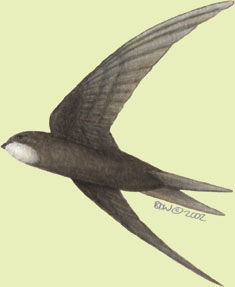
Where does the Common Swift live?
Apus apus
Spotted a bird? Identify it instantly with the Birdby app
Open the appThe Common Swift lives in specific habitats and regions. Knowing where, and when, to look improves your chances of a successful sighting.
Biomes
Urban areas, towns, villages, cliffs, and sometimes mature woodlands (for nesting sites). Requires open airspace for foraging.
Geographic range
Breeds across most of Europe and temperate Asia, from the Atlantic coast east to Siberia and China. Winters in sub-Saharan Africa.
Preferred environments
Primarily human-made structures for nesting, such as eaves, roof spaces, and crevices in old buildings. Also uses natural cliff faces. Forages over a wide variety of open habitats including farmland, wetlands, forests, and urban areas.
Elevation range
From sea level up to 2,000 meters (and occasionally higher) in breeding areas, depending on suitable nesting sites and insect availability.
Where to look
Urban and Suburban Areas
Look for them flying high over towns and cities, especially around older buildings with suitable nesting crevices under eaves or in roof spaces. Their screaming calls often draw attention to their presence.
Coastal Cliffs and Inland Rock Faces
In some regions, they nest in natural rock crevices, particularly along coastlines or in mountainous areas.
Open Countryside
While nesting in built-up areas, they forage widely over farmland, wetlands, and forests, wherever aerial insects are abundant.
Field tips
- Look Up. Swifts spend almost all their time in the air, often at considerable heights. Scan the sky, especially on warm, sunny days.
- Listen for Calls. Their distinctive screaming calls are often the first indication of their presence, particularly around nesting colonies in the mornings and evenings.
- Observe Flight Pattern. Familiarize yourself with their unique scythe-winged silhouette and powerful, direct flight. This distinguishes them from swallows and martins.
- Timing is Key. They are summer visitors to their breeding grounds. Look for them from late April/early May until late July/August.
Migration
Long-distance migratory. Arrives in breeding grounds in Europe and Asia from late April to early May, and departs for sub-Saharan Africa from late July to September. Non-breeding birds may undertake 'irruptive' movements during the breeding season in response to weather and food availability.
Explore the Common Swift
Identify birds anywhere
Free on iOS, Android, and Web. Photo & sound identification, full species database, and your personal life list.