
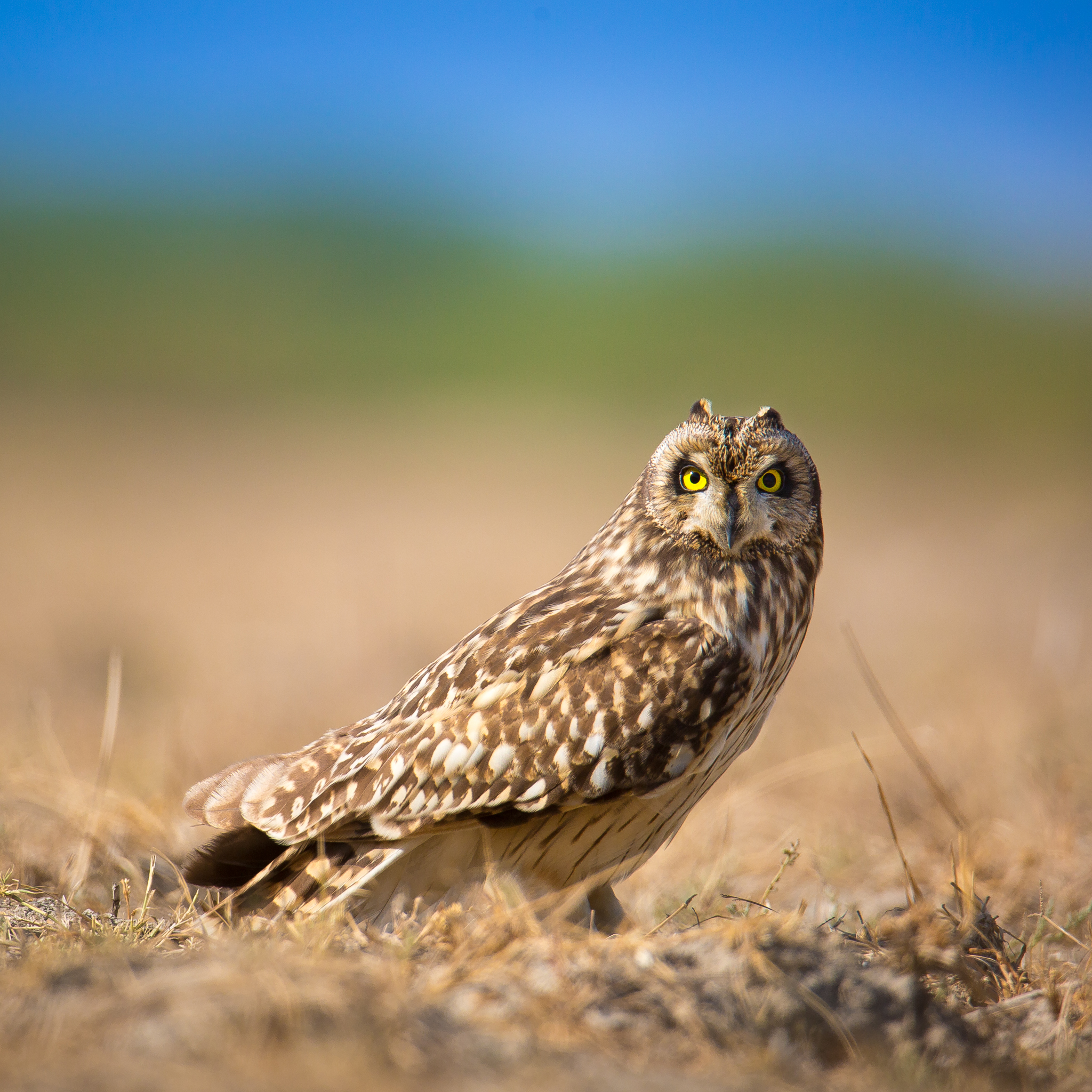
Where does the Short-eared Owl live?
Asio flammeus
Spotted a bird? Identify it instantly with the Birdby app
Open the appThe Short-eared Owl lives in specific habitats and regions. Knowing where, and when, to look improves your chances of a successful sighting.
Biomes
Grasslands, prairies, tundra, marshes, bogs, open fields, agricultural areas, coastal dunes.
Geographic range
Nearly cosmopolitan, breeding across North America, Eurasia, and parts of South America. Winters in southern parts of its breeding range and further south.
Preferred environments
Open, treeless or sparsely treed habitats with abundant small mammal populations and suitable ground cover for nesting.
Elevation range
Sea level up to 4,000 meters (13,000 feet) in some mountainous regions, but typically found in lowlands.
Where to look
Grasslands and Prairies
Extensive open grasslands, prairies, and steppes are prime habitats, especially those with tall grasses for cover and abundant voles.
Marshes and Bogs
Wetlands, including freshwater and brackish marshes, bogs, and fens, provide suitable hunting grounds and nesting sites.
Agricultural Fields
Large, open agricultural fields, particularly those with fallow areas, hayfields, or winter wheat, can attract them, especially in winter.
Coastal Dunes and Tundra
In coastal areas, they can be found in dune systems. In northern latitudes, they inhabit open tundra.
Field tips
- Time of Day. Best seen at dawn and dusk, but often active during the day, especially on cloudy days or in winter. Look for them hunting in the late afternoon.
- Scan Open Areas. Use binoculars to scan large, open fields and marshes. They often perch on low posts, hummocks, or on the ground, but are most conspicuous in flight.
- Look for Communal Roosts. In winter, several Short-eared Owls may gather at communal roosts in dense grass or low vegetation. Look for multiple birds flying out to hunt around sunset.
- Check for Pellets. If you find a potential roosting area, look for owl pellets (regurgitated indigestible prey remains) on the ground, which can confirm their presence.
- Be Patient and Observe. Their flight can cover large areas. Be patient and watch for their distinctive flight pattern over open terrain.
Migration
Highly migratory in northern parts of its range, moving south for winter. Irruptive movements can occur in response to prey availability. Southern populations may be resident or undertake shorter, localized movements.
Explore the Short-eared Owl
Identify birds anywhere
Free on iOS, Android, and Web. Photo & sound identification, full species database, and your personal life list.