
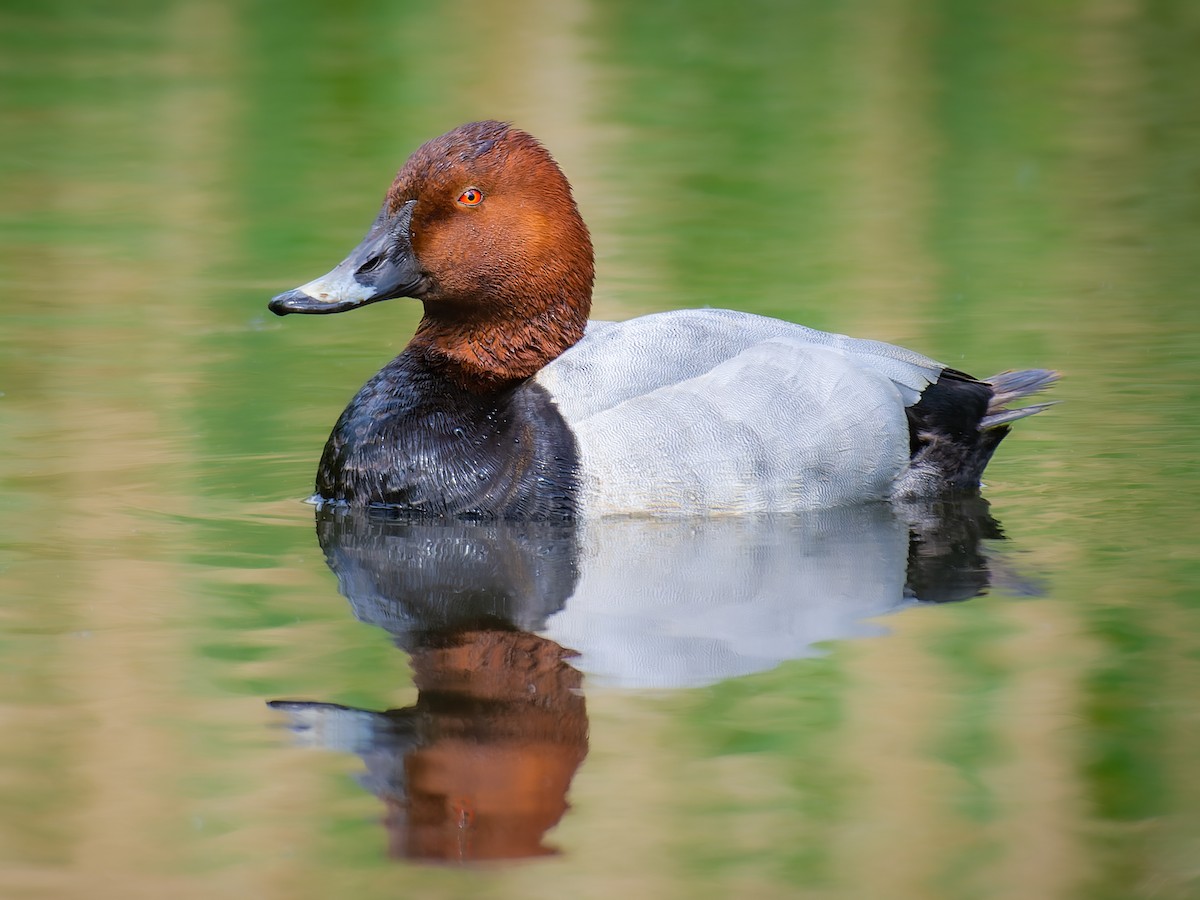
Where does the Common Pochard live?
Aythya ferina
Spotted a bird? Identify it instantly with the Birdby app
Open the appThe Common Pochard lives in specific habitats and regions. Knowing where, and when, to look improves your chances of a successful sighting.
Biomes
Temperate grasslands, wetlands, and open water bodies.
Geographic range
Breeds across the Palearctic from Western Europe to Central Asia. Winters in Western and Southern Europe, North Africa, the Middle East, and South and Southeast Asia. Some populations are resident.
Preferred environments
Large, shallow freshwater bodies with abundant submerged vegetation, such as lakes, reservoirs, slow-flowing rivers, and gravel pits. Also uses coastal lagoons and estuaries during winter. Prefers open water for feeding and safety, with reeds or other emergent vegetation for nesting cover.
Elevation range
Primarily lowland species, typically found below 500 meters, but occasionally up to 1000 meters in some parts of its range.
Where to look
Large Freshwater Lakes and Reservoirs
These are prime habitats, especially those with clear water that allows for submerged vegetation, and moderate depth for diving.
Gravel Pits and Quarries
Often colonize these artificial water bodies, particularly if they are established with some aquatic plant life.
Slow-flowing Rivers and Wide Canals
Can be found on wider, slower sections of rivers with suitable riparian vegetation. Avoid fast-flowing waters.
Coastal Lagoons and Estuaries
During winter months, smaller numbers may be found in brackish or saline habitats, though freshwater is preferred.
Wetlands and Marshes
Breeding pairs often utilize areas with extensive reedbeds or other emergent vegetation for nesting cover.
Field tips
- Scan Open Water. Pochards spend most of their time on open water. Use binoculars or a scope to scan large expanses of lakes for their characteristic diving behavior and distinctive male plumage.
- Look for Mixed Flocks. Outside of breeding, Common Pochards often associate with other diving ducks like Tufted Ducks or Greater Scaup. Carefully examine each bird in a mixed flock.
- Observe Diving. Watch their diving pattern. They typically make small, head-first dives, disappearing completely and resurfacing a short distance away.
- Check Bill and Eye Color. These are crucial identification features, especially for distinguishing between similar species and sexes. The blue-grey bill band and red male eye are key.
- Visit During Winter. Numbers often peak in wintering grounds, making them easier to find and observe in larger flocks.
- Consider Time of Day. They can be active at any time, but early morning or late afternoon might offer calmer conditions for observation.
Migration
Migratory over much of its range, moving from colder northern breeding grounds to milder southern wintering areas. Some southern populations are resident. Migration typically occurs in broad fronts.
Explore the Common Pochard
Identify birds anywhere
Free on iOS, Android, and Web. Photo & sound identification, full species database, and your personal life list.