
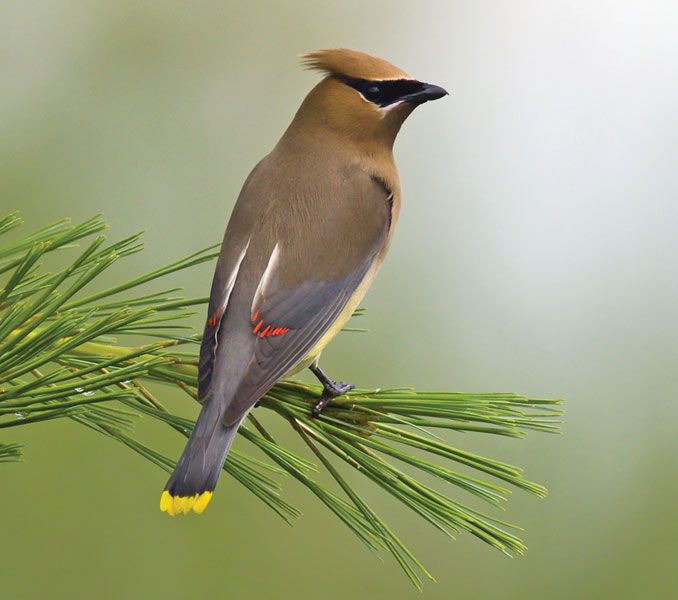
Where does the Cedar Waxwing live?
Bombycilla cedrorum
Spotted a bird? Identify it instantly with the Birdby app
Open the appThe Cedar Waxwing lives in specific habitats and regions. Knowing where, and when, to look improves your chances of a successful sighting.
Biomes
Temperate forests, woodlands, open woodlands, orchards, suburban parks, gardens, riparian areas.
Geographic range
Breeds across southern Canada and the northern United States. Winters throughout much of the United States, Mexico, Central America, and the Caribbean. Some populations are resident in parts of the Pacific Northwest and the Great Lakes region.
Preferred environments
Areas with abundant fruit-bearing trees and shrubs, especially those with small, soft berries. Also requires access to water for drinking and bathing.
Elevation range
Sea level up to 2,000 meters (6,500 feet), occasionally higher in migration.
Where to look
Orchards and Vineyards
Areas with cultivated fruit trees are prime locations, especially during migration and winter.
Suburban Parks and Gardens
Often found in residential areas with ornamental fruit-bearing shrubs and trees.
Riparian Areas
Along rivers and streams where berry-producing plants are common.
Open Woodlands and Forest Edges
Areas with a mix of trees and shrubs that provide both fruit and insect foraging opportunities.
Field tips
- Look for Fruit Sources. Cedar Waxwings are highly nomadic and will appear wherever there is an abundance of ripe berries. Focus your search on trees and shrubs laden with fruit.
- Listen for Calls. Their high-pitched, reedy calls are often the first indication of their presence, especially when a flock is moving or feeding.
- Observe Flocking Behavior. Outside the breeding season, they are almost always found in flocks. Look for groups of birds moving together, often perching in a line.
- Check Water Sources. Waxwings are fond of bathing and drinking, so checking near ponds, bird baths, or streams can be productive.
- Be Patient. Their movements are unpredictable. If you know they are in an area, patience will often be rewarded as they move through.
Migration
Irregular and nomadic migrant, driven primarily by the availability of fruit. Northern populations are generally migratory, moving south for winter. Southern populations may be resident or undertake shorter, localized movements. Their migration is often described as irruptive, with large numbers appearing in areas where fruit is abundant.
Explore the Cedar Waxwing
Identify birds anywhere
Free on iOS, Android, and Web. Photo & sound identification, full species database, and your personal life list.