
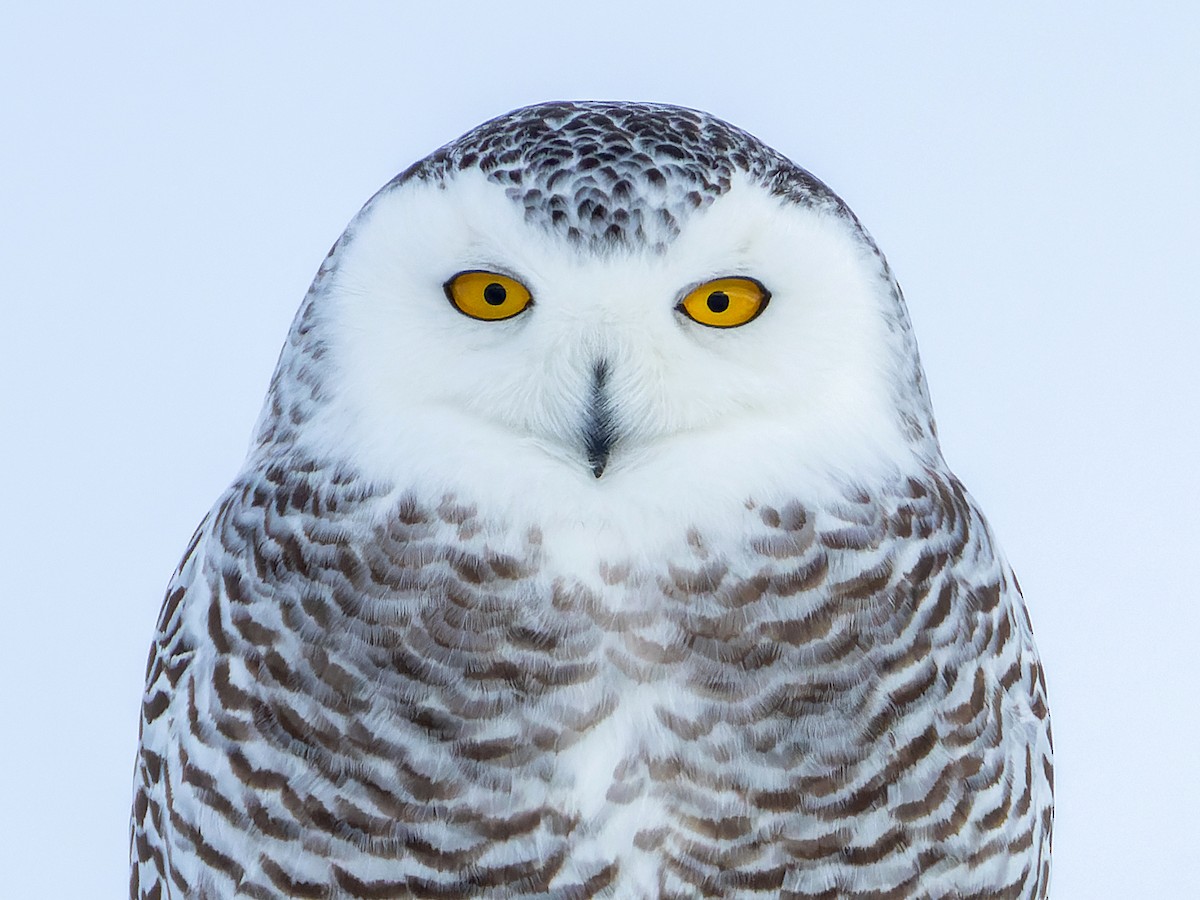
Where does the Snowy Owl live?
Bubo scandiacus
Spotted a bird? Identify it instantly with the Birdby app
Open the appThe Snowy Owl lives in specific habitats and regions. Knowing where, and when, to look improves your chances of a successful sighting.
Biomes
Tundra, open grasslands, coastal dunes, agricultural fields (during winter irruptions)
Geographic range
Circumpolar Arctic tundra of North America, Europe, and Asia. Winters irregularly south into southern Canada, northern United States, and central Europe/Asia during irruption years.
Preferred environments
Open, treeless landscapes with good visibility for hunting, such as Arctic tundra, coastal areas, and open fields. Requires elevated perches (e.g., hummocks, rocks, fence posts) for hunting and observation.
Elevation range
Typically low elevations, from sea level up to approximately 1,000 meters (3,300 feet) in mountainous tundra.
Where to look
Arctic Tundra
During the breeding season, the circumpolar Arctic tundra is the primary habitat. Look for them on elevated hummocks or ridges.
Open Fields and Coastal Areas
During winter irruptions, they can be found in open agricultural fields, coastal dunes, marshes, and prairies in southern Canada and the northern United States. Look for them perched on fence posts, hay bales, or ground mounds.
Airports and Industrial Areas
Surprisingly, during irruptions, they are sometimes found in open, treeless areas around airports or industrial sites, which mimic their open tundra habitat.
Field tips
- Scan Open Landscapes. Snowy Owls prefer open areas. Use binoculars or a spotting scope to scan fields, dunes, and flat expanses for white lumps that might be a perched owl.
- Look for Elevated Perches. They often perch on the highest available point in their environment – a fence post, telephone pole, hay bale, rock, or even a small rise in the ground.
- Check during Winter Irruptions. The best chance to see them outside the Arctic is during winter irruption years. Monitor local birding reports and news for their presence.
- Respect Their Space. Snowy Owls are easily stressed, especially during winter when food is scarce. Maintain a respectful distance (at least 100 meters/yards) and avoid flushing them, as this expends valuable energy. Do not approach for photos.
- Diurnal Activity. Unlike many owls, Snowy Owls are often active during the day, making them easier to spot. Look for them hunting or perching at any time of day.
Migration
Partial migrant. Many individuals remain on the breeding grounds year-round if prey is abundant. Others undertake irregular, irruptive migrations south during periods of low prey availability (especially lemmings) in the Arctic. These irruptions can bring them far south of their typical winter range.
Explore the Snowy Owl
Identify birds anywhere
Free on iOS, Android, and Web. Photo & sound identification, full species database, and your personal life list.