
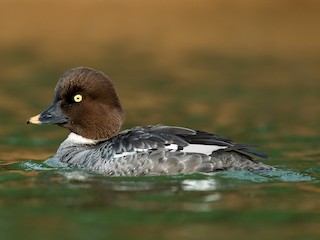
Where does the Common Goldeneye live?
Bucephala clangula
Spotted a bird? Identify it instantly with the Birdby app
Open the appThe Common Goldeneye lives in specific habitats and regions. Knowing where, and when, to look improves your chances of a successful sighting.
Biomes
Boreal forests, taiga, temperate forests, freshwater lakes, rivers, coastal estuaries, and sheltered marine bays.
Geographic range
Holarctic distribution. Breeds across northern North America (Alaska, Canada, northern USA) and northern Eurasia (Scandinavia, Russia, Siberia). Winters south to the southern USA, Mexico, central Europe, and East Asia.
Preferred environments
During breeding, prefers clear, shallow freshwater lakes and slow-moving rivers in forested areas, especially those with mature trees suitable for nesting cavities. In winter, found on larger, ice-free freshwater bodies and sheltered coastal marine environments.
Elevation range
Primarily lowlands, but can be found at moderate elevations on mountain lakes during breeding season.
Where to look
Forested Lakes and Rivers
During breeding season, search for them on clear, freshwater lakes and slow-moving rivers surrounded by mature forests, especially those with old-growth trees for nesting cavities.
Coastal Bays and Estuaries
In winter, look for large flocks on sheltered marine bays, estuaries, and large, ice-free inland lakes and reservoirs.
Artificial Nest Boxes
In areas where nest boxes are provided for cavity-nesting ducks, Common Goldeneyes are often attracted to them.
Field tips
- Scan Open Water. Goldeneyes are often found in open water, diving frequently. Use binoculars or a spotting scope to observe their diving patterns and resurfacing locations.
- Listen for Wing Whistle. Pay attention to the sounds of ducks flying overhead. The distinctive whistling of a goldeneye's wings can be a key identifier.
- Observe Courtship Displays. During early spring, observe males performing elaborate head-throwing and calling displays to attract females. This is a great opportunity to see their full plumage and hear their calls.
- Check for Mixed Flocks. On wintering grounds, Common Goldeneyes often associate with other diving ducks like scaup, Canvasbacks, and Redheads. Carefully scan these mixed flocks for goldeneyes.
Migration
Strongly migratory. Northern populations move south for winter, while some southern breeding populations may be resident. Migrates in small to large flocks, often following coastlines or major river systems. Arrives on breeding grounds in early spring and departs for wintering grounds in late autumn.
Explore the Common Goldeneye
Identify birds anywhere
Free on iOS, Android, and Web. Photo & sound identification, full species database, and your personal life list.