
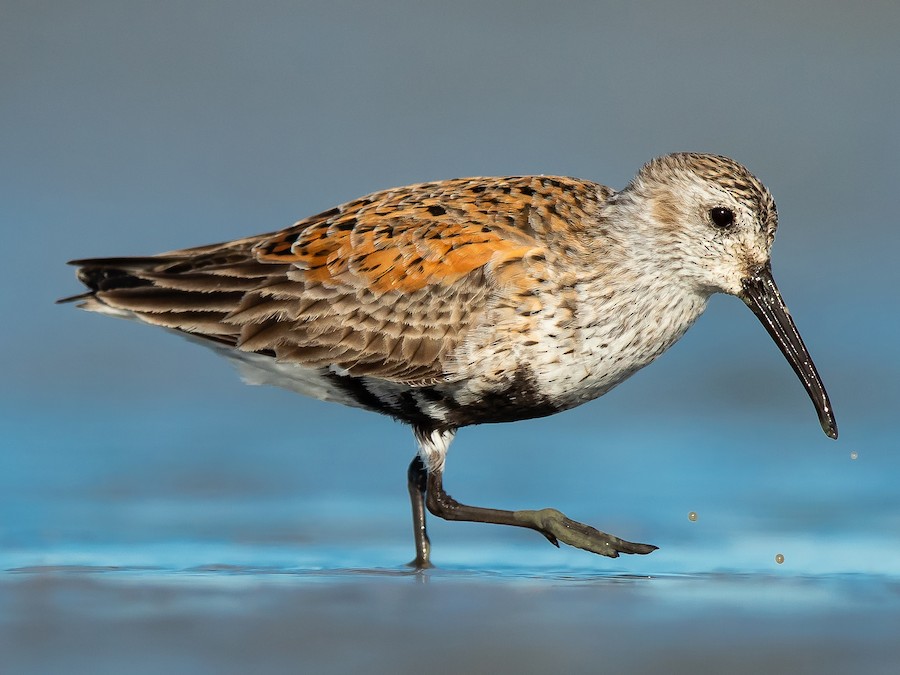
Where does the Dunlin live?
Calidris alpina
Spotted a bird? Identify it instantly with the Birdby app
Open the appThe Dunlin lives in specific habitats and regions. Knowing where, and when, to look improves your chances of a successful sighting.
Biomes
Tundra, coastal wetlands, estuaries, mudflats, sandy beaches, salt marshes, freshwater marshes, agricultural fields (during migration).
Geographic range
Breeds in Arctic and subarctic regions of Eurasia and North America. Winters along temperate and tropical coasts of Europe, Africa, Asia, and North America.
Preferred environments
During breeding, prefers wet tundra with sedges and mosses. During migration and winter, favors intertidal mudflats, sandy beaches, and shallow coastal waters rich in invertebrate prey.
Elevation range
Primarily found at sea level, but can occur at higher elevations in tundra breeding grounds.
Where to look
Coastal Mudflats and Estuaries
These are prime wintering and migratory stopover habitats, offering abundant invertebrate prey. Look for them at low tide.
Sandy Beaches
Can be found foraging along the water's edge, often mixed with other small shorebirds.
Salt Marshes
Utilize tidal creeks and pools within salt marshes for feeding and roosting.
Arctic Tundra
During the breeding season, they are found in wet, boggy tundra habitats across their northern range.
Field tips
- Scan large flocks. Dunlins often occur in large, mixed flocks with other shorebirds. Carefully scan these groups for the distinctive bill shape and, in breeding season, the black belly.
- Observe feeding behavior. Watch how they probe the mud. Their slightly downcurved bill is well-suited for this, and their methodical foraging can be a good identification clue.
- Check tides. Shorebirds are most active and visible during falling and low tides when mudflats are exposed. Plan your visits accordingly.
- Use a scope. For distant flocks on large mudflats, a spotting scope is invaluable for picking out individual features like bill shape and plumage details.
- Listen for calls. Their 'kreep' call is quite distinctive and can help locate them, especially in flight or when obscured by vegetation.
Migration
Long-distance migrant. Breeds in the Arctic and subarctic and migrates south to temperate and tropical coastal areas. North American breeders winter along the Atlantic and Pacific coasts of North America, and occasionally further south. Eurasian breeders winter along coasts of Europe, Africa, and Asia.
Explore the Dunlin
Identify birds anywhere
Free on iOS, Android, and Web. Photo & sound identification, full species database, and your personal life list.