
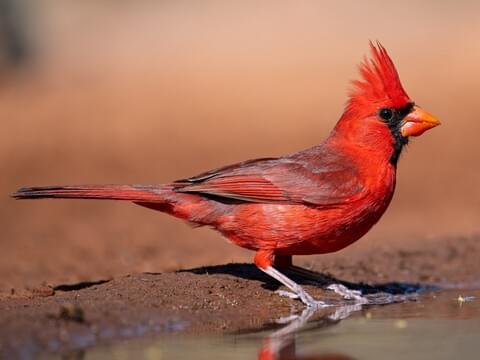
Where does the Northern Cardinal live?
Cardinalis cardinalis
Spotted a bird? Identify it instantly with the Birdby app
Open the appThe Northern Cardinal lives in specific habitats and regions. Knowing where, and when, to look improves your chances of a successful sighting.
Biomes
Forest edges, woodlands, suburban gardens, parks, shrublands, wetlands, and desert washes.
Geographic range
Southeastern Canada, eastern and central United States, and south through Mexico to northern Guatemala and Belize.
Preferred environments
Dense shrubbery for nesting and cover, open areas for foraging, and access to water sources. They thrive in areas with a mix of dense vegetation and open ground.
Elevation range
Sea level up to approximately 2,700 meters (8,900 feet) in parts of Mexico.
Where to look
Suburban Gardens and Parks
Often found in backyards, especially those with bird feeders, dense shrubs, and trees. They are highly adaptable to human-modified landscapes.
Forest Edges and Woodlands
Common in the transitional zones between forests and open areas, providing both cover and foraging opportunities.
Shrublands and Thickets
Dense vegetation provides ideal nesting sites and protection from predators.
Riparian Areas
Found along streams and rivers, where dense vegetation and water sources are abundant.
Field tips
- Listen for their song. Their distinctive whistling song is often heard before the bird is seen, especially in dense foliage. Both sexes sing.
- Look in dense cover. Cardinals prefer to stay within or near dense shrubs and small trees for cover, even when foraging. Check the edges of thickets.
- Visit bird feeders. They are frequent visitors to bird feeders, especially those offering sunflower or safflower seeds. They are often among the first birds to arrive in the morning and the last in the evening.
- Be patient. While often conspicuous, they can be shy. Sit quietly near suitable habitat, and they may emerge.
- Look for movement. Their bright red color can be surprisingly camouflaged in dappled light. Look for subtle movements in the undergrowth.
Migration
Non-migratory (resident) throughout most of its range. Some northern populations may make short-distance movements in winter, but generally, they remain in their breeding territories year-round.
Explore the Northern Cardinal
Identify birds anywhere
Free on iOS, Android, and Web. Photo & sound identification, full species database, and your personal life list.