
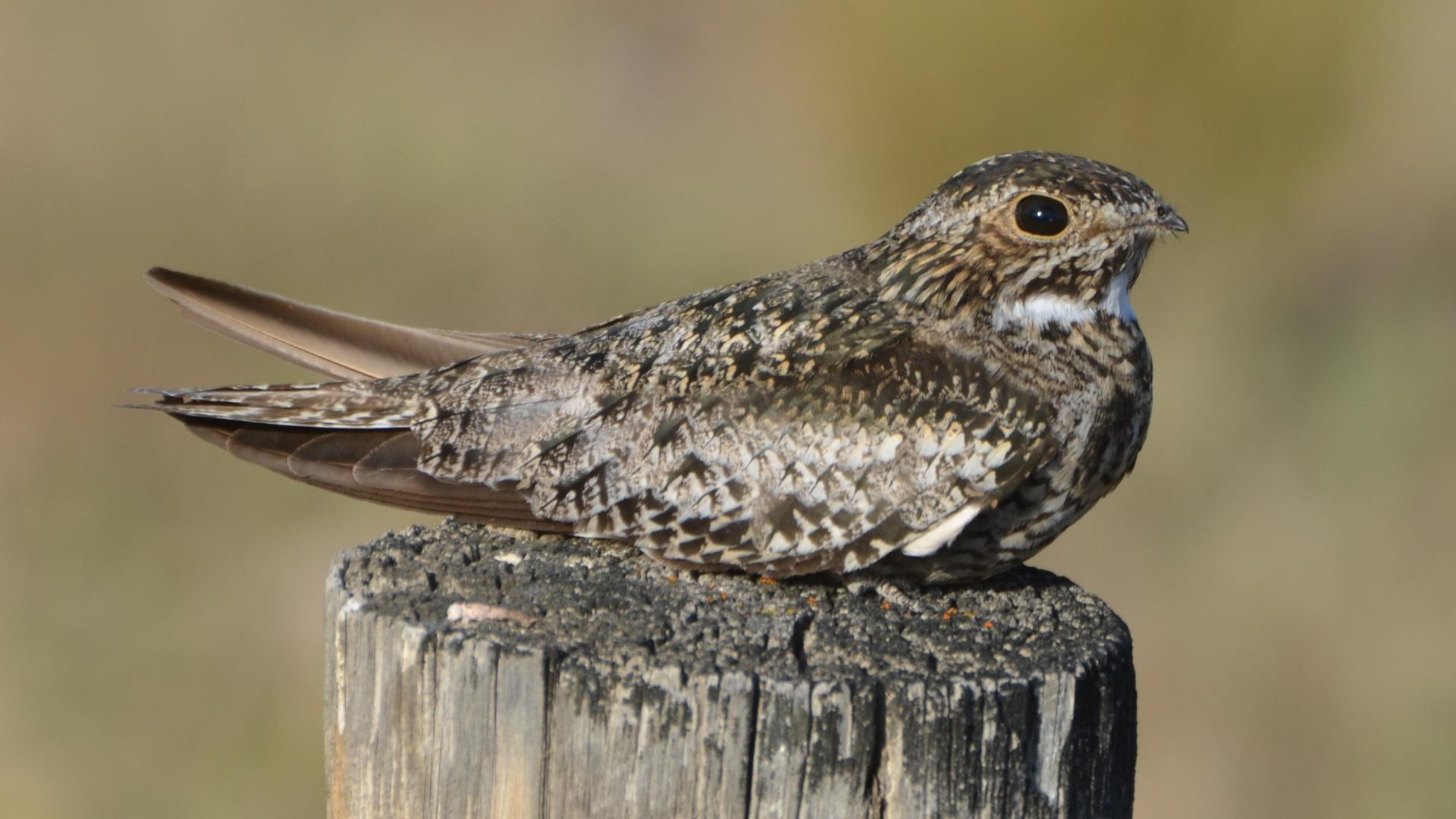
Where does the Common Nighthawk live?
Chordeiles minor
Spotted a bird? Identify it instantly with the Birdby app
Open the appThe Common Nighthawk lives in specific habitats and regions. Knowing where, and when, to look improves your chances of a successful sighting.
Biomes
Open woodlands, forest clearings, prairies, deserts, savannas, agricultural fields, urban and suburban areas, often above flat gravel roofs.
Geographic range
Breeds across most of North America, from northern Canada and Alaska south through much of the United States. Winters in South America, primarily in Brazil, Bolivia, Paraguay, Argentina, and Uruguay.
Preferred environments
Areas with open skies for hawking insects, such as clearings, river gravel bars, burned forests, open grasslands, and urban settings with flat, gravel-covered rooftops suitable for nesting.
Elevation range
Sea level up to approximately 3,000 meters (9,800 feet), primarily dependent on availability of suitable open habitat and insect prey.
Where to look
Urban/Suburban Areas
Look for them hunting over well-lit sports fields, parks, or city centers at dusk, and nesting on gravel rooftops of commercial buildings.
Open Countryside
Seek them in clearings, pastures, open woodlands edges, and agricultural fields, especially where insects are abundant.
Burned Areas
Recently burned forests provide excellent open habitat and insect prey, attracting nighthawks.
River Gravel Bars/Sand Dunes
Natural nesting sites often include these open, sparsely vegetated areas.
Migration Stopovers
During migration, they can be seen in large flocks moving along coastlines, over mountains, or any open habitat. Look skyward at dusk.
Field tips
- Look at Dusk and Dawn. The best time to observe Common Nighthawks is during the crepuscular hours when they are actively foraging. They can be seen flying erratically high in the sky.
- Listen for their Call. Their distinctive 'peent' call is often heard before the bird is seen. Learning this call is key to locating them, especially in urban areas.
- Scan the Sky. They often fly high. Use binoculars to scan the sky overhead, especially if you hear their call. Look for the white wing bars against the fading light.
- Check Flat Rooftops. In urban environments, flat, gravel-covered roofs are prime nesting and roosting spots. They are remarkably camouflaged, so looking closely or listening for calls might be necessary.
- Observe Migratory Flocks. During fall migration (late August to September), thousands can gather and migrate in large, breathtaking groups at sunset. Find open areas with good sky views.
- Look for Booming Displays. During the breeding season, watch males perform their 'booming' dive. This is easiest to spot in open areas where they display over potential nesting sites.
Migration
Long-distance Neotropical migrant. Breeds in North America and migrates to South America for the non-breeding season. Migration pathways are broad, often nocturnal, and can be seen moving over a wide front. One of the latest fall migrants.
Explore the Common Nighthawk
Identify birds anywhere
Free on iOS, Android, and Web. Photo & sound identification, full species database, and your personal life list.