
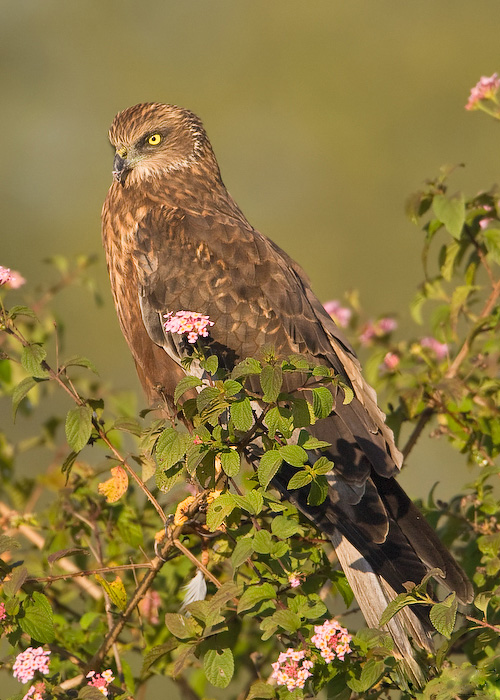
Where does the Western Marsh Harrier live?
Circus aeruginosus
Spotted a bird? Identify it instantly with the Birdby app
Open the appThe Western Marsh Harrier lives in specific habitats and regions. Knowing where, and when, to look improves your chances of a successful sighting.
Biomes
Temperate grasslands, wetlands, freshwater lakes, rivers, marshes, reedbeds, coastal lagoons, agricultural areas.
Geographic range
Breeds across much of temperate Europe and Asia, extending to parts of North Africa. Winters in southern Europe, Africa (especially sub-Saharan Africa), and southern Asia.
Preferred environments
Extensive reedbeds, dense marsh vegetation, and wet grasslands adjacent to open water bodies. They require dense cover for nesting and roosting, but also open areas for hunting.
Elevation range
Primarily lowlands, rarely observed above 1000 meters.
Where to look
Wetlands
Look for large expanses of reedbeds, marshes, and fens. These provide ideal nesting and hunting grounds.
Lakes and Rivers
Areas with extensive fringing vegetation along slow-moving rivers, lakes, and reservoirs are prime habitats.
Coastal Lagoons and Estuaries
Coastal wetlands, especially those with brackish water and reedbeds, are also suitable.
Agricultural Land (Wintering)
In winter, they may forage over agricultural fields, particularly if adjacent to suitable roosting sites.
Field tips
- Scan Low Over Reedbeds. Western Marsh Harriers typically hunt by flying low, just above the top of the reeds. Look for them quartering back and forth.
- Observe for 'Sky-Dancing'. During the breeding season, especially in spring, males perform impressive aerial courtship displays ('sky-dancing') often high above the nesting area.
- Look for Communal Roosts (Winter). In winter, they may gather in communal roosts, often in dense reedbeds. Observing at dusk can reveal birds flying into these roosts.
- Listen for Calls. During the breeding season, listen for their distinctive 'kek-kek-kek' calls, especially when disturbed or during food passes.
- Use a Scope or Binoculars. Their often distant flight and detailed plumage require good optics for accurate identification, especially to distinguish sexes and age.
Migration
Many populations are migratory, moving south for the winter. Northern and eastern European populations are generally migratory, wintering in Africa and southern Asia. Western and southern European populations may be resident or partially migratory.
Explore the Western Marsh Harrier
Identify birds anywhere
Free on iOS, Android, and Web. Photo & sound identification, full species database, and your personal life list.