
How to identify the Western Marsh Harrier
Circus aeruginosus
Spotted a bird? Identify it instantly with the Birdby app
Open the appTo correctly identify the Western Marsh Harrier (Circus aeruginosus), check each of these features. Birds can be tricky: habit, habitat, and call often confirm a sighting that a single photo cannot.
Size at a glance
- Length
- 48-56 cm (19-22 in)
- Wingspan
- 110-140 cm (43-55 in)
- Weight
- Males: 400-670 g (0.88-1.48 lb); Females: 500-1200 g (1.1-2.65 lb)
Physical features to check
- 1
Plumage
Overall feather coloration and pattern.
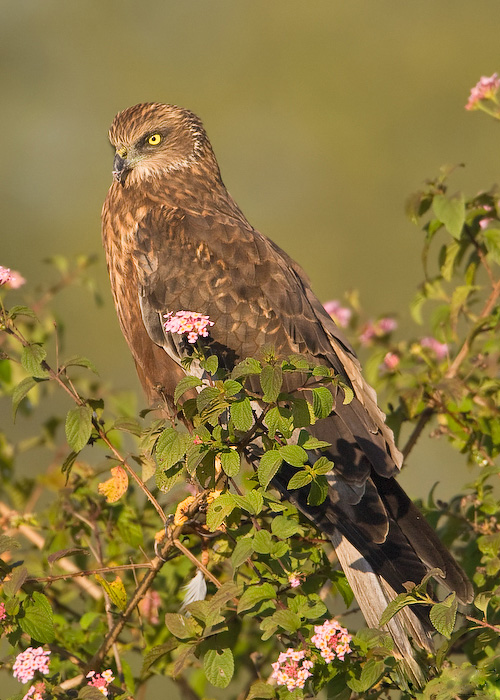
Adult males have a striking plumage: brown back, rusty-brown underparts, grey tail, and complex grey wings with black wingtips. Adult females are largely dark brown with a creamy-yellow cap and leading edge to the wing. Juveniles resemble adult females but often have a more uniformly dark body and a less defined creamy cap, sometimes with a pale patch on the nape.
- 2
Beak shape
Shape and color of the bill: a key field mark.
Hooked, characteristic of raptors, designed for tearing flesh.
- 3
Eye color
Iris color and any distinctive eye markings.
Adult males: yellow; Adult females: yellow to yellowish-brown; Juveniles: dark brown.
- 4
Leg color
Leg and foot color.
Yellow
- 5
Distinguishing features
Standout features that separate this species.
Long wings and tail, buoyant flight with wings held in a shallow 'V' (dihedral) while soaring or quartering, especially when hunting. The dark brown body and distinctive creamy head/wing patches of females and juveniles are key. Males are unique among harriers in their complex grey, black, and brown wing pattern.
- 6
Juvenile appearance
How young birds differ from adults.
Similar to adult females but generally darker overall. They typically have a more uniform dark brown body and often a less bright or more restricted creamy-yellow cap, sometimes appearing as a pale nape patch rather than a full cap.
- 7
Seasonal changes
Plumage variation between breeding and non-breeding seasons.
No significant seasonal plumage changes for adults. Juveniles molt into adult plumage over 1-2 years.
- 8
Sexual dimorphism
How males and females differ.
Pronounced. Males are smaller and much lighter in plumage, with grey on wings and tail, and rusty underparts. Females are larger and predominantly dark brown with a distinct creamy-yellow head and forewing patch. Juveniles resemble females.
Key field marks
- Flight Profile. Look for a characteristic low, buoyant flight over wetlands, often with wings held in a shallow 'V' (dihedral). This allows them to scan the ground below effectively.
- Size and Build. It is a relatively large and robust harrier compared to other European harriers, with broad wings.
- Male Plumage. Adult males are unmistakable: brown body, grey tail, and complex grey wings with black wingtips. This combination is unique among harriers.
- Female Plumage. Adult females are dark brown overall with a striking creamy-yellow cap and a prominent creamy-yellow patch on the leading edge of the inner wing (carpal joint). The facial area is often paler.
- Juvenile Plumage. Juveniles resemble females but are typically a more uniform dark brown with a less distinct, sometimes paler, creamy cap or nape patch. They lack the strong pale forewing patch of adult females.
- Habitat. Its strong association with extensive reedbeds and marshlands is a key identification clue. If you see a large harrier in such a habitat, it is most likely a Western Marsh Harrier.
Explore the Western Marsh Harrier
Identify birds anywhere
Free on iOS, Android, and Web. Photo & sound identification, full species database, and your personal life list.