
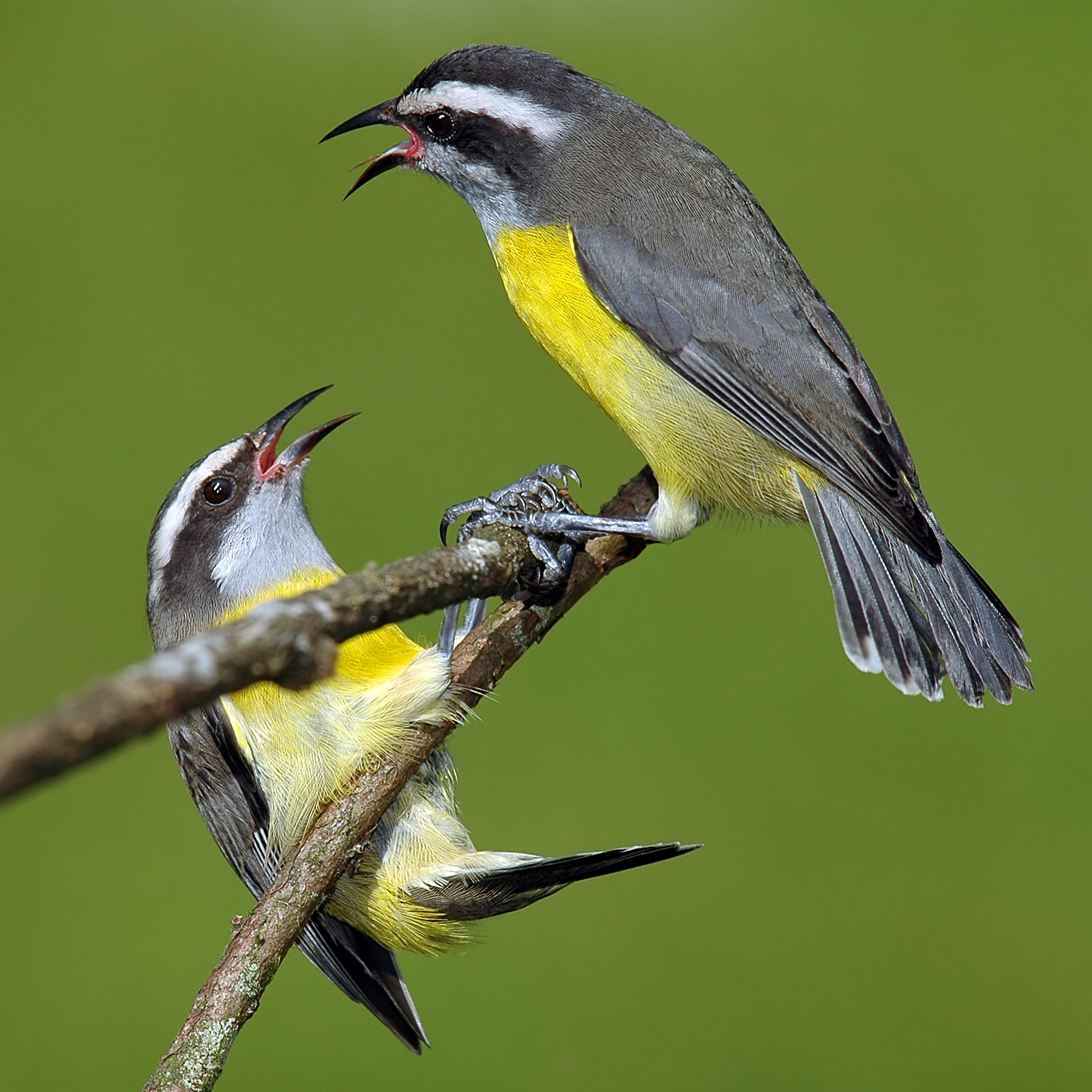
Where does the Bananaquit live?
Coereba flaveola
Spotted a bird? Identify it instantly with the Birdby app
Open the appThe Bananaquit lives in specific habitats and regions. Knowing where, and when, to look improves your chances of a successful sighting.
Biomes
Tropical and subtropical moist broadleaf forests, dry broadleaf forests, savannas, shrublands, mangroves, gardens, parks, and urban areas.
Geographic range
Widespread throughout the Neotropics, from southern Mexico and the Caribbean islands south through Central America and much of South America, reaching northern Argentina and Uruguay. Absent from high Andean elevations and parts of the Amazon basin.
Preferred environments
Highly adaptable, preferring areas with abundant flowering plants. Commonly found in open woodlands, forest edges, clearings, plantations, suburban gardens, and urban parks. They thrive in disturbed habitats.
Elevation range
Sea level up to approximately 2,000 meters (6,500 feet), occasionally higher in some regions.
Where to look
Gardens and Parks
Very common in suburban and urban gardens, especially those with flowering plants or hummingbird feeders.
Forest Edges and Clearings
Frequently found at the edges of tropical and subtropical forests, in clearings, and along trails.
Plantations
Abundant in coffee, banana, and other agricultural plantations where flowering plants are present.
Mangroves
Can be found in coastal mangrove habitats, feeding on nectar from mangrove flowers.
Field tips
- Look for movement in flowering plants. Bananaquits are highly active. Scan flowering shrubs and trees for their quick movements as they probe for nectar.
- Check hummingbird feeders. They are frequent visitors to hummingbird feeders and will often chase away smaller hummingbirds to access the sugar water.
- Listen for their calls. Their distinctive high-pitched calls and buzzy songs can often lead you to their location before you see them.
- Observe their feeding technique. Watch for their 'nectar robbing' behavior, where they pierce the base of flowers with their bill to get nectar without pollinating.
Migration
Mostly resident throughout its range, with no significant migratory movements. Local movements may occur in response to flowering seasons or food availability.
Explore the Bananaquit
Identify birds anywhere
Free on iOS, Android, and Web. Photo & sound identification, full species database, and your personal life list.