
Spotted a bird? Identify it instantly with the Birdby app
Open the appAbout
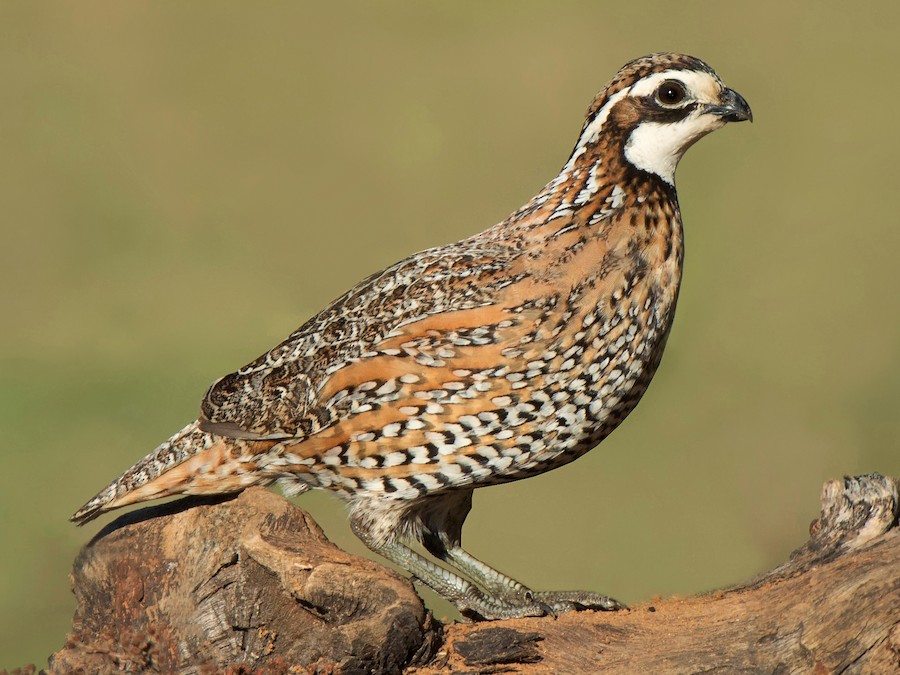
The Northern Bobwhite chick is the juvenile stage of the Northern Bobwhite, a small, ground-dwelling game bird native to the eastern United States, Mexico, and the Caribbean. Chicks are precocial, meaning they are born relatively mature and mobile, able to feed themselves shortly after hatching. They are characterized by their cryptic downy plumage, which provides camouflage from predators.
Size & lifespan
- Length
- Approximately 7-10 cm (2.8-3.9 in) at hatching, growing rapidly
- Wingspan
- Not typically measured for chicks, but adult wingspan is 33-38 cm (13-15 in)
- Weight
- Approximately 6-8 g (0.21-0.28 oz) at hatching
- Lifespan
- Chicks have high mortality rates; if they survive to adulthood, average lifespan is 1-2 years in the wild, up to 5-6 years in captivity.
- Diet
- Primarily insects (especially ants, beetles, grasshoppers, caterpillars) and small spiders; also consumes tender plant shoots and seeds as they mature.
Physical characteristics
- Plumage
- Chicks are covered in soft, downy plumage. The dorsal side is typically mottled with shades of brown, buff, and black, providing excellent camouflage. They often have a dark stripe running down the back and a lighter, yellowish-buff underside. A dark eye-stripe is usually present.
- Beak shape
- Small, conical, and dark gray to black.
- Eye color
- Dark brown.
- Leg color
- Pale yellowish-orange to grayish-pink.
- Distinguishing features
- Small size, precocial nature, cryptic downy plumage with dorsal mottling and a dark eye-stripe. They have short, stubby wings and a very short tail.
- Juvenile appearance
- As chicks grow, they begin to develop juvenile contour feathers, gradually replacing their down. The juvenile plumage resembles a duller version of the adult female, with less distinct facial markings. They reach adult size and plumage by about 15 weeks.
- Seasonal changes
- Chicks are present during the breeding season (spring to late summer). Their appearance changes as they grow and molt into juvenile and then adult plumage, rather than seasonal plumage changes in the traditional sense.
- Sexual dimorphism
- Not apparent in chicks. Sexual dimorphism develops as they mature into adults, with males exhibiting a distinct white throat and supercilium, while females have a buffy throat and supercilium.
How to identify
- 1
Size and Shape
Very small, round, downy chicks, moving quickly on the ground. They have short, stubby wings and a very short tail.
- 2
Plumage
Look for mottled brown, buff, and black down on the back, with a lighter, yellowish-buff underside. A dark stripe through the eye is often visible.
- 3
Behavior
Observe them foraging actively on the ground, often in a tight group with adult bobwhites. They will scatter and hide if alarmed, freezing in place.
- 4
Vocalization
Listen for soft peeping or chirping calls, especially if they become separated from the brood.
- 5
Habitat
Found in open grassy areas with nearby dense cover, often near agricultural fields or forest edges.
Habitat & range
- Biomes
- Grasslands, open woodlands, agricultural fields, shrublands, pine forests, and forest edges.
- Geographic range
- Southeastern United States, extending north to parts of the Midwest and Northeast, and south into Mexico and parts of Central America, as well as Cuba.
- Elevation range
- Typically found from sea level up to approximately 1,500 meters (5,000 feet).
- Preferred environments
- Areas with a mosaic of dense cover (for protection from predators and weather), open areas for foraging, and bare ground for dusting. They require diverse vegetation structure, including grasses, forbs, and scattered shrubs.
Behavior
- Activity time
- Diurnal, most active during early morning and late afternoon, foraging and dust-bathing.
- Feeding habits
- Chicks forage actively on the ground, pecking at small insects and seeds. They are highly dependent on insect protein for rapid growth. They learn foraging behaviors from their parents.
- Social behavior
- Chicks stay in a tight brood with their parents (or parent, as males often take over brooding if the female re-nests). Broods may combine to form larger coveys in late summer and fall.
- Flight pattern
- Chicks are capable of short, weak flights (flushing) at a very young age, typically within a week or two of hatching, but prefer to run and hide. Adult flight is rapid, short, and often explosive when flushed.
- Migration pattern
- Northern Bobwhites are non-migratory and resident throughout their range. Chicks remain with their brood/covey in the natal area.
- Territoriality
- Adult pairs establish breeding territories. Chicks are not territorial but remain within the parental territory until dispersal.
Song & calls
- Song
- Chicks do not sing. The iconic 'bob-WHITE!' whistle is the song of the adult male.
- Call
- Chicks emit soft, peeping or chirping calls to communicate with their parents and siblings, especially when separated or alarmed. Parents use clucking and alarm calls to guide and warn their young.
- When they vocalize
- Chicks vocalize frequently throughout the day, particularly when foraging or if disturbed.
Breeding & reproduction
- Breeding season
- Late April to September, with peak activity from May to July. Northern Bobwhites are known for multiple nesting attempts and renesting if a clutch is lost.
- Nesting habits
- Nests are shallow depressions on the ground, often at the base of a clump of grass or shrub, lined with grass and leaves. They are well-concealed by overhead vegetation.
- Clutch size
- Typically 10-16 eggs, but can range from 5 to 20. Chicks from a single clutch are called a brood.
- Egg description
- Adults lay pure white, unmarked, oval-shaped eggs. Chicks hatch from these eggs.
- Incubation period
- 23-24 days, primarily by the female, but males will also incubate, especially for second clutches.
- Fledging period
- Chicks are precocial and leave the nest within hours of hatching. They are capable of short flights by 1-2 weeks and are largely independent by 8-10 weeks, though they remain with the covey.
- Parental care
- Both parents typically care for the brood, leading them to foraging areas, brooding them at night or during inclement weather, and protecting them from predators. Males often take over care of the first brood if the female initiates a second clutch.
Where to find
Grasslands and Prairies
Look in areas with native grasses and forbs, especially those undergoing restoration or managed for wildlife.
Agricultural Edges
Often found along the borders of crop fields, especially those with hedgerows or brushy cover.
Open Woodlands and Pine Forests
Areas with an open understory and good ground cover, particularly after prescribed burns.
Shrublands and Old Fields
Habitats with a mix of dense shrubs, briars, and open patches are ideal.
Field tips
- Listen for Adults. The best way to find chicks is often to first locate adult Northern Bobwhites by their distinctive 'bob-WHITE!' call. Chicks will be with the adults.
- Observe Early Morning/Late Afternoon. Chicks are most active during these cooler parts of the day, foraging with their parents.
- Look for Movement in Ground Cover. Chicks are masters of camouflage. Look for subtle movements in dense grass or under shrubs. They will often freeze when they detect a threat.
- Be Patient and Quiet. Approach potential bobwhite habitat slowly and quietly. Disturbing a brood can cause them to scatter and make them harder to observe.
- Use Binoculars. Even if you spot movement, binoculars will help confirm it's a chick and allow for better observation without disturbance.
Similar species
Scaled Quail Chick
Callipepla squamata
Scaled Quail chicks typically have a more grayish-brown down with less distinct patterning. Adult Scaled Quail have a distinctive 'scaled' appearance and a white crest, which are absent in Bobwhite chicks and adults.
Gambel's Quail Chick
Callipepla gambelii
Gambel's Quail chicks are similar but often have a slightly more rufous or reddish-brown tinge to their down. Adult Gambel's Quail have a prominent black comma-shaped plume on their head, which is absent in Bobwhites.
California Quail Chick
Callipepla californica
California Quail chicks are also similar in appearance. Adult California Quail have a forward-curving plume and a scaly belly pattern, differing from Bobwhites.
Quick facts
- Precocial:
- Chicks are born with open eyes, covered in down, and able to walk and feed themselves shortly after hatching.
- Diet:
- High insect protein diet crucial for rapid growth.
- Camouflage:
- Their mottled downy plumage provides excellent camouflage against the ground.
- Brood Rearing:
- Both parents typically involved, with males often taking over if the female re-nests.
- Conservation Concern:
- Northern Bobwhite populations have declined significantly across much of their range due to habitat loss and degradation.
Fun facts
- Northern Bobwhite chicks are incredibly fast growers, reaching adult size in just a few months.
- A single female Northern Bobwhite can lay multiple clutches in a season, sometimes with different males, leading to a high reproductive potential.
- Chicks learn to forage and identify food items by observing their parents.
- When threatened, bobwhite chicks will often 'freeze' in place, relying on their camouflage to avoid detection, while the parents may perform a distraction display.
Scientific classification
- Kingdom
- Animalia
- Phylum
- Chordata
- Class
- Aves
- Order
- Galliformes
- Family
- Odontophoridae
- Genus
- Colinus
- Species
- virginianus
Explore the Northern Bobwhite Chick
Identify birds anywhere
Free on iOS, Android, and Web. Photo & sound identification, full species database, and your personal life list.