
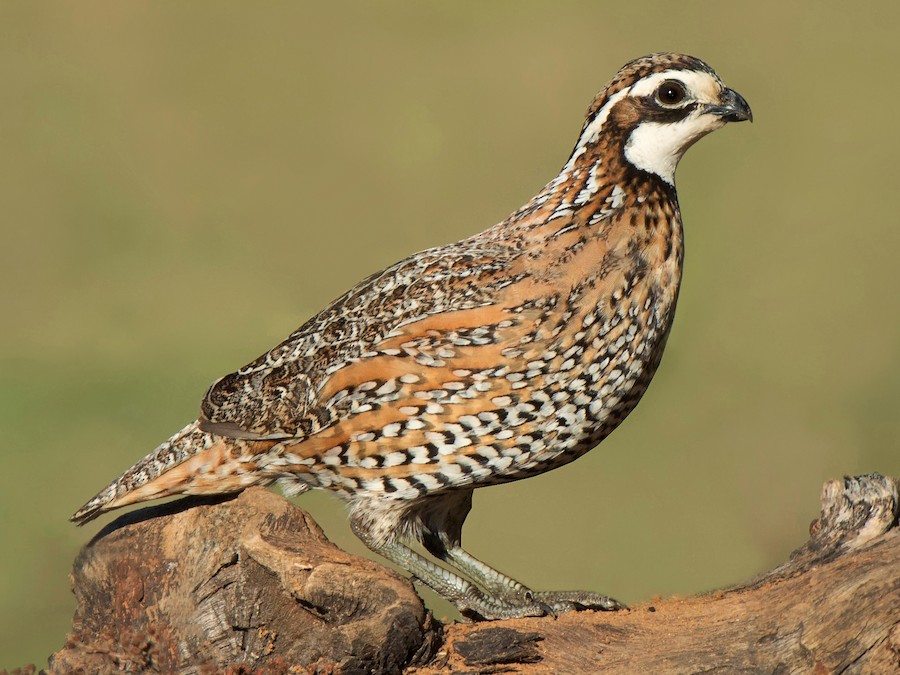
Where does the Northern Bobwhite Chick live?
Colinus virginianus
Spotted a bird? Identify it instantly with the Birdby app
Open the appThe Northern Bobwhite Chick lives in specific habitats and regions. Knowing where, and when, to look improves your chances of a successful sighting.
Biomes
Grasslands, open woodlands, agricultural fields, shrublands, pine forests, and forest edges.
Geographic range
Southeastern United States, extending north to parts of the Midwest and Northeast, and south into Mexico and parts of Central America, as well as Cuba.
Preferred environments
Areas with a mosaic of dense cover (for protection from predators and weather), open areas for foraging, and bare ground for dusting. They require diverse vegetation structure, including grasses, forbs, and scattered shrubs.
Elevation range
Typically found from sea level up to approximately 1,500 meters (5,000 feet).
Where to look
Grasslands and Prairies
Look in areas with native grasses and forbs, especially those undergoing restoration or managed for wildlife.
Agricultural Edges
Often found along the borders of crop fields, especially those with hedgerows or brushy cover.
Open Woodlands and Pine Forests
Areas with an open understory and good ground cover, particularly after prescribed burns.
Shrublands and Old Fields
Habitats with a mix of dense shrubs, briars, and open patches are ideal.
Field tips
- Listen for Adults. The best way to find chicks is often to first locate adult Northern Bobwhites by their distinctive 'bob-WHITE!' call. Chicks will be with the adults.
- Observe Early Morning/Late Afternoon. Chicks are most active during these cooler parts of the day, foraging with their parents.
- Look for Movement in Ground Cover. Chicks are masters of camouflage. Look for subtle movements in dense grass or under shrubs. They will often freeze when they detect a threat.
- Be Patient and Quiet. Approach potential bobwhite habitat slowly and quietly. Disturbing a brood can cause them to scatter and make them harder to observe.
- Use Binoculars. Even if you spot movement, binoculars will help confirm it's a chick and allow for better observation without disturbance.
Migration
Northern Bobwhites are non-migratory and resident throughout their range. Chicks remain with their brood/covey in the natal area.
Explore the Northern Bobwhite Chick
Identify birds anywhere
Free on iOS, Android, and Web. Photo & sound identification, full species database, and your personal life list.