
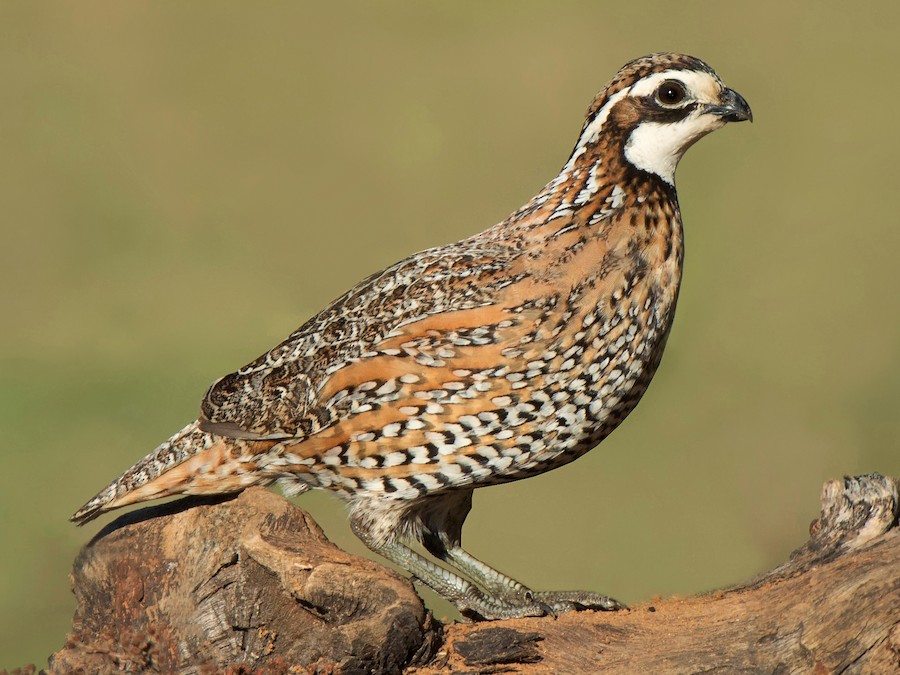
How to identify the Northern Bobwhite Chick
Colinus virginianus
Spotted a bird? Identify it instantly with the Birdby app
Open the appTo correctly identify the Northern Bobwhite Chick (Colinus virginianus), check each of these features. Birds can be tricky: habit, habitat, and call often confirm a sighting that a single photo cannot.
Size at a glance
- Length
- Approximately 7-10 cm (2.8-3.9 in) at hatching, growing rapidly
- Wingspan
- Not typically measured for chicks, but adult wingspan is 33-38 cm (13-15 in)
- Weight
- Approximately 6-8 g (0.21-0.28 oz) at hatching
Physical features to check
- 1
Plumage
Overall feather coloration and pattern.
Chicks are covered in soft, downy plumage. The dorsal side is typically mottled with shades of brown, buff, and black, providing excellent camouflage. They often have a dark stripe running down the back and a lighter, yellowish-buff underside. A dark eye-stripe is usually present.
- 2
Beak shape
Shape and color of the bill: a key field mark.
Small, conical, and dark gray to black.
- 3
Eye color
Iris color and any distinctive eye markings.
Dark brown.
- 4
Leg color
Leg and foot color.
Pale yellowish-orange to grayish-pink.
- 5
Distinguishing features
Standout features that separate this species.
Small size, precocial nature, cryptic downy plumage with dorsal mottling and a dark eye-stripe. They have short, stubby wings and a very short tail.
- 6
Juvenile appearance
How young birds differ from adults.
As chicks grow, they begin to develop juvenile contour feathers, gradually replacing their down. The juvenile plumage resembles a duller version of the adult female, with less distinct facial markings. They reach adult size and plumage by about 15 weeks.
- 7
Seasonal changes
Plumage variation between breeding and non-breeding seasons.
Chicks are present during the breeding season (spring to late summer). Their appearance changes as they grow and molt into juvenile and then adult plumage, rather than seasonal plumage changes in the traditional sense.
- 8
Sexual dimorphism
How males and females differ.
Not apparent in chicks. Sexual dimorphism develops as they mature into adults, with males exhibiting a distinct white throat and supercilium, while females have a buffy throat and supercilium.
Key field marks
- Size and Shape. Very small, round, downy chicks, moving quickly on the ground. They have short, stubby wings and a very short tail.
- Plumage. Look for mottled brown, buff, and black down on the back, with a lighter, yellowish-buff underside. A dark stripe through the eye is often visible.
- Behavior. Observe them foraging actively on the ground, often in a tight group with adult bobwhites. They will scatter and hide if alarmed, freezing in place.
- Vocalization. Listen for soft peeping or chirping calls, especially if they become separated from the brood.
- Habitat. Found in open grassy areas with nearby dense cover, often near agricultural fields or forest edges.
Explore the Northern Bobwhite Chick
Identify birds anywhere
Free on iOS, Android, and Web. Photo & sound identification, full species database, and your personal life list.