
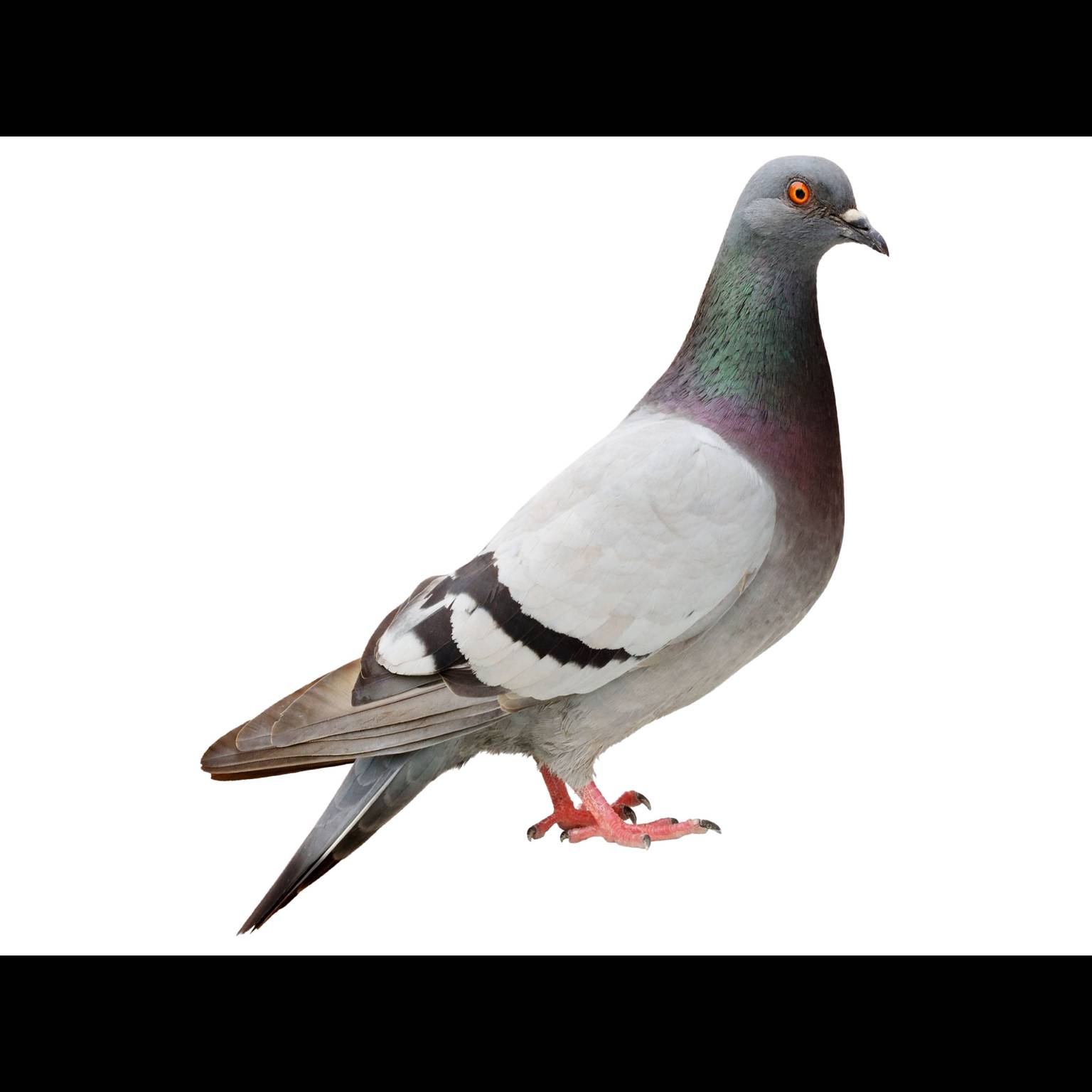
How to identify the Rock Pigeon
Columba livia
Spotted a bird? Identify it instantly with the Birdby app
Open the appTo correctly identify the Rock Pigeon (Columba livia), check each of these features. Birds can be tricky: habit, habitat, and call often confirm a sighting that a single photo cannot.
Size at a glance
- Length
- 30-35 cm (12-14 in)
- Wingspan
- 62-72 cm (24-28 in)
- Weight
- 238-380 g (8.4-13.4 oz)
Physical features to check
- 1
Plumage
Overall feather coloration and pattern.
The ancestral wild type (often seen in feral populations) is slate-grey with a whitish rump, two distinct black bars on the secondary wing feathers, and a broad black band on the tail. The neck and breast feathers are iridescent, displaying green and purplish hues. Feral populations show immense variation, including solid black, white, brown, pied (mixed colors), and various patterns of grey, often lacking the distinct wing bars or rump patch.
- 2
Beak shape
Shape and color of the bill: a key field mark.
Slender, dark grey to black bill with a prominent white cere (fleshy patch) at the base.
- 3
Eye color
Iris color and any distinctive eye markings.
Orange to reddish-orange, with a pale inner ring.
- 4
Leg color
Leg and foot color.
Reddish-pink to purplish-red.
- 5
Distinguishing features
Standout features that separate this species.
The classic wild-type plumage with two black wing bars, white rump, and iridescent neck. The characteristic head-bobbing walk and strong, direct flight. The prominent white cere at the base of the bill is also a good field mark.
- 6
Juvenile appearance
How young birds differ from adults.
Juveniles are duller than adults, with less iridescence on the neck and breast. Their plumage is generally softer and looser, and their eyes may be a duller brown or grey before developing the adult orange color.
- 7
Seasonal changes
Plumage variation between breeding and non-breeding seasons.
No significant seasonal plumage changes. Plumage remains consistent year-round, though feather wear can make colors appear duller over time.
- 8
Sexual dimorphism
How males and females differ.
Minimal. Males tend to be slightly larger and have more pronounced iridescence on the neck and breast, especially during courtship displays. Females may appear slightly duller.
Key field marks
- Plumage (Wild Type). Look for the classic slate-grey body, iridescent green/purple neck, two prominent black wing bars, and a white rump patch. This is the ancestral form, though many feral birds are highly variable.
- Head and Bill. Note the small head, dark bill, and the distinctive white, fleshy cere at the base of the bill.
- Eyes and Legs. Orange to reddish-orange eyes with a pale inner ring, and reddish-pink legs and feet.
- Behavior. Observe their characteristic head-bobbing walk while foraging on the ground. Their flight is strong and direct, often with a clatter of wings upon takeoff.
- Vocalization. Listen for the soft, guttural 'coo-roo-coo-coo' call, especially from males during courtship.
- Habitat. Most commonly encountered in urban and suburban environments, around human structures.
Explore the Rock Pigeon
Identify birds anywhere
Free on iOS, Android, and Web. Photo & sound identification, full species database, and your personal life list.