
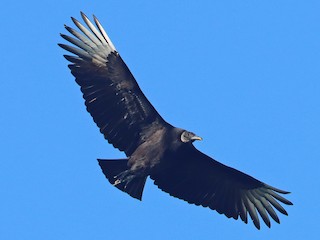
Where does the Black Vulture live?
Coragyps atratus
Spotted a bird? Identify it instantly with the Birdby app
Open the appThe Black Vulture lives in specific habitats and regions. Knowing where, and when, to look improves your chances of a successful sighting.
Biomes
Tropical and subtropical forests, open woodlands, savannas, grasslands, agricultural areas, urban and suburban environments.
Geographic range
Southeastern United States, Mexico, Central America, and most of South America (excluding the Andes at high altitudes and extreme southern regions).
Preferred environments
Prefers open country interspersed with woodlands for roosting and nesting. Often found near human settlements due to readily available food sources (landfills, roadkill).
Elevation range
Sea level up to approximately 2,500 meters (8,200 feet), occasionally higher.
Where to look
Roadsides
Frequently seen feeding on roadkill, especially in rural and semi-urban areas.
Landfills/Dumps
Commonly found foraging at waste disposal sites where food is abundant.
Open Country with Woodlands
Look for them soaring over open fields, pastures, and agricultural lands, often near wooded areas used for roosting.
Communal Roosts
Large numbers can be found roosting together in tall trees, communication towers, or other elevated structures, especially in winter.
Field tips
- Scan the skies. Look for large, dark birds soaring in circles, often at considerable heights, especially during the warmer parts of the day when thermals are active.
- Check for groups. Black Vultures are highly social; if you see one, there are often more nearby. They frequently congregate at food sources and roosts.
- Observe flight pattern. Distinguish from Turkey Vultures by their flatter wing profile and more active wing beats. The white wing patches are diagnostic.
- Look for roosts. At dawn or dusk, observe large trees or structures where they may be gathering to roost or disperse from.
Migration
Generally resident throughout its range, though northern populations in the United States may make short-distance movements south during harsh winters. Juveniles may disperse more widely.
Explore the Black Vulture
Identify birds anywhere
Free on iOS, Android, and Web. Photo & sound identification, full species database, and your personal life list.