
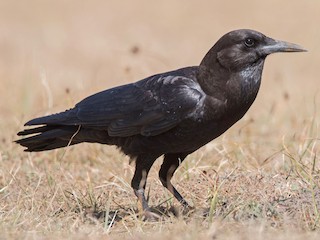
Where does the Cape Crow live?
Corvus capensis
Spotted a bird? Identify it instantly with the Birdby app
Open the appThe Cape Crow lives in specific habitats and regions. Knowing where, and when, to look improves your chances of a successful sighting.
Biomes
Grasslands, savannas, agricultural lands, semi-arid regions, open woodlands, and edges of human settlements.
Geographic range
Widely distributed across Southern Africa (South Africa, Namibia, Botswana, Zimbabwe, Mozambique, Angola, Zambia, Malawi, DRC, Tanzania, Uganda, Kenya, Ethiopia, Eritrea, South Sudan, Sudan, Somalia). There are two disjunct populations: one in Southern Africa and another in East Africa.
Preferred environments
Prefers open country with scattered trees, cultivation, pastures, and savannahs. Less common in dense forests or true deserts. Often found near human activity and farms.
Elevation range
Sea level up to approximately 3,000 meters (9,800 feet) in Eastern Africa.
Where to look
Agricultural Fields
Often seen in cultivated areas, especially after ploughing, where they feed on exposed invertebrates.
Open Grasslands and Savannas
Look for them foraging on the ground or perched on prominent trees, fences, or utility poles.
Roadsides
Frequently spotted along roadsides, feeding on roadkill or insects.
Tree Lines and Scattered Woodlands
They prefer open areas but utilize trees for nesting and roosting, so check woodland edges.
Field tips
- Scan Open Areas. Cape Crows are often conspicuous in open habitats. Use binoculars to scan fields, fence lines, and distant trees for perched birds.
- Listen for Calls. Their unique nasal 'kraaaak' call can often alert you to their presence before you see them.
- Observe Foraging Behavior. Watch for birds walking steadily on the ground, frequently probing with their long bills.
- Look for Perch Sites. They often perch on prominent elevated spots like telephone poles, tall trees, or even buildings, providing good viewing opportunities.
Migration
Generally resident throughout its range, but some local or seasonal movements occur in response to food availability or rainfall. Not considered a long-distance migrant.
Explore the Cape Crow
Identify birds anywhere
Free on iOS, Android, and Web. Photo & sound identification, full species database, and your personal life list.