
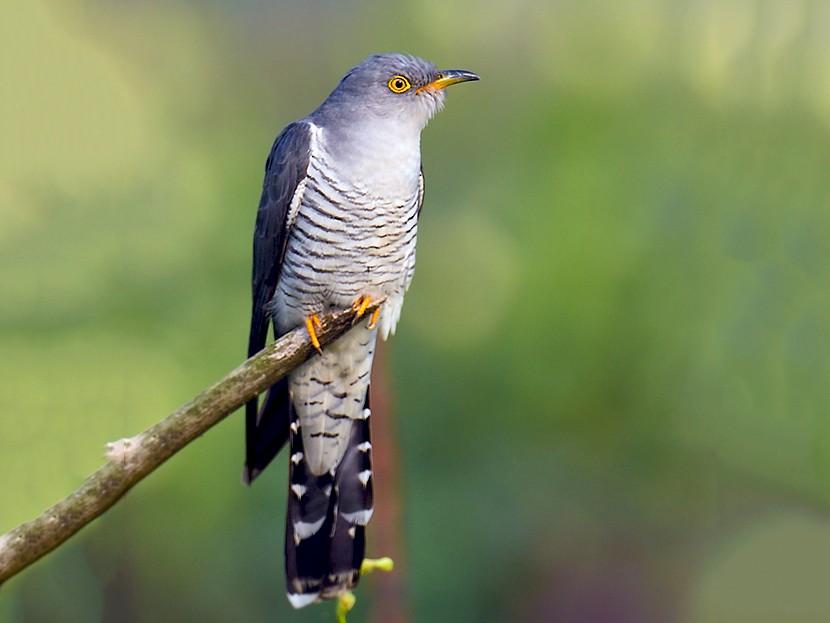
Where does the Common Cuckoo live?
Cuculus canorus
Spotted a bird? Identify it instantly with the Birdby app
Open the appThe Common Cuckoo lives in specific habitats and regions. Knowing where, and when, to look improves your chances of a successful sighting.
Biomes
Forests, woodlands, scrublands, heathlands, grasslands, marshes, and agricultural areas.
Geographic range
Breeds across most of Europe and Asia, from the Atlantic to the Pacific. Winters in tropical and subtropical Africa and Asia.
Preferred environments
Open woodlands, forest edges, clearings, heathland with scattered trees, and areas with a good supply of host nests. They prefer habitats that support their primary host species.
Elevation range
From sea level up to 3,000 meters in some parts of its range, though typically found at lower to mid-elevations.
Where to look
Open Woodlands and Forest Edges
These areas provide both perching sites and access to host nests.
Heathlands and Moorlands
Especially where there are scattered trees or shrubs, providing suitable habitat for host species like Meadow Pipits.
Reedbeds and Marshes
Common Cuckoos often parasitize Reed Warblers in these habitats.
Agricultural Landscapes
Areas with hedgerows, small copses, and diverse vegetation can attract both cuckoos and their hosts.
Field tips
- Listen for the Call. The male's 'cuck-oo' call is the most reliable way to detect its presence, especially in spring and early summer. They call most frequently in the early morning and late evening.
- Scan Perches. Cuckoos often perch prominently on exposed branches, fence posts, or power lines, scanning for prey or host nests. Use binoculars to scan these spots.
- Observe Host Species. If you see small passerines (like Dunnocks, Reed Warblers, Meadow Pipits) acting agitated or feeding an unusually large chick, it might be a cuckoo chick.
- Look for Raptor-like Flight. Keep an eye out for a bird with a hawk-like silhouette and flight pattern, but pay attention to the finer details to distinguish it from a true raptor.
- Timing. The best time to see or hear Common Cuckoos is during their breeding season, from April to July, before they migrate south.
Migration
Long-distance migratory. Breeds in the Palearctic and migrates south to wintering grounds in sub-Saharan Africa and parts of tropical Asia. Migration occurs mainly at night. They are one of the earliest migrants to arrive in their breeding grounds in spring.
Explore the Common Cuckoo
Identify birds anywhere
Free on iOS, Android, and Web. Photo & sound identification, full species database, and your personal life list.