
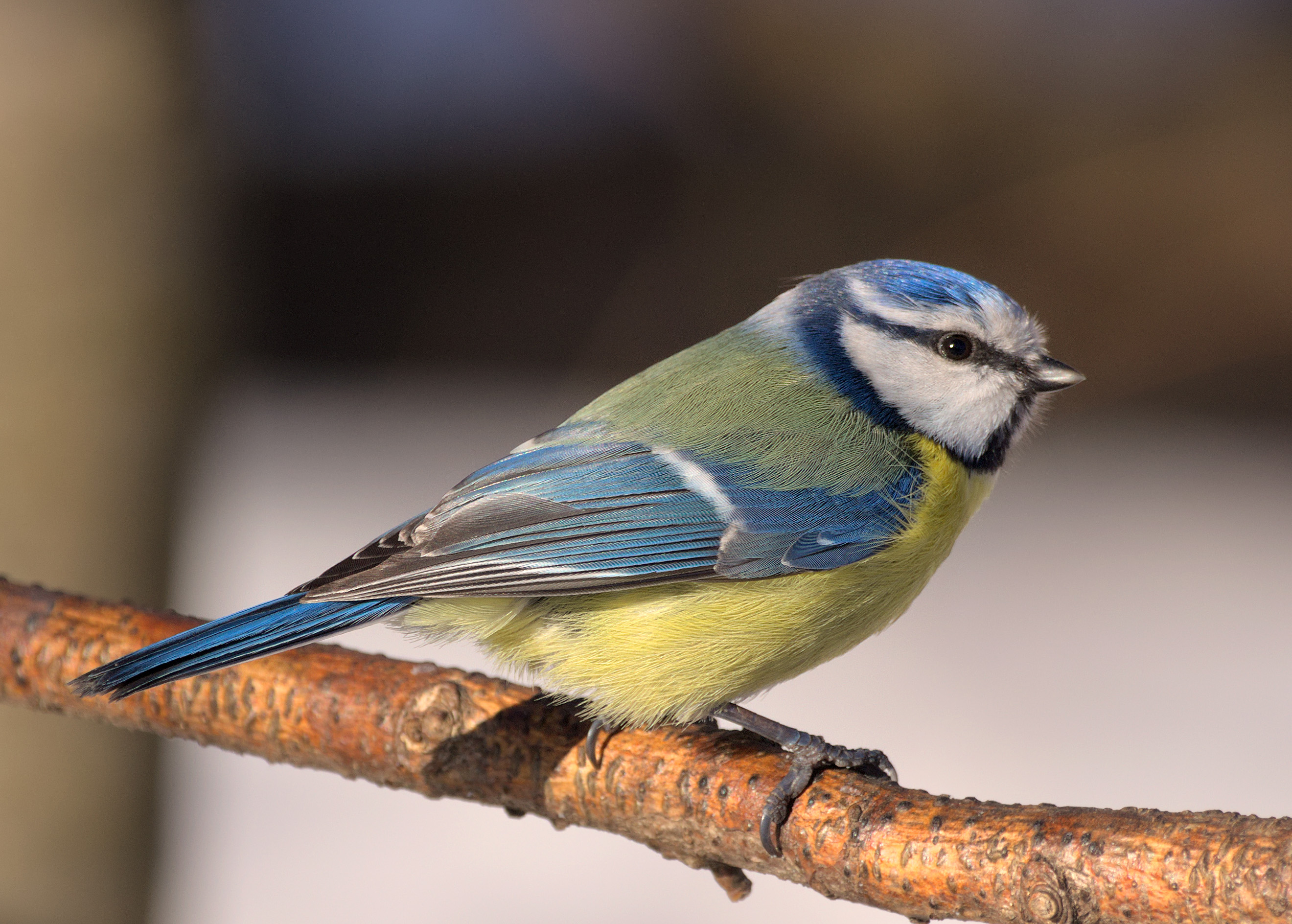
Where does the Eurasian Blue Tit live?
Cyanistes caeruleus
Spotted a bird? Identify it instantly with the Birdby app
Open the appThe Eurasian Blue Tit lives in specific habitats and regions. Knowing where, and when, to look improves your chances of a successful sighting.
Biomes
Temperate forests, woodlands, parks, gardens, hedgerows, orchards.
Geographic range
Widespread across temperate and subarctic Europe, extending east to western Asia and south to North Africa (Maghreb region). Absent from Iceland and parts of northern Scandinavia.
Preferred environments
Deciduous and mixed woodlands, particularly those with oak trees. Highly adaptable to human-modified landscapes, including suburban gardens and urban parks, as long as suitable trees and nesting sites (e.g., nest boxes) are available.
Elevation range
Sea level up to 1,800 meters, occasionally higher in mountainous regions.
Where to look
Deciduous and Mixed Woodlands
Primary habitat, especially those with mature oak trees, which provide abundant insect food.
Parks and Gardens
Common in suburban and urban green spaces, particularly where there are mature trees and shrubs. They readily use bird feeders and nest boxes.
Orchards and Hedgerows
Agricultural areas with suitable tree cover and nesting opportunities.
Field tips
- Look for movement in tree canopies. Blue Tits are constantly on the move, flitting between branches and often hanging upside down. Look for small, quick movements in the foliage.
- Listen for their calls and songs. Their distinctive high-pitched song and sharp calls are often the first indication of their presence, especially during spring.
- Check bird feeders. They are frequent and bold visitors to garden bird feeders, especially those offering sunflower seeds, peanuts, and suet.
- Install nest boxes. Providing suitable nest boxes with a small entrance hole (around 25-28mm) can attract them to your garden for breeding.
Migration
Mostly resident throughout their range. Northern and eastern populations may undertake short-distance irruptive movements in harsh winters or years of food scarcity. Juveniles disperse from their natal territories.
Explore the Eurasian Blue Tit
Identify birds anywhere
Free on iOS, Android, and Web. Photo & sound identification, full species database, and your personal life list.