
How to identify the Eurasian Blue Tit
Cyanistes caeruleus
Spotted a bird? Identify it instantly with the Birdby app
Open the appTo correctly identify the Eurasian Blue Tit (Cyanistes caeruleus), check each of these features. Birds can be tricky: habit, habitat, and call often confirm a sighting that a single photo cannot.
Size at a glance
- Length
- 10.5-12 cm
- Wingspan
- 17.5-20 cm
- Weight
- 7.5-12 g
Physical features to check
- 1
Plumage
Overall feather coloration and pattern.
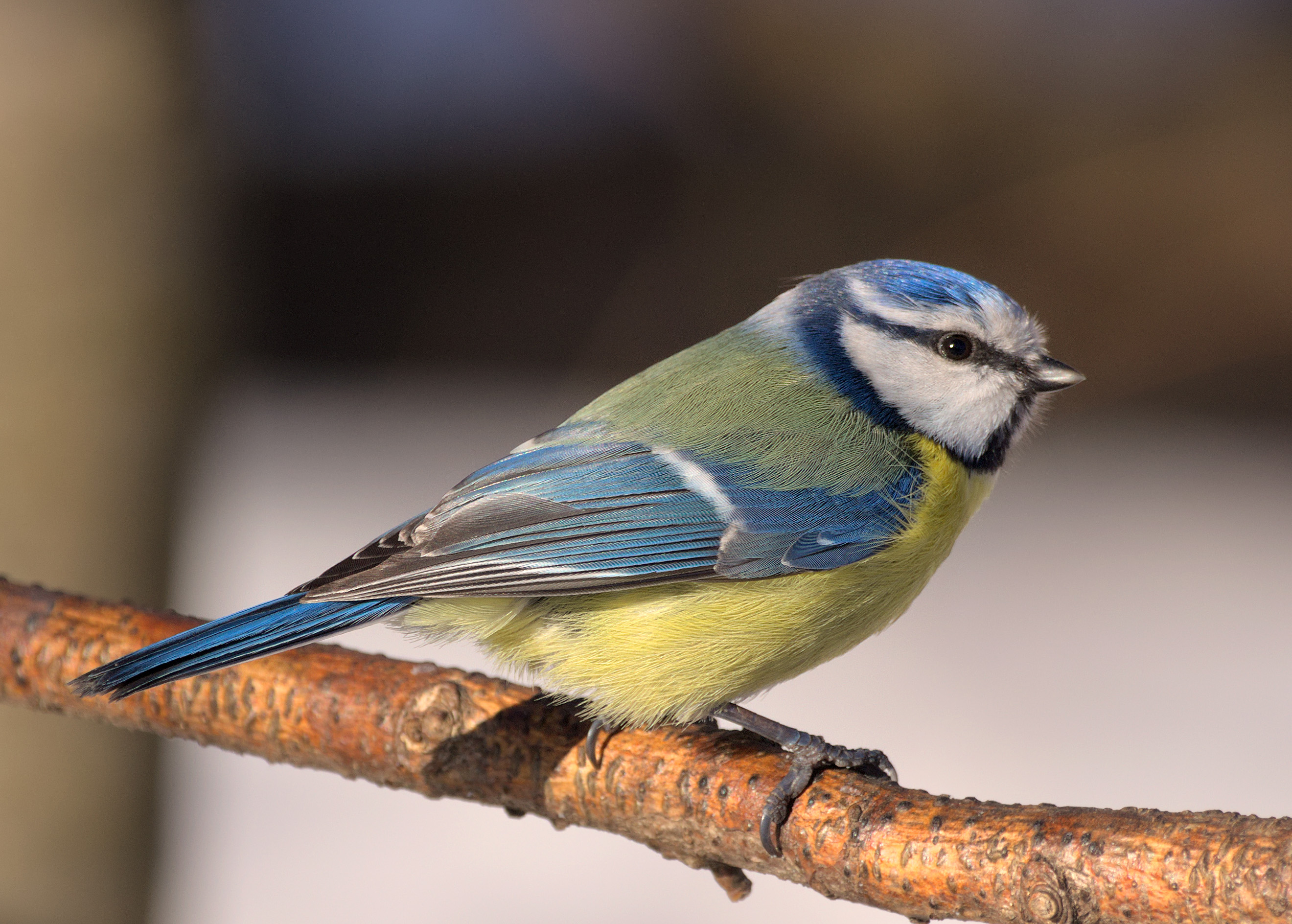
Adults have a bright blue crown, nape, and wings, with a white face bordered by a dark blue-black eye-stripe and collar. The back is greenish-blue, and the underparts are bright yellow with a narrow dark line down the belly. The tail is blue. The wing-bar is white.
- 2
Beak shape
Shape and color of the bill: a key field mark.
Small, conical, and pointed; dark grey to black.
- 3
Eye color
Iris color and any distinctive eye markings.
Dark brown.
- 4
Leg color
Leg and foot color.
Dark grey to bluish-grey.
- 5
Distinguishing features
Standout features that separate this species.
The combination of a bright blue cap, white cheeks with a dark eye-stripe, and yellow underparts with a dark belly stripe is distinctive. The white wing-bar on blue wings is also a key feature.
- 6
Juvenile appearance
How young birds differ from adults.
Juveniles are duller than adults, with a yellowish-green crown and cheeks, and duller yellow underparts. The blue areas are less vibrant, and the eye-stripe is less defined. They lack the crisp white wing-bar of adults, which is often yellowish.
- 7
Seasonal changes
Plumage variation between breeding and non-breeding seasons.
No significant seasonal plumage changes. Plumage may appear slightly duller after breeding due to wear, but no distinct non-breeding plumage.
- 8
Sexual dimorphism
How males and females differ.
Males tend to have slightly brighter plumage, particularly the blue on the crown and the yellow on the breast, and a broader, darker belly stripe. However, these differences are subtle and often difficult to discern in the field.
Key field marks
- Size and Shape. Small, plump, and compact with a relatively short tail and a small, pointed bill.
- Head Pattern. Look for the distinctive bright blue cap, white cheeks, and a dark blue-black eye-stripe extending to a collar around the nape.
- Body Plumage. Bright yellow underparts with a narrow dark line down the belly. Greenish-blue back. Blue wings with a single white wing-bar.
- Behavior. Observe its acrobatic feeding style, often hanging upside down. It is very active and restless.
- Vocalizations. Listen for its characteristic high-pitched, tinkling song ('tsee-tsee-tsee-tsooit') and sharp 'tink' calls.
Explore the Eurasian Blue Tit
Identify birds anywhere
Free on iOS, Android, and Web. Photo & sound identification, full species database, and your personal life list.