
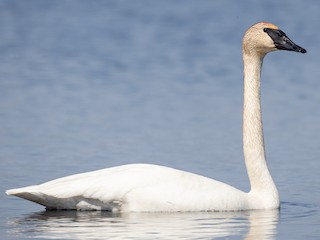
Where does the Trumpeter Swan live?
Cygnus buccinator
Spotted a bird? Identify it instantly with the Birdby app
Open the appThe Trumpeter Swan lives in specific habitats and regions. Knowing where, and when, to look improves your chances of a successful sighting.
Biomes
Freshwater wetlands, marshes, shallow lakes, slow-moving rivers, and ponds.
Geographic range
North America, primarily in Alaska, western Canada, and scattered populations in the Rocky Mountains, Great Lakes region, and Pacific Northwest of the United States. Wintering grounds extend south to parts of the central and southern U.S.
Preferred environments
Large, undisturbed bodies of shallow freshwater with abundant submerged aquatic vegetation for foraging, and isolated islands or muskrat/beaver lodges for nesting. Requires open water for foraging and takeoff/landing, especially during winter.
Elevation range
Typically found at low to moderate elevations, primarily in wetland habitats.
Where to look
Large freshwater wetlands and shallow lakes
Look for them in expansive, undisturbed wetlands with abundant aquatic vegetation, especially during breeding season.
Slow-moving rivers and large ponds
During migration and winter, they can be found on larger, ice-free bodies of water, including rivers and reservoirs.
Agricultural fields (winter)
In some wintering areas, they may forage in harvested grain fields, often near water sources.
Field tips
- Scan large bodies of water. Use binoculars or a spotting scope to scan open water for large white birds. Their size makes them relatively easy to spot from a distance.
- Listen for their call. Their loud, distinctive call is often heard before the bird is seen, especially in foggy or low-light conditions.
- Visit known wintering grounds. During winter, visit wildlife refuges and protected areas known to host Trumpeter Swan populations for the best viewing opportunities.
- Observe behavior. Watch for their characteristic 'up-ending' behavior while foraging in shallow water, with their tail pointing skyward.
- Distinguish from other swans. Pay close attention to bill color and shape, and listen carefully to vocalizations to differentiate from Tundra and Mute Swans.
Migration
Migratory in most of its range, moving from northern breeding grounds to ice-free wintering areas further south. Some populations, particularly in the Pacific Northwest and parts of the Great Lakes, may be resident or undertake short-distance movements. Migration occurs in large family groups or flocks.
Explore the Trumpeter Swan
Identify birds anywhere
Free on iOS, Android, and Web. Photo & sound identification, full species database, and your personal life list.