
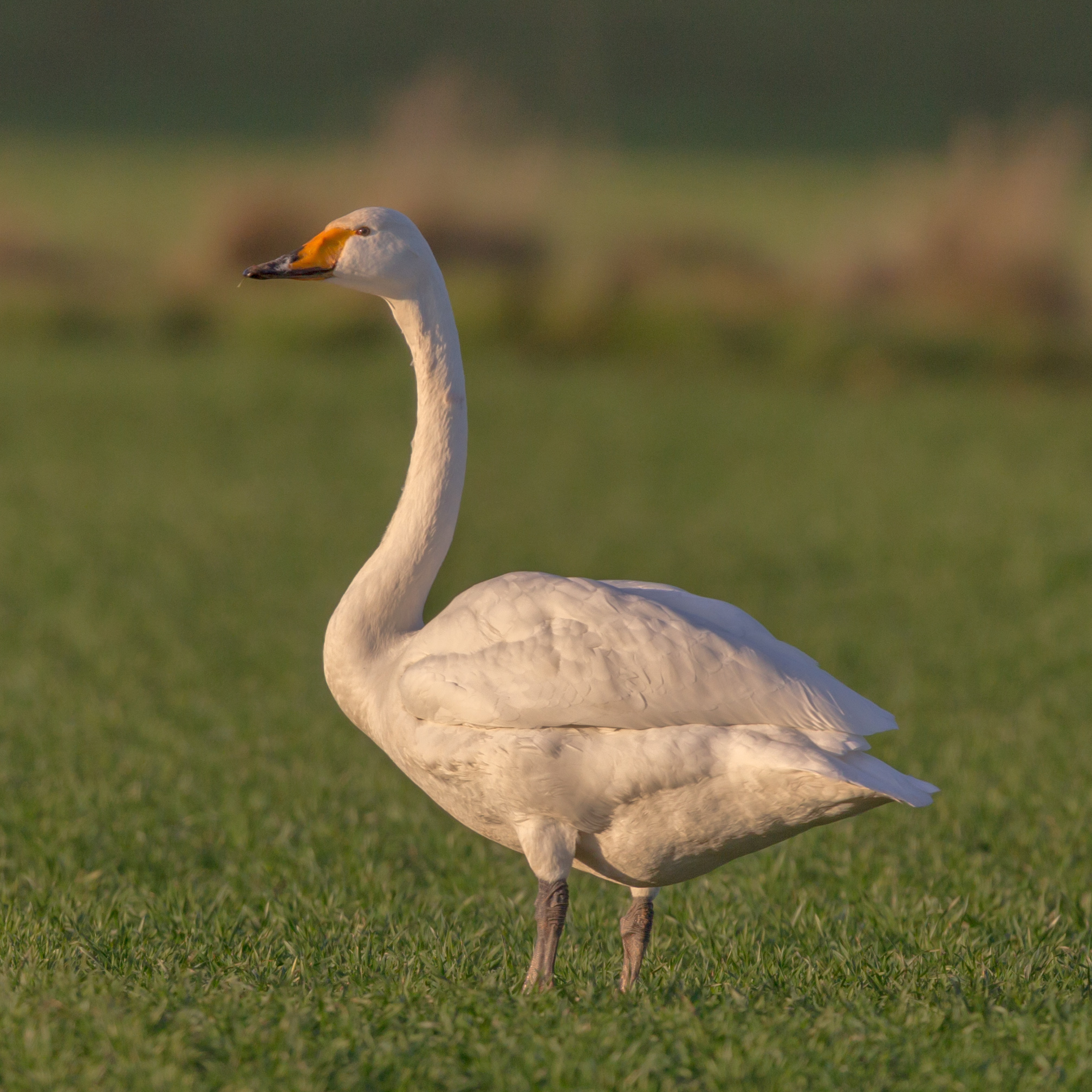
Where does the Whooper Swan live?
Cygnus cygnus
Spotted a bird? Identify it instantly with the Birdby app
Open the appThe Whooper Swan lives in specific habitats and regions. Knowing where, and when, to look improves your chances of a successful sighting.
Biomes
Tundra, taiga, wetlands, freshwater lakes, rivers, coastal lagoons, agricultural fields.
Geographic range
Breeds across the subarctic and arctic regions of Eurasia, from Iceland and Scandinavia eastward through Russia to the Pacific. Winters in temperate Europe, the Black Sea region, Caspian Sea, and East Asia (e.g., Japan, Korea, China).
Preferred environments
Shallow, nutrient-rich freshwater bodies such as lakes, ponds, slow-moving rivers, and marshes during breeding. In winter, they utilize larger lakes, estuaries, coastal waters, and often feed in agricultural fields (e.g., stubble fields, potato fields).
Elevation range
Typically found at low elevations, primarily in lowland wetlands and coastal areas, but can breed in upland tundra regions.
Where to look
Breeding Grounds
Arctic and subarctic tundra and taiga wetlands, remote lakes, and slow-moving rivers in northern Eurasia, including Iceland, Scandinavia, and Russia.
Wintering Grounds
Temperate lakes, estuaries, coastal lagoons, and agricultural fields across Europe (e.g., UK, Ireland, Netherlands, Germany), the Black Sea region, Caspian Sea, and East Asia (e.g., Japan, Korea, China).
Migration Stopovers
Large wetlands, lakes, and coastal areas along their migratory routes.
Field tips
- Listen for Calls. Their loud, trumpeting calls are often heard before the birds are seen, especially during migration or when large flocks are present.
- Scan Water Bodies and Fields. In winter, check large freshwater lakes, estuaries, and coastal areas. Also, look for them grazing in open agricultural fields, particularly stubble fields or those with root crops.
- Observe Bill Pattern Closely. Use binoculars or a scope to get a clear view of the bill's yellow and black pattern, paying attention to the extent and shape of the yellow.
- Look for Family Groups. During winter, family groups (parents with greyish-brown cygnets) often stay together, which can aid in identification.
Migration
Long-distance migratory. Breeds in the north and migrates south for the winter. Icelandic population winters mainly in the UK and Ireland. Scandinavian and Russian populations winter in various parts of Europe and Asia. Migration occurs from September to November and March to May.
Explore the Whooper Swan
Identify birds anywhere
Free on iOS, Android, and Web. Photo & sound identification, full species database, and your personal life list.