
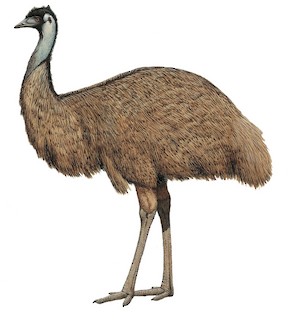
Where does the Emu live?
Dromaius novaehollandiae
Spotted a bird? Identify it instantly with the Birdby app
Open the appThe Emu lives in specific habitats and regions. Knowing where, and when, to look improves your chances of a successful sighting.
Biomes
Grasslands, woodlands, savannas, mallee scrub, and semi-arid to arid regions.
Geographic range
Widespread across mainland Australia, avoiding densely populated areas, dense rainforests, and extremely arid deserts.
Preferred environments
Open plains, eucalyptus forests, and areas with a mix of grasses, shrubs, and trees, often near water sources.
Elevation range
Sea level to approximately 1,500 meters (4,900 feet).
Where to look
National Parks and Reserves
Many national parks and wildlife reserves across mainland Australia offer excellent opportunities to see Emus, particularly in open woodland and grassland areas. Examples include Hattah-Kulkyne National Park, Mungo National Park, and various parks in Western Australia and Queensland.
Agricultural Lands
Emus are often seen in agricultural areas, especially where native vegetation borders farmlands, as they forage for crops and insects.
Roadsides in Rural Areas
When driving through rural and semi-arid parts of Australia, Emus can frequently be spotted grazing by the side of the road, particularly at dawn and dusk.
Field tips
- Look in open country. Emus prefer open woodlands, grasslands, and plains where they can see predators and run freely. Scan wide-open areas.
- Early morning and late afternoon. These are their most active feeding times, making them more visible. They may rest during the hottest parts of the day.
- Listen for calls. The female's booming call can travel far and help pinpoint their location, especially during the breeding season.
- Drive slowly in rural areas. Emus can be unpredictable and may cross roads suddenly. Driving slowly increases your chances of spotting them safely.
- Look for family groups. During the breeding season and for many months afterward, you might see a male Emu accompanied by a group of striped chicks.
Migration
Nomadic rather than migratory. Emus undertake seasonal movements in response to rainfall and food availability, often moving north in summer and south in winter in some regions, or following rainfall patterns across the continent.
Explore the Emu
Identify birds anywhere
Free on iOS, Android, and Web. Photo & sound identification, full species database, and your personal life list.