
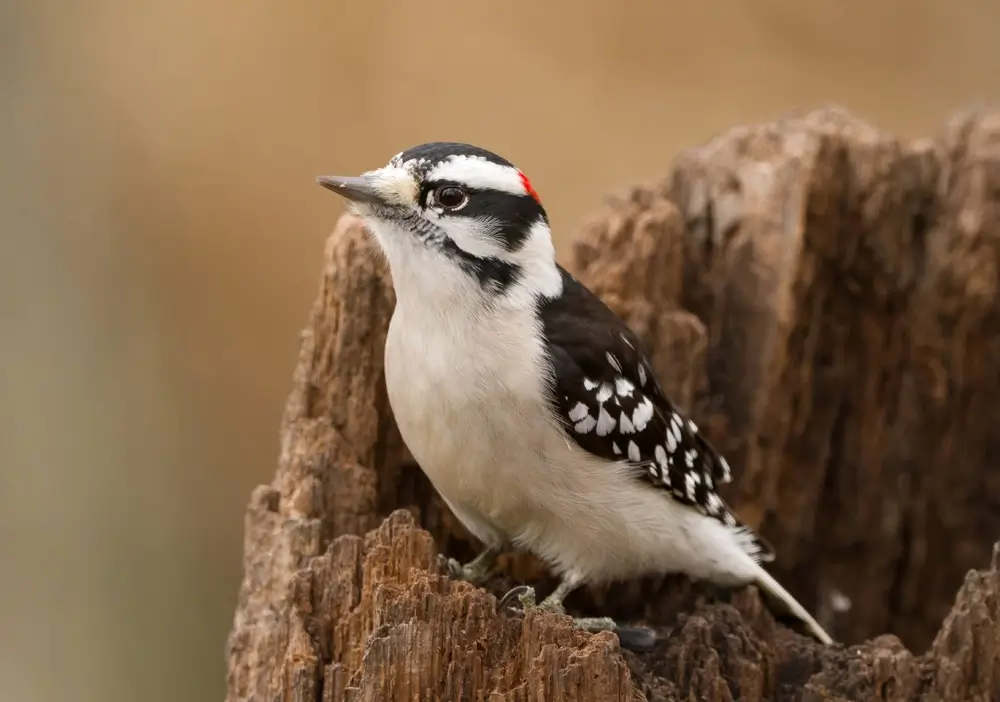
Where does the Downy Woodpecker live?
Dryobates pubescens
Spotted a bird? Identify it instantly with the Birdby app
Open the appThe Downy Woodpecker lives in specific habitats and regions. Knowing where, and when, to look improves your chances of a successful sighting.
Biomes
Forests, woodlands, suburban areas, parks, orchards, riparian zones.
Geographic range
Widespread across most of North America, from Alaska and Canada south through the United States, excluding arid southwestern deserts and parts of Florida.
Preferred environments
Deciduous and mixed forests, suburban gardens with mature trees, parks, and orchards. They prefer areas with a good mix of tree sizes, including smaller branches and shrubs where they can forage effectively.
Elevation range
Sea level up to approximately 2,700 meters (9,000 feet) in some western regions, but typically found at lower to mid-elevations.
Where to look
Suburban Backyards and Parks
Common visitors to bird feeders, especially suet feeders, and can be found foraging on trees in residential areas.
Deciduous and Mixed Forests
Found throughout these habitats, particularly in areas with a mix of tree sizes and dead wood.
Orchards and Riparian Zones
Often present in areas with fruit trees and along watercourses where trees and shrubs are abundant.
Field tips
- Install a Suet Feeder. Downy Woodpeckers are frequent visitors to suet feeders, especially in winter, providing excellent viewing opportunities.
- Look on Smaller Branches. Unlike larger woodpeckers, Downies often forage on smaller branches and even weed stalks, so scan these areas carefully.
- Listen for Calls and Drumming. Their soft 'pik' call and short drumming bursts can help locate them, especially when they are hidden by foliage.
- Observe Mixed-Species Flocks. In winter, they often join foraging flocks with chickadees and nuthatches; look for them among these groups.
Migration
Mostly resident throughout its range, though some northern populations may make short-distance, altitudinal, or irruptive movements in winter, especially in response to food availability.
Explore the Downy Woodpecker
Identify birds anywhere
Free on iOS, Android, and Web. Photo & sound identification, full species database, and your personal life list.