
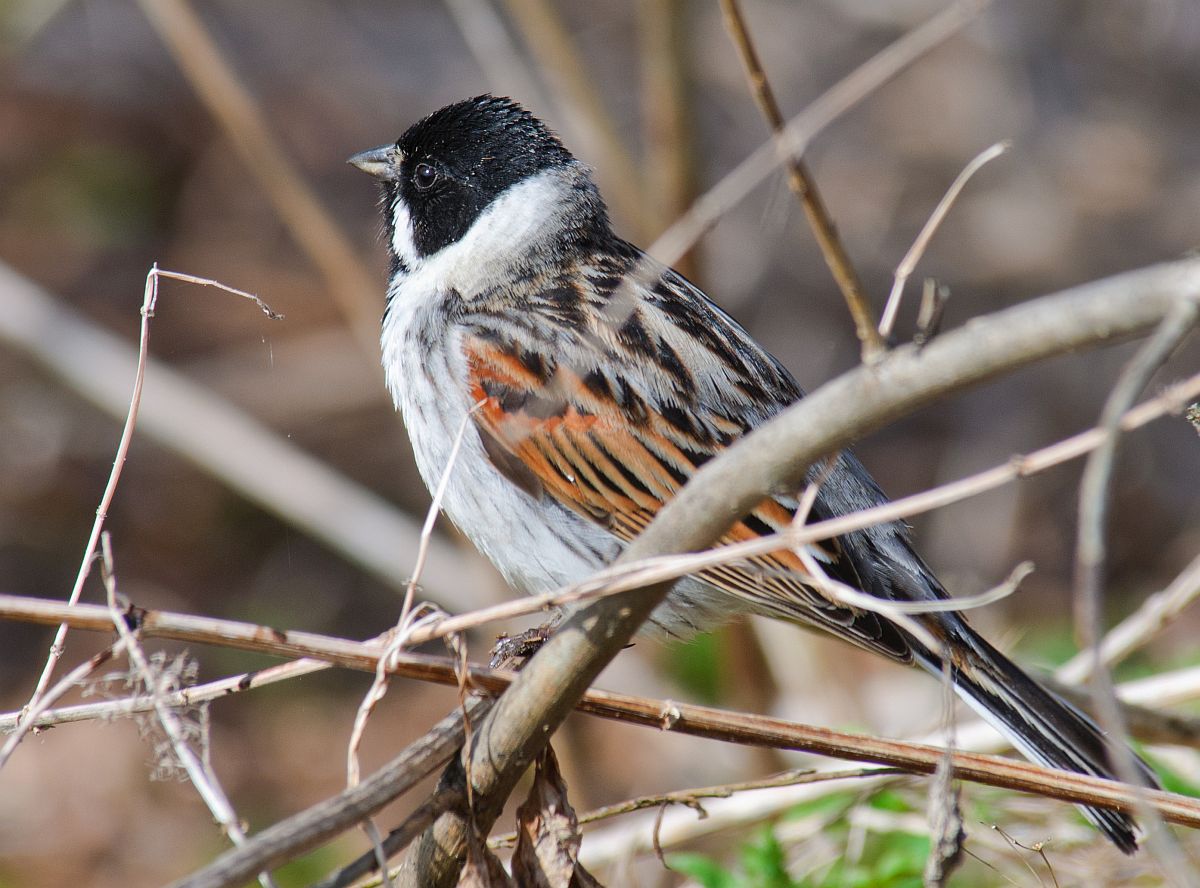
Where does the Reed Bunting live?
Emberiza schoeniclus
Spotted a bird? Identify it instantly with the Birdby app
Open the appThe Reed Bunting lives in specific habitats and regions. Knowing where, and when, to look improves your chances of a successful sighting.
Biomes
Wetlands, marshes, fens, reedbeds, damp meadows, scrubland, riverbanks, ditches, and occasionally agricultural land.
Geographic range
Widespread across most of Europe and temperate Asia, from the Atlantic coast to the Pacific. Absent from Iceland and parts of southern Europe.
Preferred environments
Dense vegetation near water, particularly reedbeds (Phragmites australis), sedges, and willow/alder scrub. Requires a mix of open water, dense cover for nesting, and emergent vegetation for foraging.
Elevation range
Typically found from sea level up to around 1,000 meters, occasionally higher in some mountainous regions.
Where to look
Reedbeds
The primary habitat, especially dense stands of common reed (Phragmites australis) along lakes, rivers, and marshes.
Wetlands and Marshes
Any area with standing water and emergent vegetation, including fens, bogs, and wet meadows.
Damp Scrub and Ditches
Areas with willow, alder, or other scrubby vegetation bordering water bodies or drainage ditches.
Coastal Lagoons and Estuaries
Where suitable reed or scrub habitat exists near brackish or freshwater.
Field tips
- Listen for the song. During the breeding season, males often sing from the tops of reeds or small bushes, making them easier to locate. Their song is distinctive, though not particularly loud.
- Scan reed edges. Reed Buntings often perch on the outer edges of reedbeds or on nearby low vegetation, especially in the morning and late afternoon.
- Look for movement in reeds. They can be quite skulking, moving through dense reeds. Look for subtle movements or rustling in the vegetation.
- Check feeding areas. In winter, look for flocks foraging for seeds on the ground in stubble fields or along the edges of wetlands.
- Be patient. Reed Buntings can be elusive. Patience and quiet observation in suitable habitat will increase your chances of a sighting.
Migration
Northern and eastern populations are migratory, moving south and west for the winter. Southern and western populations are largely resident or undertake short-distance movements. Migrants typically arrive in breeding grounds from March to May and depart from September to November.
Explore the Reed Bunting
Identify birds anywhere
Free on iOS, Android, and Web. Photo & sound identification, full species database, and your personal life list.