
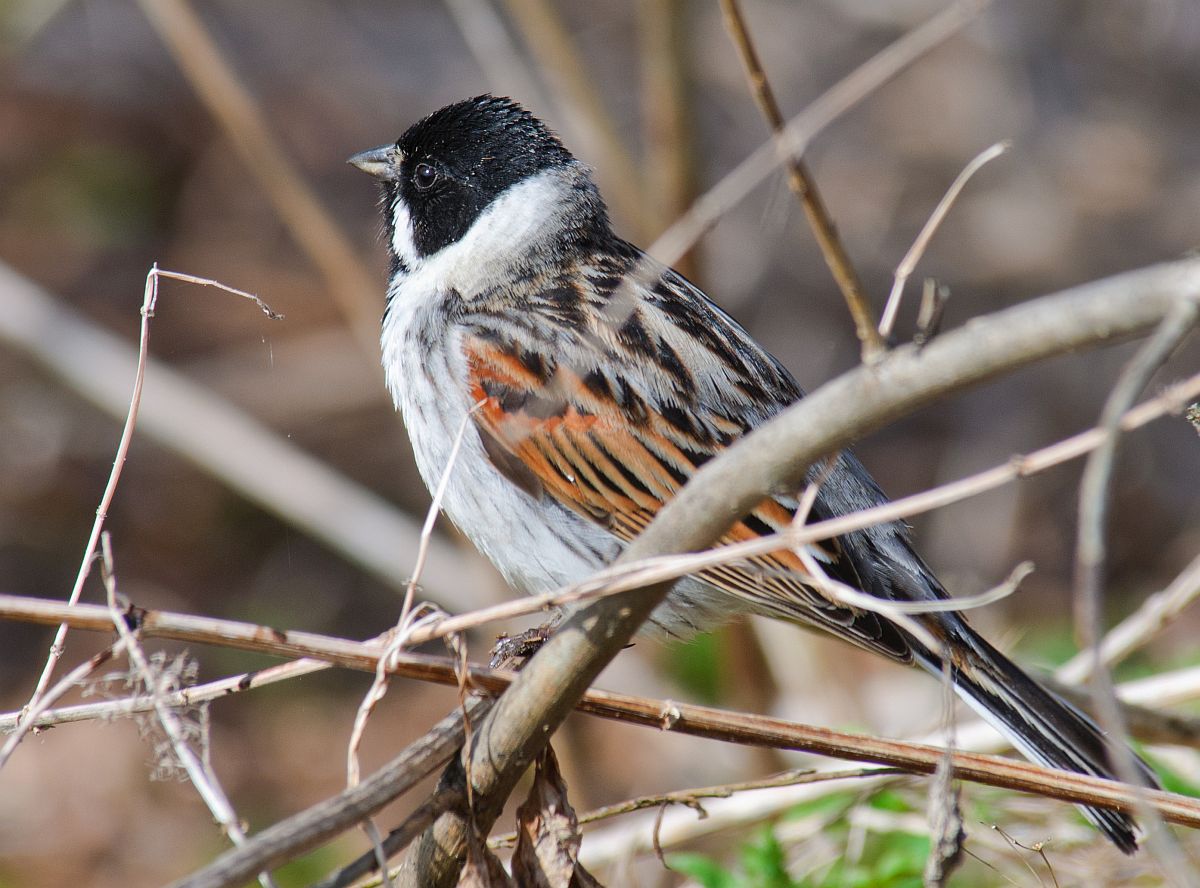
How to identify the Reed Bunting
Emberiza schoeniclus
Spotted a bird? Identify it instantly with the Birdby app
Open the appTo correctly identify the Reed Bunting (Emberiza schoeniclus), check each of these features. Birds can be tricky: habit, habitat, and call often confirm a sighting that a single photo cannot.
Size at a glance
- Length
- 13.5-16 cm
- Wingspan
- 21-27 cm
- Weight
- 13-23 g
Physical features to check
- 1
Plumage
Overall feather coloration and pattern.
Overall streaky brown plumage with a relatively long, notched tail. Males in breeding plumage are striking with a black head and throat, a white moustachial stripe, and a white collar. Females and non-breeding males are duller, with streaky brown heads and a buffy supercilium.
- 2
Beak shape
Shape and color of the bill: a key field mark.
Conical, relatively small, dark grey to blackish.
- 3
Eye color
Iris color and any distinctive eye markings.
Dark brown.
- 4
Leg color
Leg and foot color.
Pinkish-brown to dark brown.
- 5
Distinguishing features
Standout features that separate this species.
Breeding male's black head, white collar, and white moustachial stripe are unmistakable. Females and non-breeding males show a streaky brown head with a pale supercilium and dark malar stripe, often with a faint dark spot on the ear coverts. The outer tail feathers are white, visible in flight.
- 6
Juvenile appearance
How young birds differ from adults.
Juveniles are heavily streaked brown overall, resembling adult females but often with a more rufous tinge and less defined head patterns. They lack the distinct head markings of adult males and have a less contrasting plumage than adult females.
- 7
Seasonal changes
Plumage variation between breeding and non-breeding seasons.
Males undergo a significant plumage change. In breeding season (spring/summer), they display a striking black head and throat with a white collar. In non-breeding season (autumn/winter), the black is largely obscured by pale feather fringes, making them appear much duller and more similar to females, though often still showing a darker cap and malar stripe.
- 8
Sexual dimorphism
How males and females differ.
Pronounced sexual dimorphism in breeding plumage. Males have a black head and throat, white collar, and white moustachial stripe. Females lack the black head, having a streaky brown head with a pale supercilium and dark malar stripe. In non-breeding plumage, males resemble females but retain some darker markings on the head.
Key field marks
- Breeding Male Head Pattern. Look for the unmistakable black head and throat, sharply contrasted by a clean white moustachial stripe and a broad white collar extending around the nape. This is the most reliable field mark for males in spring/summer.
- Female/Non-breeding Male Head Pattern. Observe the streaky brown head with a pale supercilium (eyebrow stripe) and a dark malar stripe (from the gape down the side of the throat). There is often a faint dark spot on the ear coverts. The overall impression is of a 'messy' brown head compared to the clean patterns of the male.
- Habitat. Always consider the habitat. Reed Buntings are almost exclusively found in wetlands, reedbeds, and damp scrub. If you see a bunting-like bird in such an environment, it's a strong indicator.
- Tail. Note the relatively long, notched tail with white outer tail feathers, which are particularly noticeable in flight.
- Song/Call. Listen for the simple, somewhat melancholic 'tsip, tsip, tsee-tsee-tsee' song or the sharp 'tzip' call. These vocalizations are distinctive and often given from a prominent perch.
Explore the Reed Bunting
Identify birds anywhere
Free on iOS, Android, and Web. Photo & sound identification, full species database, and your personal life list.